Choline and choline inositol, explained
Choline inositol pairs two different compounds, and only choline has authorised health claims in Great Britain. The NHS gives no amount for choline, but EFSA's adequate intake is 400 mg a day for adults and 480 mg in pregnancy, and eggs, meat, fish, beans and broccoli supply most of it.
By The Natura teamUpdated 12 min read
What is choline inositol?
Choline inositol is a supplement that combines choline and inositol, two compounds the body uses in cell membranes. Choline is an essential nutrient: EFSA says the body can make some, but not always enough, so it has to come from food. The Linus Pauling Institute at Oregon State University notes it isn't a vitamin by strict definition. Inositol is a sugar-like molecule, and a 2024 systematic review notes that people both make myo-inositol, its main form, and take it in from food.
You'll see the pair promoted online for the liver, hair and PCOS. What a UK product may say is set by the Great Britain nutrition and health claims register. It authorises three claims for choline, covered below. For inositol, the two claims assessed (mental performance and concentration, and the nervous system) were both not authorised, so a product sold here can't say inositol does anything for you.
What is inositol?
Inositol is a sugar-like molecule found in cell membranes, and the body both makes it and takes it in from food. A 2024 systematic review of inositol for PCOS describes nine forms (stereoisomers), with myo-inositol the most abundant in the human body, and says inositols are structural parts of cell membranes that also take part in hormone signalling. Insulin prompts the body to convert some myo-inositol into a second form, D-chiro-inositol. As noted above, the register of health claims in Great Britain has no authorised claim for inositol.
Inositol supplements: what to know before you take one
Inositol supplements are sold as myo-inositol, D-chiro-inositol or a mix of the two. The research on them is limited, so talk to a pharmacist or GP before you start, especially if you have PCOS, are pregnant or trying to conceive, or take regular medicines. The 2023 international PCOS guideline says inositol products are regulated and quality-controlled differently from medicines, so doses and quality may vary, and that side effects and safety are not known when inositol is used for infertility. In the trials in a 2024 systematic review, gastrointestinal side effects were reported in six trials and were described as typically mild and self-limited. Across the review, doses of myo-inositol ran from 1 to 4 g a day, often with folic acid. That is what researchers tested, not a recommended dose.
Myo-inositol and D-chiro-inositol: what's the difference?
They are two forms of the same molecule. Myo-inositol is the most abundant form in the body, and the body converts some of it to D-chiro-inositol when insulin acts, according to the 2024 review. Some products combine the two in set ratios; the review describes a 40 to 1 ratio of myo to D-chiro as one suggested to be physiological, citing mouse studies. In its analyses, the evidence for D-chiro-inositol on its own came from two small trials (64 women in total) and was rated low certainty, and most of its findings overall were rated low or very low certainty. The 2023 guideline says no specific type, dose or combination can currently be recommended. If you have PCOS, tell your GP or pharmacist what you take.
What does the research say about inositol and PCOS?
The NHS now calls this condition polyendocrine metabolic ovarian syndrome (PMOS) and says it used to be called polycystic ovary syndrome, but the research below still uses the name PCOS. The 2023 international guideline for polycystic ovary syndrome says inositol in any form could be considered, based on a woman's preferences, noting limited harm and potential improvement in some metabolic measures but limited clinical benefit for ovulation, hirsutism (excess body or facial hair) or weight. It treats inositol as experimental for fertility and says no particular type, dose or combination can be recommended. A 2024 systematic review of 30 trials reached a similar conclusion: the evidence is limited and inconclusive. Those trials tested inositol on its own or with other treatments, and the review doesn't mention choline.
We searched the Europe PMC database on 7 October 2026 and found no randomised trial of a combined choline and inositol supplement for hair loss, liver health or PCOS. If you have PCOS, tell your GP or pharmacist what you take, as the guideline encourages. The NHS says to see a GP if you think you might have it or your symptoms are affecting your everyday life, work and relationships.
What are the benefits of choline?
In Great Britain three health claims are authorised for choline: it contributes to normal homocysteine metabolism, to normal lipid metabolism and to the maintenance of normal liver function. The register's condition is that a food must contain at least 82.5 mg of choline per 100 g, per 100 ml or per single portion.
Claims you may see elsewhere were assessed and not authorised. They include choline supporting memory, brain function or nerve transmission, lecithin or phosphatidylcholine helping to maintain normal cholesterol, and choline being needed for the brain development of infants and young children.
EFSA notes that dietary deficiency of choline can cause fatty liver and liver and muscle damage, which is part of why it counts choline as essential. EFSA also concluded that the available data linking choline intake to fatty liver disease, cardiovascular disease, cancer, birth defects and cognition couldn't be used to set reference values.
How much choline do you need?
There's no NHS or UK reference amount for choline, and the UK's official food composition dataset (CoFID) has no choline column. EFSA's adequate intake, published in 2016, is 400 mg a day for all adults, 480 mg in pregnancy and 520 mg when breastfeeding. An adequate intake is set when the evidence can't pin down a requirement. EFSA based the adult figure on average intakes in healthy EU populations, about 370 mg a day, plus a study of people fed low-choline diets and then topped up.
EFSA's own figures show average adult intakes across nine EU countries of 269 to 468 mg a day. For the UK, a 2018 review table drawn from national diet records gives about 407 mg a day for men and 294 mg for women. These surveys are old and used US food data, and an adequate intake isn't a requirement, so a woman averaging 294 mg isn't necessarily short.
What foods are high in choline?
Eggs, liver, fish, meat, beans and vegetables such as broccoli and cauliflower are the main sources. The table uses the US Department of Agriculture's Database for the Choline Content of Common Foods, Release Two (2008), because UK tables don't list choline. The per-100 g values are USDA's total choline, in US foods. Portion sizes come from the British Dietetic Association (BDA), and the per-portion figures are our arithmetic, rounded to the nearest milligram.
| Food | Portion | Choline per portion | Choline per 100 g |
|---|---|---|---|
| Beef liver, braised | 90 g | 387 mg | 430 mg |
| Chicken liver, pan-fried | 90 g | 297 mg | 330 mg |
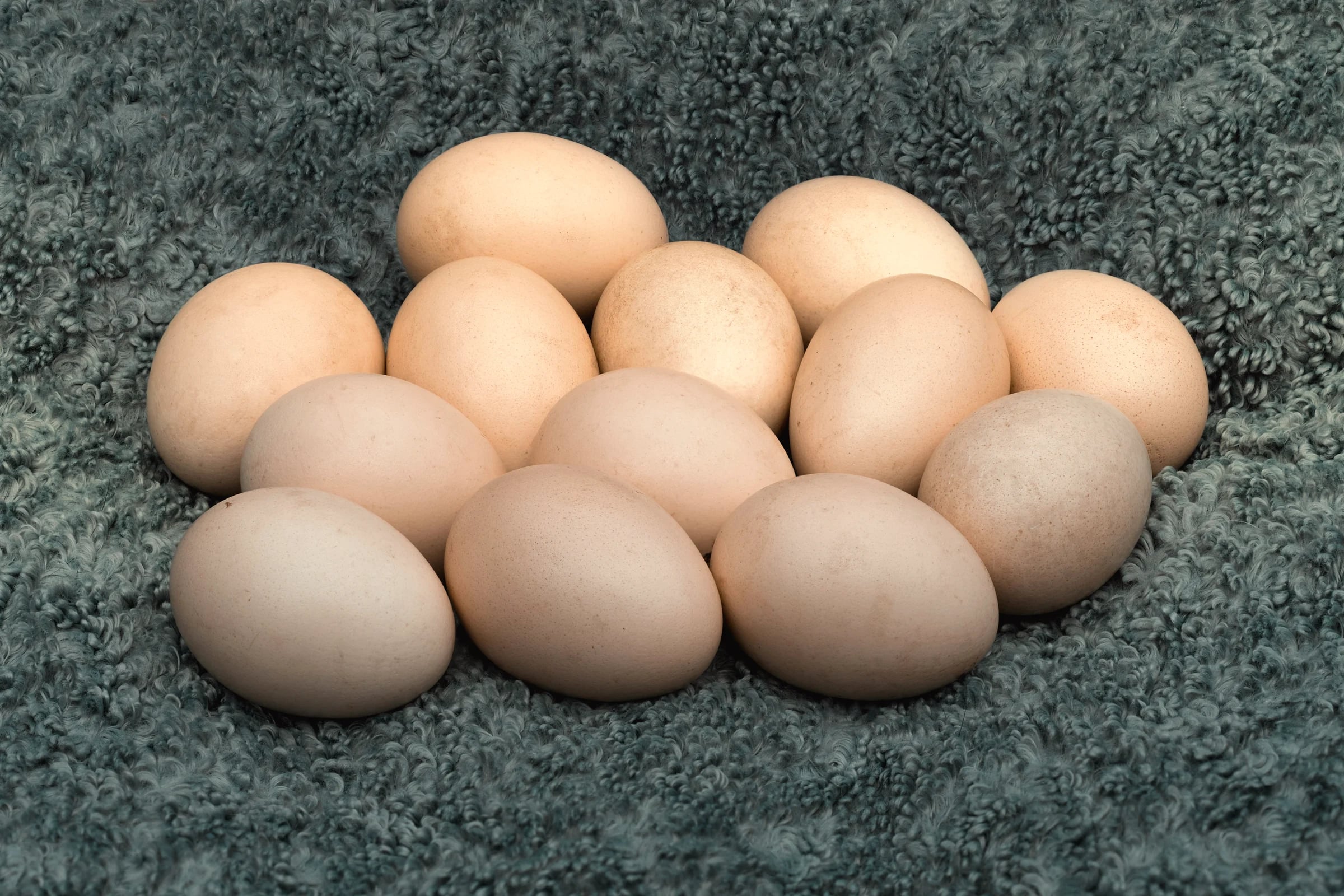
| Eggs, hard boiled | 2 medium eggs, 120 g | 276 mg | 230 mg |
| Salmon, farmed, cooked | 140 g | 127 mg | 91 mg |
| Cod, cooked | 140 g | 118 mg | 84 mg |
| Pork loin (tenderloin), roasted | 90 g | 80 mg | 89 mg |
| Beef mince, 85% lean, cooked | 90 g | 74 mg | 82 mg |
| Chicken, roasted | 90 g | 71 mg | 79 mg |
| Kidney beans, canned | 150 g | 50 mg | 33 mg |
| Soya drink | 200 ml | 48 mg | 24 mg |
| Baked beans, canned | 150 g | 48 mg | 32 mg |
| Tuna, canned in water, drained | 140 g | 41 mg | 29 mg |
| Broccoli, boiled | 80 g | 32 mg | 40 mg |
| Semi-skimmed milk | 200 ml | 32 mg | 16 mg |
| Cauliflower, boiled | 80 g | 31 mg | 39 mg |
| Peanuts, raw | 30 g | 16 mg | 53 mg |
A day built from the table shows how it adds up: two boiled eggs (276 mg), a portion of roast chicken (71 mg), broccoli (32 mg) and a glass of semi-skimmed milk (32 mg) come to about 411 mg. Plant foods give less per portion than eggs or meat, so vegetarians and vegans rely on several servings of beans, soya, broccoli, cauliflower and peanuts.
Liver is the richest source, but the NHS says liver is high in vitamin A and that eating it more than once a week may give you too much. It advises avoiding liver and liver products altogether in pregnancy.
Choline in pregnancy
EFSA's adequate intake is 480 mg a day in pregnancy and 520 mg when breastfeeding, up from 400 mg. EFSA says trials suggest pregnant and lactating women may need more, but the data weren't enough to estimate how much, so it derived the figures from the non-pregnant value, using weight gain in pregnancy and the choline in breast milk when breastfeeding.
The research is small and mixed. In a 2018 trial, 26 women in their third trimester were fed either 480 or 930 mg of choline a day under controlled conditions. Their infants' average reaction times on a processing-speed test, at 4 to 13 months, were faster in the 930 mg group. A 2025 systematic review of four randomised trials and five observational studies found that most neurodevelopmental outcomes did not support a benefit, and concluded the evidence was insufficient to support or refute one.
The NHS lists folic acid (400 micrograms a day) and vitamin D (10 micrograms a day from early October to late March) as the supplements to take in pregnancy. Choline isn't on that page, and the Linus Pauling Institute notes that most multivitamins, prenatal ones included, contain none, or much less than the adequate intake. Observational studies of choline and neural tube defects have been mixed and no randomised trial has tested it, so choline is no substitute for folic acid.
Eggs are a good choline source in pregnancy. The NHS says hen eggs with the British Lion stamp can be eaten runny, and that other hen eggs should be well cooked. If you're thinking about a choline supplement, talk to your midwife or GP first.
What is choline bitartrate?
Choline bitartrate is a salt of choline, one of the forms sold as a supplement alongside choline chloride and CDP-choline, according to the Linus Pauling Institute. Because the salt includes the bitartrate part, only some of its weight is choline. PubChem gives molecular weights of 253.25 for choline bitartrate and 104.17 for choline, so about 41% of the salt is choline, and 1,000 mg of it contains roughly 410 mg of choline. Check which number a label leads with. In a 2025 randomised crossover trial of 37 healthy men, a meal with 600 mg of choline as bitartrate raised urinary choline over the next six hours more than a no-choline meal, while phosphatidylcholine did not differ clearly from either. That is a short-term marker of what reaches the urine, and it says nothing about health benefits.
Choline supplements in the UK: what to check
Check the label for the amount of choline itself. The weight of the compound is larger: on Natura's label, 700 mg of choline bitartrate gives 280 mg of choline. Other forms include choline chloride, CDP-choline (citicoline) and phosphatidylcholine or lecithin, which is only about 13% choline by weight, according to the Linus Pauling Institute.
The US Institute of Medicine set an upper level of 3,500 mg a day for adults in 1998, mainly to prevent low blood pressure and, secondarily, fishy body odour. Doses of 10,000 to 16,000 mg a day have caused fishy body odour, vomiting, salivation and sweating, and 7,500 mg a day lowered blood pressure slightly. The fishy smell comes from trimethylamine, a compound gut bacteria make from choline. People with liver or kidney disease, Parkinson's disease, depression or the inherited condition trimethylaminuria may be at higher risk near the upper level, and management of trimethylaminuria can include a choline-restricted diet.
Gut bacteria turn some choline into trimethylamine, which the liver converts to TMAO. Higher blood TMAO has been linked to heart disease in observational studies, but the Linus Pauling Institute says it may be a marker rather than a cause and that there's little evidence that dietary choline raises cardiovascular risk. If you take medicines or have a long-term condition, ask a pharmacist before starting a supplement.
Where Natura fits
Natura's Daily Choline (coming soon) is one capsule giving 280 mg of choline from 700 mg of choline bitartrate, and choline contributes to the maintenance of normal liver function. It contains choline only: Natura doesn't sell a choline and inositol product. The capsule sits in the Liver Pack, the B Pack and one other pack, so buying one of those and the single bottle would double the 280 mg, still far below the US upper level. The B Pack also holds biotin at 5000 µg, which is above the 0.9 mg a day the NHS says is unlikely to cause harm (see our biotin guide), and B6 at 10 mg, the most the NHS advises from supplements unless a doctor says otherwise, so don't add another B6 source such as Daily Multi.
Common questions
What is the difference between myo-inositol and D-chiro-inositol?
They are two forms of inositol. Myo-inositol is the most abundant in the body, and the body converts some of it into D-chiro-inositol when insulin acts. Supplements use either one or a mix. The 2023 PCOS guideline says no particular type, dose or combination can be recommended, so tell your GP or pharmacist if you take one.
Is an inositol supplement safe?
The safety evidence is limited. The 2023 PCOS guideline says side effects and safety are not known when inositol is used for infertility, and that product dose and quality can vary. A 2024 review reported mild, self-limited stomach side effects in some trials. Ask a pharmacist or GP first, and your midwife if you're pregnant.
Is choline bitartrate the same as choline?
No. Choline bitartrate is a salt of choline, and by molecular weight about 41% of it is choline, so 1,000 mg of the salt gives roughly 410 mg of choline. Look for the choline figure on the label rather than the weight of the whole compound.
Is choline a vitamin?
Not strictly. The Linus Pauling Institute says choline isn't a vitamin by strict definition, and it isn't one of the eight B vitamins. EFSA classes it as an essential nutrient: the body can make some, but not always enough, so some has to come from food.
How much choline is in an egg?
About 140 mg in a medium egg. USDA data give 230 mg of total choline per 100 g of hard-boiled egg, and the BDA counts two medium eggs as 120 g, so one is about 60 g. Most of the choline is in the yolk, which has 680 mg per 100 g raw, against about 1 mg in the white. Two eggs give roughly 276 mg, about two-thirds of EFSA's adult adequate intake.
Does choline cause a fishy smell?
Only at very high doses, or in people with an inherited condition. The Linus Pauling Institute reports fishy body odour at 10,000 to 16,000 mg a day, far above any supplement dose or the 3,500 mg US upper level. People with trimethylaminuria, a condition affecting how the body handles trimethylamine, may notice it at much lower intakes and are advised to restrict choline.
Does inositol help with PCOS?
The evidence is limited. The 2023 international PCOS guideline says inositol could be considered based on personal preference, with limited harm and some metabolic benefit, but limited clinical benefit for ovulation, excess hair or weight, and calls it experimental for fertility. It can't recommend a type or dose. See your GP, and tell them if you take it.
What are vegan sources of choline?
Soya, beans, broccoli, cauliflower, peanuts and some wholegrains. In USDA data, a 200 ml glass of soya drink gives about 48 mg and 150 g of canned kidney beans about 50 mg, against 276 mg for two boiled eggs. Amounts per portion are smaller, so variety matters. EFSA's adequate intake is a benchmark based on average intakes, not a requirement.
Sources
- EFSA: Dietary Reference Values for nutrients, summary report (2017), section on choline
- GOV.UK: Great Britain nutrition and health claims (NHC) register
- US Department of Agriculture (2008): Database for the Choline Content of Common Foods, Release Two
- GOV.UK (Public Health England): McCance and Widdowson's Composition of Foods Integrated Dataset (CoFID), 2021
- British Dietetic Association: Portion sizes food fact sheet
- Oregon State University, Linus Pauling Institute: Choline
- Wiedeman et al. (2018), Dietary choline intake: current state of knowledge across the life cycle, Nutrients
- Vennemann et al. (2015), Dietary intake and food sources of choline in European populations, British Journal of Nutrition
- Caudill et al. (2018), Maternal choline supplementation during the third trimester of pregnancy improves infant information processing speed, FASEB Journal
- Gould et al. (2025), Choline during pregnancy and child neurodevelopment: a systematic review, Nutrients
- Teede et al. (2023), Recommendations from the 2023 international evidence-based guideline for the assessment and management of PCOS, Journal of Clinical Endocrinology and Metabolism
- Fitz et al. (2024), Inositol for polycystic ovary syndrome: a systematic review and meta-analysis, Journal of Clinical Endocrinology and Metabolism
- NHS: Polyendocrine metabolic ovarian syndrome (PMOS), formerly polycystic ovary syndrome (PCOS)
- US National Library of Medicine, PubChem: choline bitartrate (molecular weight record)
- US National Library of Medicine, PubChem: choline (molecular weight record)
- Butt et al. (2025), Common genetic polymorphisms define one-carbon metabolite responses to different forms of choline in healthy adult males, Frontiers in Nutrition
- NHS: Pregnancy vitamins and supplements
- NHS: Foods to avoid in pregnancy
- NHS: Vitamin A
- NHS: Non-alcoholic fatty liver disease (NAFLD)
This guide is general information, not medical advice. If you have a medical condition, take prescription medicines, or are pregnant or breastfeeding, speak to your GP or pharmacist before starting a supplement.
This product is a food supplement intended for use by adults aged 18 and over. It is not intended to diagnose, treat, cure, or prevent any disease. Consult a qualified healthcare professional before use, particularly if pregnant, breastfeeding, or taking medication. Individual results vary.
Further reading
Vitamins and minerals
Folic acid: doses, foods and side effects
There are no foods you have to avoid when taking folic acid. The NHS says to avoid or limit alcohol, which can affect how well it works, and one study suggests swallowing the tablet with water rather than tea.
10 min read

Vitamins and minerals
When to take vitamin D in a UK winter
Start in October. From October to early March, UK sunlight is too weak for your skin to make enough vitamin D, so the NHS says everyone should consider 10 micrograms (400 IU) a day until spring, and some people need it all year.
12 min read

Vitamins and minerals
Does magnesium help you sleep?
For most people, not by much. The trials are small and mixed, the clearest signal is in older adults and people who get little magnesium from food, and even there the effect is modest.
11 min read