Natural GLP-1 foods: can food raise GLP-1?
Yes, a little. In studies, meals higher in protein, and meals where vegetables and protein came before carbohydrate, produced bigger GLP-1 responses after eating. The rises were in the tens of percent and lasted a few hours, which is a long way from what a GLP-1 medicine does.
By The Natura team7 min read
Can food raise GLP-1?
Yes. Food is what triggers GLP-1 in the first place: specialised L-cells in the lining of your gut release it when nutrients reach them (Holst, 2007).
In research, "raising GLP-1" means something specific. Natural GLP-1 is broken down by an enzyme within about two minutes (Min and colleagues, 2025), so you never build up a store of it. Researchers measure the response to a meal instead: how high GLP-1 climbs and how long it stays up over the next two to four hours. Every food study below is about the size of that post-meal response.
How big is the effect compared with GLP-1 medicines?
Small. In the food studies below, GLP-1 responses were tens of percent larger than after a comparison meal, measured over a few hours. The medicines are engineered to resist breakdown: semaglutide has a half-life of about seven days and tirzepatide about five, which is why they're taken once a week.
| What was tested | Who took part | What happened to GLP-1 |
|---|---|---|
| Meal with 50% of its energy from protein, against 14% | 25 men, Denmark | Response 20% larger over four hours |
| Protein and vegetables 10 minutes before carbohydrate, against carbohydrate first | 16 adults with type 2 diabetes, US | Response about 40% larger over three hours |
| Fish or meat eaten before rice, against rice first | 12 adults with type 2 diabetes and 10 without, Japan | Response larger (most clearly with meat first), and the stomach emptied more slowly |
| 50 g whey protein drink shortly before breakfast, against water | 15 adults with type 2 diabetes | Total GLP-1 response more than doubled |
All four were single meals in small groups, three of them in people with type 2 diabetes, so the results may not carry over to everyone. And a bigger GLP-1 response didn't always mean eating less: in the Danish protein study, the men ate no less at a lunch four hours later where they could have as much as they liked.
Does protein increase GLP-1?
Yes. Of the approaches in this article, protein has the most consistent results. In the Danish study, 25 men ate breakfasts with the same calories but 14%, 25% or 50% of their energy from protein. GLP-1 rose with the dose: the response was 10% larger for the middle meal and 20% larger for the high-protein one. The men also rated themselves less hungry (Belza and colleagues, 2013).
The biggest effect came from a deliberate dose. In 15 people with type 2 diabetes, 50 g of whey protein in water shortly before breakfast more than doubled the total GLP-1 response compared with water alone (Jakubowicz and colleagues, 2014). That is a lot of protein for one sitting, in a study designed for people with diabetes.
The everyday version is simpler: build each meal around a protein food. Eggs, Greek yoghurt, fish, chicken, tofu, beans and lentils all count.
Does fibre increase GLP-1?
Possibly, through your gut bacteria, but the human evidence is mixed. Fermentable fibres, found in oats, beans, lentils, onions and many other plants, reach the colon undigested. Bacteria there ferment them into short-chain fatty acids, and in lab and mouse studies those fatty acids trigger L-cells to release GLP-1 through receptors on the cell surface (Tolhurst and colleagues, 2012).
In people, the clearest result used an engineered compound. In a 2015 study, 20 volunteers took 10 g of inulin-propionate ester, a fibre designed to release a short-chain fatty acid in the colon. Compared with plain inulin, it raised GLP-1 and PYY (another fullness hormone) several hours later, and the volunteers ate about 14% less at a buffet meal (Chambers and colleagues, 2015). Plain inulin, a common fibre supplement ingredient, gave the smaller response. A 2014 review of 26 trials of prebiotic fibres found people reported feeling fuller, but effects on GLP-1 were contradictory (Kellow and colleagues, 2014).
So fibre is a plausible route that hasn't been shown to raise GLP-1 reliably in people, though it's worth eating more of anyway. UK guidelines say adults should aim for 30 g a day, and most of us eat about 20 g (NHS).
Does eating vegetables first make a difference?
In small studies, yes. Eating vegetables and protein before carbohydrate lowered the rise in blood glucose after a meal and, in the studies that measured it, raised GLP-1. Much of this work comes from Shukla and colleagues at Weill Cornell Medicine in New York.
- In 2015, 11 adults with type 2 diabetes ate the same meal (ciabatta and orange juice, chicken, salad and broccoli) in two orders a week apart. With vegetables and protein first, the glucose rise over two hours was 73% smaller (Shukla and colleagues, 2015).
- In 2017, 16 adults with type 2 diabetes ate the carbohydrate first, last, or with everything else. Carbohydrate last gave a glucose rise 53% smaller than carbohydrate first, and a GLP-1 response about 40% larger (Shukla and colleagues, 2017).
- In 2019, the team found similar glucose results in 15 adults with prediabetes (Shukla and colleagues, 2019).
- In Japan, eating fish or meat before rice slowed stomach emptying and raised GLP-1, most clearly when meat came first (Kuwata and colleagues, 2016).
These were single meals in small groups, mostly people with diabetes or prediabetes. They don't show whether meal order changes weight or long-term health, or how much it does for people without diabetes.
At home, it looks like this: start with the salad, vegetables or soup and the protein, and leave the bread, rice, pasta or potatoes for the second half of the meal. You eat the same food in a different order.
Are whole foods better than ultra-processed ones?
The strongest trial so far found people ate more on ultra-processed food, but its GLP-1 findings were inconclusive. In a 2019 US study, 20 adults lived on a research ward for four weeks: two weeks on an ultra-processed diet and two on an unprocessed one. The meals offered were matched for calories, sugar, fat, fibre and salt. Free to eat as much as they liked, they ate about 500 kcal a day more on the ultra-processed diet (Hall and colleagues, 2019).
On the unprocessed diet, fasting PYY was higher and the hunger hormone ghrelin lower. Fasting GLP-1 dipped on the ultra-processed diet compared with the start of the study, but it was only measured before breakfast and the study wasn't built around it.
What should go on a UK shopping list?
There is no special set of natural GLP-1 foods. The research points to a protein food, a fibre-rich carbohydrate and plenty of vegetables at each meal, and all of these are in any UK supermarket:
- Eggs, Greek or natural yoghurt, cottage cheese, chicken, turkey and tofu for protein.
- Oily fish such as salmon, mackerel, sardines and pilchards (tinned is fine). The NHS recommends at least two portions of fish a week, one of them oily (NHS).
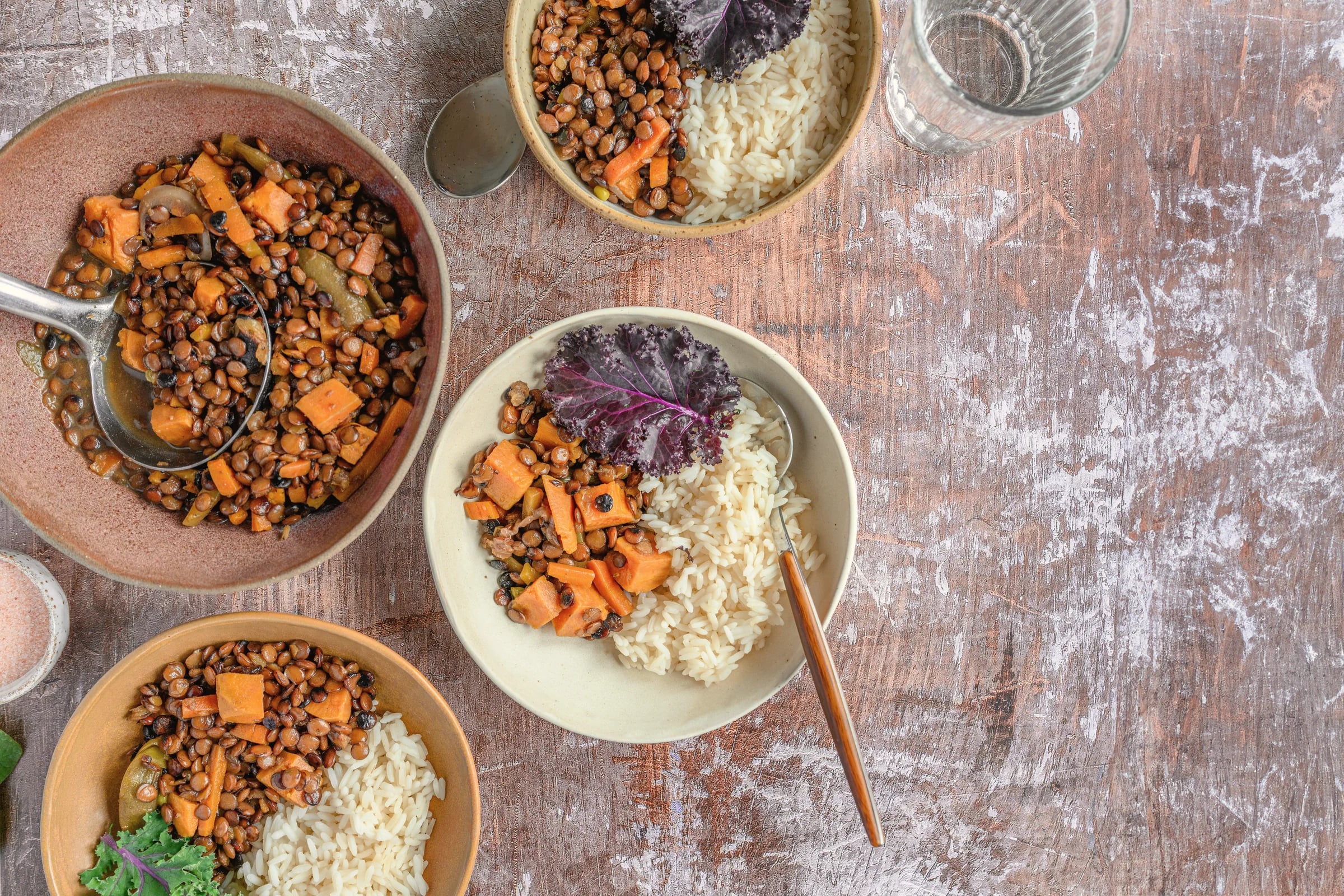
- Tinned or dried beans, lentils and chickpeas, which give you protein and fibre together.
- Porridge oats, barley, wholemeal bread, wholewheat pasta and brown rice.
- Potatoes with their skins on.
- Vegetables, fresh or frozen: broccoli, peas, spinach, carrots, onions, leeks, peppers and salad leaves.
- Apples, pears, bananas and frozen berries.
- Unsalted nuts and seeds.
What does a day of eating look like?
There's no official GLP-1 diet plan. Here is one example day, built so that each meal starts with vegetables or protein and the starchy food comes later. Swap in foods you like.
- For breakfast, two eggs with grilled tomatoes and spinach, then a slice of wholemeal toast. On other days, porridge made with milk and topped with Greek yoghurt, berries and a few nuts.
- For lunch, lentil and vegetable soup followed by a wholemeal roll, or a mixed salad with tinned mackerel and chickpeas.
- For a snack, an apple and a small handful of almonds, or a pot of natural yoghurt.
- For the evening meal, a side salad first, then chicken or tofu stir-fried with broccoli and peppers, with the brown rice eaten last.
What can food do, and what can't it?
Food can change the size of your GLP-1 response after a meal, modestly and for a few hours. It can't reproduce a GLP-1 medicine, and no authorised UK health claim says any food raises GLP-1. More fibre, oily fish and plenty of vegetables are already standard UK healthy eating advice. Meal order isn't part of NHS advice, but it costs nothing to try, so there is little downside whatever these habits do for GLP-1.
If you're taking a GLP-1 medicine, our guide to eating well on Mounjaro or Wegovy covers food alongside treatment. If you're weighing up supplements sold on the GLP-1 idea, our guide to GLP-1 supplements looks at what's in them and what the research shows.
Where Natura fits
Natura's Daily Fibre (psyllium husk, 1400 mg per serving) is in the Natura cabinet (coming soon). It doesn't replace the food habits above, and we don't claim it raises GLP-1.
Common questions
What foods increase GLP-1 naturally?
In studies, protein-rich foods gave the most consistent rise in post-meal GLP-1: eggs, dairy such as Greek yoghurt, fish, meat, tofu and pulses. Fermentable fibre from oats, beans and lentils may play a part through gut bacteria, though human results are mixed. Eating vegetables and protein before carbohydrate also raised GLP-1 in small trials. The effects were modest and lasted a few hours.
Is there a GLP-1 diet plan?
There's no official GLP-1 diet in the UK. The research points to a few habits rather than a fixed plan: protein at each meal, more fibre from whole foods, vegetables and protein before starchy carbohydrate, and fewer ultra-processed foods. Apart from meal order, these are standard NHS healthy eating advice. If you have diabetes or take medicines that affect blood glucose, talk to your diabetes team before changing how you eat.
Does eating vegetables before carbs really make a difference?
In small studies, yes. Researchers at Weill Cornell found that people with type 2 diabetes who ate vegetables and protein before carbohydrate had much smaller blood glucose rises and, in one study, a GLP-1 response about 40% larger. The studies were single meals in 11 to 16 people, mostly with diabetes or prediabetes, so effects on weight or long-term health aren't known.
Can food replace Wegovy or Mounjaro?
No. Food changes the size of your own GLP-1 response by tens of percent for a few hours after a meal. Semaglutide and tirzepatide are modified so the body can't break them down quickly, and they stay active for days, which is why they're taken weekly. If you're thinking about a GLP-1 medicine, speak to your GP or pharmacist.
Does fibre increase GLP-1?
Possibly, but not reliably in people. Gut bacteria ferment some fibres into short-chain fatty acids, which trigger GLP-1 release in lab and animal studies. In humans, a 2014 review of 26 prebiotic fibre trials found contradictory effects on GLP-1, though participants reported feeling fuller. Fibre is still worth increasing: UK adults average about 20 g a day against a 30 g target.
How long does GLP-1 last in the body?
About two minutes. An enzyme called DPP-4 breaks natural GLP-1 down almost as soon as it's released, so your gut makes it in short bursts around meals. GLP-1 medicines are built to resist that enzyme, which gives semaglutide a half-life of about seven days and tirzepatide about five.
Sources
- Holst (2007), Physiological Reviews: The physiology of glucagon-like peptide 1
- Min and colleagues (2025), Drug Design, Development and Therapy: pharmacokinetics of GLP-1 receptor agonists
- Belza and colleagues (2013), American Journal of Clinical Nutrition: appetite hormones and protein-induced satiety
- Jakubowicz and colleagues (2014), Diabetologia: whey protein pre-load in type 2 diabetes
- Tolhurst and colleagues (2012), Diabetes: short-chain fatty acids and GLP-1 secretion
- Chambers and colleagues (2015), Gut: targeted delivery of propionate to the human colon
- Kellow and colleagues (2014), British Journal of Nutrition: metabolic benefits of dietary prebiotics, systematic review
- Shukla and colleagues (2015), Diabetes Care: food order and post-meal glucose and insulin
- Shukla and colleagues (2017), BMJ Open Diabetes Research and Care: carbohydrate-last meal pattern
- Shukla and colleagues (2019), Diabetes, Obesity and Metabolism: food order in prediabetes
- Kuwata and colleagues (2016), Diabetologia: meal sequence, gastric emptying and incretins
- Hall and colleagues (2019), Cell Metabolism: ultra-processed diets and calorie intake
- NHS: How to get more fibre into your diet
- NHS: Fish and shellfish
This guide is general information, not medical advice. If you have a medical condition, take prescription medicines, or are pregnant or breastfeeding, speak to your GP or pharmacist before starting a supplement.
This product is a food supplement intended for use by adults aged 18 and over. It is not intended to diagnose, treat, cure, or prevent any disease. Consult a qualified healthcare professional before use, particularly if pregnant, breastfeeding, or taking medication. Individual results vary.
Further reading
GLP-1 and appetite
GLP-1 supplements, explained
A GLP-1 supplement is a food supplement sold on the idea of the gut hormone GLP-1, usually made from fibres, berberine, probiotics or plant extracts. Legitimate ones contain no GLP-1 medicine, and the research on their ingredients is small and short, with nothing showing they act like prescription semaglutide or tirzepatide.
7 min read
GLP-1 and appetite
Berberine in the UK: research and safety
Berberine is a plant alkaloid studied mainly for blood sugar and cholesterol in people with type 2 diabetes, with modest results from trials of limited quality. It often upsets the gut, interacts with several medicines, and in 2026 a draft opinion from Europe's food safety authority concluded that no safe intake could be set.
12 min read