Zinc deficiency: the symptoms and the best foods
Signs of low zinc include a weaker sense of taste and smell, wounds that heal slowly, hair loss, rough skin or rashes, tiredness, poor appetite and more infections. Each has other causes, so a GP blood test is the way to find out. Red meat, shellfish, cheese, seeds, nuts, pulses and wholegrains are the main food sources.
By The Natura teamUpdated 10 min read
What are the symptoms of zinc deficiency?
The commonest signs are a reduced or lost sense of taste and smell, wounds that heal slowly, hair loss, skin rashes or rough skin, and feeling very tired. That's the list an NHS hospital gives patients of its weight loss surgery service, who are at higher risk of low zinc. The same leaflet adds more frequent infections, loss of appetite, mouth ulcers, cracked lips, damaged nails, irregular periods and, in men, a lower sex drive. Severe deficiency can cause very bad diarrhoea, trouble seeing at night and a rash around the mouth and genitals.
None of these low zinc symptoms points only to zinc. Tiredness, hair loss and slow healing all have other causes, including illness, stress and low iron (our guide to the signs of low iron covers those). So the next step is a blood test rather than a supplement.
How do you know if your zinc is too low?
Ask your GP. BMJ Best Practice lists a blood test for serum or plasma zinc as the first test, and your GP can look at it alongside your symptoms, medicines and other results.
A single result needs care. A 2015 review of zinc biomarkers found that blood zinc is affected by your last meal, the time of day, inflammation and some medicines and hormones, so a low reading during an infection, for example, may not mean your body is short of zinc. The same review found too little evidence to recommend zinc in hair, urine or nails as a measure of zinc status, which rules out the hair mineral tests sold online.
Who is at risk of low zinc?
BMJ Best Practice lists people aged 65 and over, people with long-term gut or liver disease, chronic kidney disease or sickle cell disease, people with alcohol use disorder or HIV, and long-term vegetarians and vegans. Some medicines raise the risk too, including the diuretic hydrochlorothiazide, penicillamine and the tuberculosis drug ethambutol. A 2019 review of nutrients and hair loss adds anorexia, inflammatory bowel disease, weight loss surgery, cystic fibrosis, pregnancy and burns.
In the UK's National Diet and Nutrition Survey for 2019 to 2023, 13% of men and 7% of women aged 19 to 64 got less zinc from food than the lower reference nutrient intake, an amount that meets the needs of only a small minority of people. Among girls aged 11 to 18 it was 23%. A low intake in a survey isn't the same as a deficiency, but it shows who is more likely to fall short.
What blocks zinc absorption?
Phytate, a compound in wholegrains and pulses, binds zinc in the gut. That's why diets based mainly on cereals, and vegetarian and vegan diets, carry more risk even though those foods contain zinc. Iron and calcium supplements also reduce zinc absorption, according to the product information for a licensed zinc medicine, so take them at a different time of day.
Which foods have the most zinc?
Oysters, by a long way. The UK's official food composition data, McCance and Widdowson's Composition of Foods Integrated Dataset (CoFID, 2021), gives raw oysters 59 mg of zinc per 100 g, about seven times as much as stewed lean beef, and cooked white crab meat 7.2 mg per 100 g. For everyday foods, red meat leads, followed by dark poultry meat, sardines, seeds, nuts, cheese, pulses and wholegrains. Portions below are from the British Dietetic Association, apart from seeds, where we've used the same 30 g handful as for nuts.
| Food | Portion | Zinc per portion | Zinc per 100 g |
|---|---|---|---|
| Beef stewing steak, lean, stewed | 90 g | 7.7 mg | 8.6 mg |
| Beef mince, stewed | 90 g | 4.5 mg | 5.0 mg |
| Lamb leg, lean, roasted | 90 g | 4.1 mg | 4.6 mg |
| Pork mince, stewed | 90 g | 3.2 mg | 3.5 mg |
| Turkey dark meat, roasted | 90 g | 3.1 mg | 3.4 mg |
| Sardines, canned in brine, drained | 140 g | 3.1 mg | 2.2 mg |
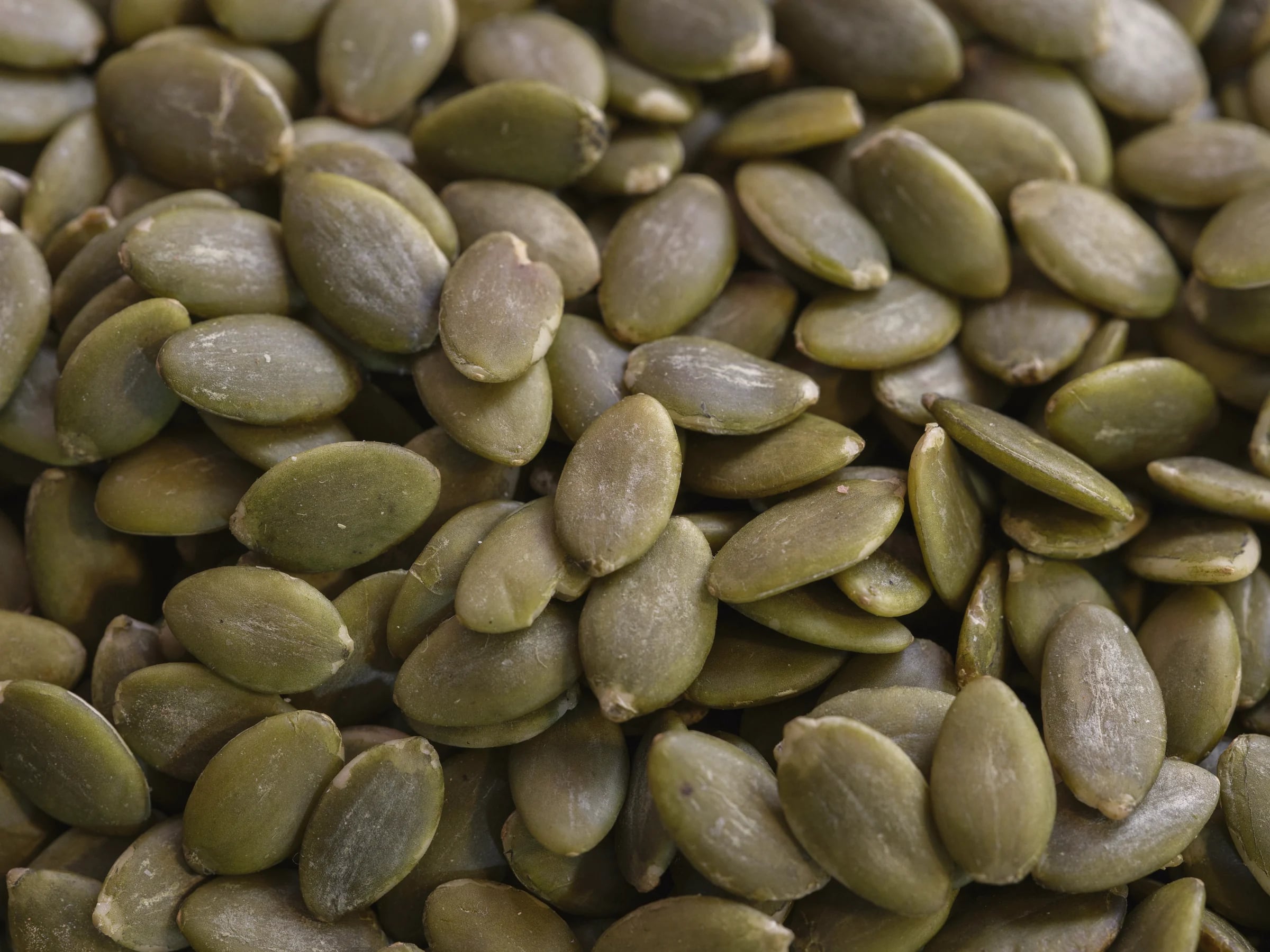
| Pumpkin seeds | 30 g | 2.0 mg | 6.6 mg |
| Cashew nuts, plain | 30 g | 1.8 mg | 5.9 mg |
| Wholewheat spaghetti, boiled | 150 g cooked | 1.8 mg | 1.2 mg |
| Chickpeas, canned, drained | 150 g (4 tablespoons) | 1.7 mg | 1.1 mg |
| Eggs, boiled | 2 medium (120 g) | 1.6 mg | 1.3 mg |
| Red lentils, boiled | 150 g | 1.5 mg | 1.0 mg |
| Cheddar cheese | 30 g | 1.2 mg | 4.1 mg |
| Plain whole milk yoghurt | 150 g pot | 1.1 mg | 0.7 mg |
| Brown rice, boiled | 150 g cooked | 1.1 mg | 0.7 mg |
| Porridge oats (dry weight) | 40 g | 0.9 mg | 2.3 mg |
| Semi-skimmed milk | 200 ml glass | 0.8 mg | 0.4 mg |
| Chicken breast, grilled, no skin | 90 g | 0.7 mg | 0.8 mg |
| Tofu, steamed | 100 g | 0.7 mg | 0.7 mg |
| Wholemeal bread | 1 medium slice (36 g) | 0.6 mg | 1.6 mg |
| White bread | 1 medium slice (36 g) | 0.3 mg | 0.7 mg |
The NHS says men need 9.5 mg of zinc a day and women 7 mg. One portion of stewed lean beef gets a man most of the way. On a vegetarian day, 40 g of porridge oats, a pot of yoghurt, a 30 g handful of pumpkin seeds, a portion of chickpeas and a plate of wholewheat spaghetti come to about 7.5 mg before anything else you eat. Dark chicken meat has nearly three times the zinc of breast, and wholemeal bread about twice as much as white.
Eating a lot of zinc-rich food isn't a safety concern. The UK Expert Group on Vitamins and Minerals found no evidence of harm from zinc in food; its upper level applies to supplements.
Is zinc good for acne?
Zinc is one of the options a pharmacist may suggest, but the evidence is modest, and in the largest head-to-head trial we found, an antibiotic worked twice as often. The NHS lists tablet supplements "such as zinc, niacinamide and vitamin A" among the things a pharmacist can recommend for acne.
A 2020 review that pooled studies of oral and topical zinc found that people with acne had lower blood zinc on average than people without it, and that zinc treatment reduced the number of inflamed spots. A 2001 trial gave 332 people with inflammatory acne either 30 mg of zinc (as gluconate) or the antibiotic minocycline every day for three months. Treatment counted as a success for 31% of the zinc group and 63% of the minocycline group. That 30 mg dose is above the NHS limit of 25 mg a day from supplements, so take a dose like that only on a pharmacist's or doctor's advice.
See a GP if pharmacy treatments haven't helped, or if your spots are deep, painful, widespread or leaving scars, because there are effective prescription treatments.
Is zinc good for hair?
If you're short of zinc, yes. Hair loss is a well-known sign of zinc deficiency, and a 2019 review of nutrients and hair loss notes that hair grows back once the deficiency is treated. Zinc contributes to the maintenance of normal hair.
Is zinc good for hair growth?
In people with normal zinc levels, there's no good evidence that extra zinc makes hair grow. The same review found the links between zinc levels and common types of hair loss inconsistent, and in a 1981 trial in people with alopecia areata, high-dose zinc gluconate for three months made no difference. Too much zinc brings its own risk, because it reduces copper absorption, which the NHS says can lead to anaemia. The NHS lists illness, stress, weight loss and iron deficiency among the causes of temporary hair loss, so see a GP if you're worried. Our guide to biotin, hair and nails covers the other nutrients sold for hair.
Is zinc good for you?
Yes, in the amounts your body needs. Zinc is an essential mineral: the NHS says it helps make new cells and enzymes, helps process carbohydrate, fat and protein from food, and helps wounds heal. Men need about 9.5 mg a day and women about 7 mg, and most people can get that from a varied diet.
More isn't better. The NHS advises no more than 25 mg a day from supplements unless a doctor says so, because high doses reduce how much copper you absorb, which can lead to anaemia and weaker bones.
Zinc tablets, gummies or food?
For most people, food is enough; the NHS says you should be able to get all the zinc you need from a varied, balanced diet. If you take a supplement, the NHS advises no more than 25 mg of zinc a day unless a doctor says otherwise, and you should count multivitamins and combination products too. Our guide to zinc supplements compares picolinate, bisglycinate and the other forms and explains when to take them.
Zinc tablets
Read the amount of zinc itself on the label, not the weight of the zinc salt. The licensed UK zinc medicine for a diagnosed deficiency shows the difference: each tablet provides 45 mg of zinc, which corresponds to 125 mg of zinc sulfate. Count only the zinc towards the NHS limit of 25 mg a day from supplements.
Zinc can upset the stomach. That medicine's product information lists stomach pain, indigestion and nausea among its side effects, and directs that it is taken after meals. It also says zinc can reduce how well tetracycline and quinolone antibiotics are absorbed, and that iron and calcium supplements can reduce zinc absorption, so ask a pharmacist how to space them.
Zinc gummies
Zinc gummies hold the same mineral in a chewable form, so the same limit of 25 mg a day from supplements applies. The Food Standards Agency (FSA) lists gummies among the forms food supplements come in, and advises not exceeding the recommended dose and taking high-dose supplements only if a GP or specialist advises it.
Check the zinc in each gummy and how many you're told to take, look at the sugar on the nutrition table, and add up any other products that contain zinc, such as multivitamins. If a supplement makes you feel unwell, the FSA says to stop taking it and contact a healthcare professional.
Where Natura fits
Daily Zinc, in the Natura cabinet (coming soon), is one capsule with 15 mg of zinc as bisglycinate, within the NHS limit for supplements. Zinc contributes to the maintenance of normal hair, skin and nails. A diagnosed deficiency needs your GP's advice on dose, and several Natura packs contain the same 15 mg, so check before you combine them. You'll find it with the single bottles.
Common questions
Is zinc good for you?
Yes, in the amounts you need. The NHS says zinc helps make new cells and enzymes, process carbohydrate, fat and protein and heal wounds. Men need about 9.5 mg a day and women 7 mg, usually met by food. Supplements shouldn't go above 25 mg a day unless a doctor advises it, because too much zinc reduces copper absorption.
What are the warning signs of zinc deficiency?
An NHS hospital leaflet lists a reduced or lost sense of taste and smell, wounds that heal slowly, hair loss, skin rashes or rough skin and feeling very tired as the common ones, along with loss of appetite and more infections. Severe deficiency can also cause diarrhoea and a rash around the mouth and genitals. All of these have other causes, so ask your GP about a blood test rather than starting high-dose zinc.
Which food has the most zinc?
Oysters, with 59 mg per 100 g in UK food composition data. Among everyday foods, red meat leads: a 90 g portion of stewed lean beef has about 7.7 mg and the same amount of beef mince about 4.5 mg. Crab, lamb, pork, dark poultry meat, sardines, pumpkin seeds, cashews and cheddar are also good sources.
Can vegans and vegetarians get enough zinc?
Yes, with some planning. Pumpkin seeds, cashews, chickpeas, lentils, wholewheat pasta, oats and tofu all contain zinc. These foods also contain phytate, which reduces how much zinc you absorb, so clinical references count long-term vegetarians and vegans as more likely to run low. Eat zinc-rich plant foods every day, and if you have symptoms, ask your GP about a blood test.
Are zinc gummies as good as zinc tablets?
Gummies and tablets contain the same mineral, so the zinc per dose and your total from all products matter more than the format. Keep supplements to 25 mg a day or less unless a doctor advises more, check the sugar on gummy labels, and don't exceed the recommended dose, as the Food Standards Agency advises.
Can low zinc cause hair loss?
Yes. Hair loss is a recognised sign of zinc deficiency, and a 2019 review notes that hair grows back once the deficiency is treated. Hair loss has many other causes, though, including stress, illness, weight loss and iron deficiency. If you're losing hair, see your GP, who can check zinc and iron levels instead of you guessing with supplements.
Should I take zinc if I think I'm deficient?
Get a blood test first. The symptoms of low zinc overlap with many other conditions, and treating a real deficiency often means doses above the NHS limit of 25 mg a day from supplements, which should be taken only on a doctor's advice and for as long as they say. Long-term high doses reduce copper absorption and can cause anaemia.
Sources
- Whittington Health NHS Trust, North London Obesity Surgery Service: Zinc leaflet (April 2026)
- BMJ Best Practice: Zinc deficiency (public summary)
- King et al. (2015), Biomarkers of Nutrition for Development (BOND): zinc review, Journal of Nutrition
- NHS: Vitamins and minerals, others (zinc)
- GOV.UK (OHID): National Diet and Nutrition Survey 2019 to 2023 (chapter 5 tables)
- GOV.UK (Public Health England): McCance and Widdowson's Composition of Foods Integrated Dataset (CoFID), 2021
- British Dietetic Association: Portion sizes food fact sheet
- Almohanna et al. (2019), The role of vitamins and minerals in hair loss: a review, Dermatology and Therapy
- emc: Solvazinc 45mg Effervescent Tablets (zinc sulfate), Summary of Product Characteristics
- Food Standards Agency (GOV.UK): Food supplements, guidance for consumers
- Expert Group on Vitamins and Minerals (2003), Safe Upper Levels for Vitamins and Minerals (archived)
- NHS: Acne, treatment
- Yee et al. (2020), Serum zinc levels and efficacy of zinc treatment in acne vulgaris: a systematic review and meta-analysis, Dermatologic Therapy
- Dreno et al. (2001), Multicenter randomized comparative double-blind controlled clinical trial of zinc gluconate versus minocycline in inflammatory acne vulgaris, Dermatology
- NHS: Hair loss
- GOV.UK: Great Britain nutrition and health claims (NHC) register
This guide is general information, not medical advice. If you have a medical condition, take prescription medicines, or are pregnant or breastfeeding, speak to your GP or pharmacist before starting a supplement.
This product is a food supplement intended for use by adults aged 18 and over. It is not intended to diagnose, treat, cure, or prevent any disease. Consult a qualified healthcare professional before use, particularly if pregnant, breastfeeding, or taking medication. Individual results vary.
Further reading
Vitamins and minerals
Signs of low iron: symptoms and tests
The commonest signs of low iron are tiredness, shortness of breath, palpitations, paler skin and headaches. Less common ones include tinnitus, craving ice, hair loss, restless legs and spoon-shaped nails. None of them is specific to iron, so the way to find out is a blood test from your GP.
12 min read

Vitamins and minerals
When to take vitamin D in a UK winter
Start in October. From October to early March, UK sunlight is too weak for your skin to make enough vitamin D, so the NHS says everyone should consider 10 micrograms (400 IU) a day until spring, and some people need it all year.
12 min read

Vitamins and minerals
Does magnesium help you sleep?
For most people, not by much. The trials are small and mixed, the clearest signal is in older adults and people who get little magnesium from food, and even there the effect is modest.
11 min read