Free tool
Caffeine calculator
Add up the caffeine in a normal day of coffee, tea, cola, energy drinks and chocolate, and see how it compares with UK and European limits. Every figure comes from the NHS, EFSA, a UK study or the drink's own UK label.
Figures checked See sources
- Who it is for
- What you drink and eat in a day
Free, with no sign-up. Nothing you enter is saved.
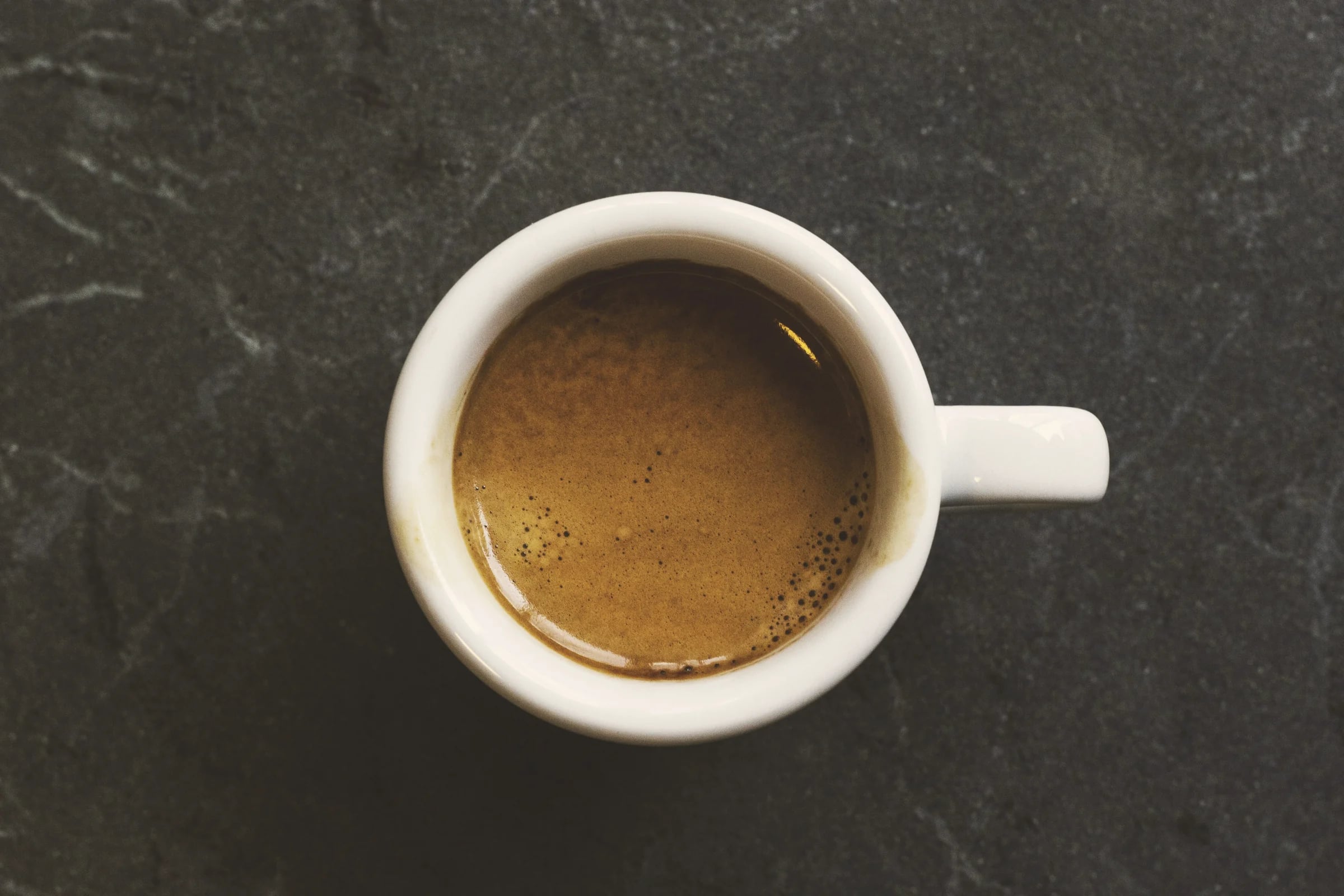
How much caffeine is too much?
For healthy adults, the European Food Safety Authority (EFSA) found that up to 400 mg a day, spread through the day, raises no safety concerns. It gave a separate figure for one sitting: single doses up to 200 mg, about 3 mg per kg of body weight. EFSA also noted that 100 mg can affect sleep in some adults, particularly close to bedtime.
Lower limits apply to some people:
- Pregnant: no more than 200 mg a day, the NHS says, because too much caffeine has been linked to a higher chance of miscarriage and stillbirth.
- Breastfeeding: no more than 200 mg a day. Caffeine reaches your baby through breast milk, and the NHS says a lot of it may make them restless and keep them awake.
- Children and teenagers: EFSA proposed 3 mg per kg of body weight a day, so about 150 mg for someone who weighs 50 kg. Pick "Under 18" in the calculator and add their weight to see it.
How much caffeine is in coffee?
It depends far more on where the coffee comes from than on what it's called. The NHS uses 100 mg for a cup of instant coffee. Coffee-shop drinks are often much stronger, because a medium cup can hold two or three espresso shots. Costa's own figures, for example, put a medium latte at 200 mg and a medium cappuccino or americano at 325 mg, more than EFSA's single-dose figure for adults in one cup.
Espresso itself varies a lot. When researchers at the University of Glasgow bought 20 espressos from Glasgow coffee shops in 2012, the caffeine in a single shot ranged from 51 mg to 322 mg. The calculator uses the middle value of 140 mg for a generic shop espresso, and each chain's own figure where it publishes one.
Decaf isn't completely caffeine free, but it's close: Nescafé gives 2 to 5 mg for a mug of its decaf instant, and Costa 2 mg for a decaf double espresso.
How much caffeine is in a cup of tea?
The NHS uses 75 mg for a cup of tea in its pregnancy advice and 55 mg for a mug of tea in its breastfeeding advice. Brewing time matters: Yorkshire Tea gives 48 mg for a 200 ml mug brewed for five minutes. Green tea is usually lower, at 38 mg a mug in the NHS breastfeeding figures.
How much caffeine is in energy drinks?
A 250 ml can of energy drink has about 80 mg, the same as a mug of instant coffee. Bigger cans add up fast. Red Bull gives 114 mg for its 355 ml can and 151 mg for 473 ml, and a 500 ml can of Monster has 160 mg. Two large cans in a day takes an adult most of the way to 400 mg before any tea or coffee.
In the UK, any drink except tea and coffee with more than 150 mg of caffeine per litre must carry the words "High caffeine content. Not recommended for children or pregnant or breast-feeding women" on the label.
How the calculator works
Tap + for each drink or bar you have in a normal day, pick who it's for, and it adds up the caffeine and compares the total with the matching limit. If one serving you've picked has more than 200 mg, it says so, because that is over EFSA's single-dose figure for adults. Where the NHS or EFSA gives a rough figure ("less than 25 mg" for a bar of dark chocolate), the calculator uses the upper figure.
Labels and recipes change, and coffee-shop drinks vary from cup to cup, so treat the total as a good estimate rather than a measurement. Caffeine also turns up in some cold and flu remedies and painkillers; check the packet if you take them.
Common questions
How much caffeine is in a cup of coffee?
About 100 mg in a cup of instant coffee, according to the NHS. Filter and coffee-shop coffee are often stronger: a medium latte at Costa has 200 mg and a medium americano 325 mg.
How much caffeine can I have when pregnant?
No more than 200 mg a day, the NHS says. Using the NHS figures, that is two cups of instant coffee (100 mg each), or a cup of instant coffee and a cup of tea (175 mg) with a little room to spare.
Is 400 mg of caffeine a day too much?
For healthy adults, EFSA found that up to 400 mg a day spread through the day raises no safety concerns. It does not apply in pregnancy or while breastfeeding, where the limit is 200 mg, or to children and teenagers.
How much caffeine is in a can of Monster?
Monster gives 160 mg for a 500 ml can of the original green Monster Energy, and 150 mg for a 500 ml can of Monster Ultra (White Monster).
Sources
- EFSA: Scientific opinion on the safety of caffeine (2015)
- NHS: Foods to avoid in pregnancy
- NHS: Breastfeeding and diet
- Crozier et al. Espresso coffees, caffeine and chlorogenic acid intake, Food and Function (2012)
- GOV.UK: Banning the sale of high-caffeine energy drinks to children (consultation, current labelling rules)
These tools give general information, not medical advice. If you have a medical condition, take prescription medicines, or are pregnant or breastfeeding, speak to your GP, pharmacist or a dietitian.
Further reading
Vitamins and minerals
Which supplements can you take together?
Most vitamins and minerals, vitamin C and zinc included, can be taken together. Keep iron about 2 hours away from calcium, tea, coffee and antacids, keep mineral supplements away from medicines such as levothyroxine, alendronic acid and some antibiotics, and add up your totals so two products don't take you past NHS limits.
15 min read
Sport and training
How to take creatine: how much and when
The standard dose is 3 to 5 g of creatine monohydrate a day, every day, at whatever time suits you. Loading with about 20 g a day for a week fills your muscles faster but isn't necessary, and the evidence on taking it before or after training is too thin to plan around.
16 min read
Hydration
Do you need electrolytes, or is water enough?
For most people on most days, water and normal meals cover your electrolytes, and UK adults already eat more salt than recommended. Electrolyte drinks earn their place in a few situations: long or hot sessions with heavy sweating, hours of work in serious heat, and (as pharmacy oral rehydration solution) sickness or diarrhoea.
16 min read
More free tools

Sleep calculator
Enter the time you need to wake up and get bedtimes that fit whole sleep cycles, or enter a bedtime and get wake-up times. Each option is checked against the 7 to 9 hours the NHS says most adults need.
Protein calculator
Enter your weight in kilograms or stone and see how much protein you need a day: the UK reference amount, and the higher ranges research suggests if you train regularly or are over 65.
Fibre calculator
Add up the fibre in a normal day of everyday UK foods and see how close you come to the 30 g a day the UK recommends for adults. Figures come from the UK's official food composition data, per typical portion.
Creatine calculator
Work out a daily creatine dose, or a loading dose scaled to your weight, and how much water it takes to dissolve. The numbers come from the International Society of Sports Nutrition's position stand and published solubility data.
Vitamin unit converter
Convert micrograms, milligrams and grams, or switch vitamin D, A and E between international units (IU) and mcg or mg. Each result is shown next to the NHS daily amounts for that vitamin.