Activated charcoal tablets: uses and risks
Activated charcoal binds other substances to its surface in the gut, so less of them is absorbed. As a food supplement in Great Britain it has one authorised claim, for reducing excessive wind after eating, which needs 1 g at least 30 minutes before a meal and 1 g shortly after; keep it two hours apart from medicines and never use it to treat poisoning yourself.
By The Natura teamUpdated 7 min read
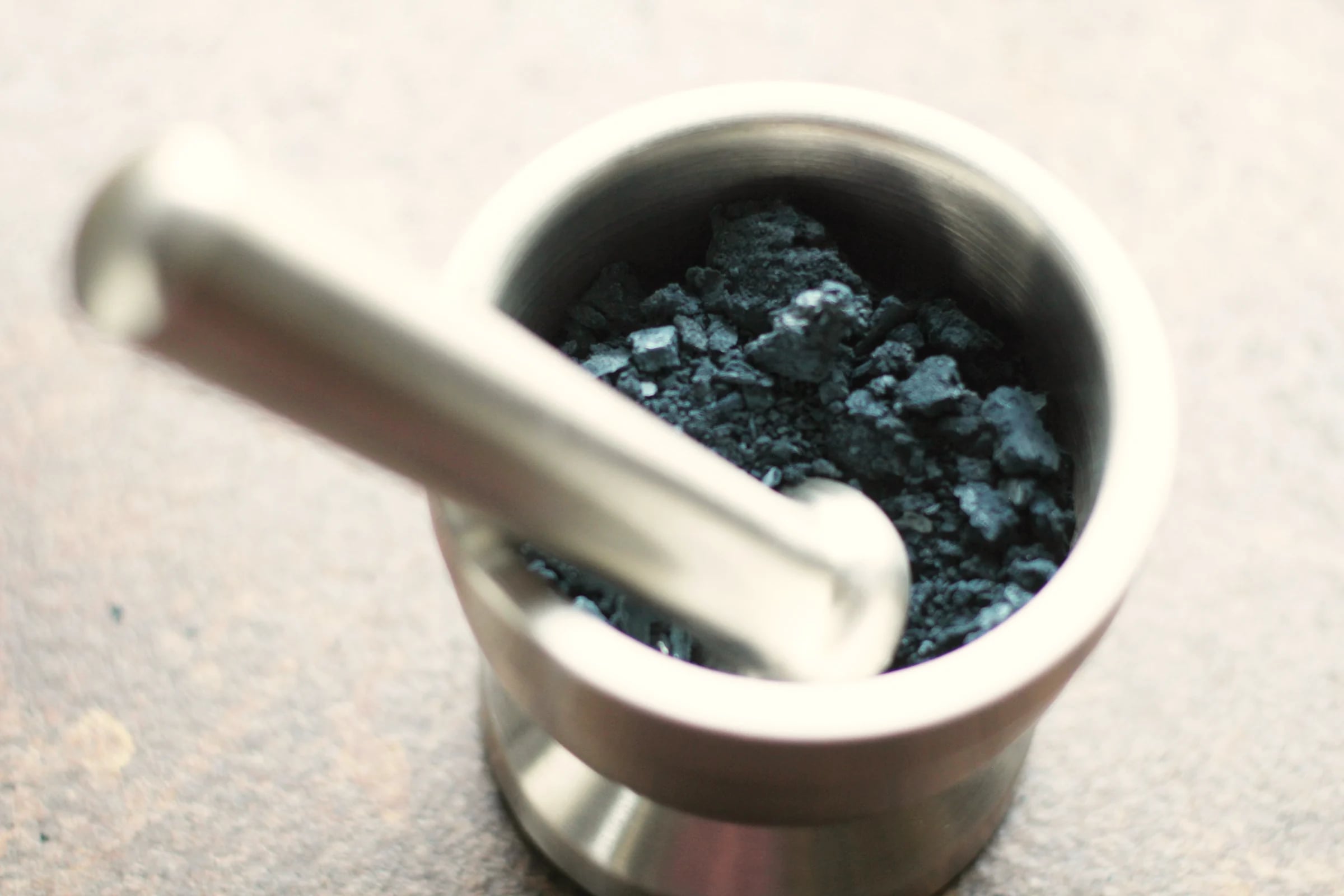
What do activated charcoal tablets do?
Activated charcoal tablets bind other substances to the charcoal's surface while it passes through your gut, so less of them gets into your body. As a food supplement in Great Britain, activated charcoal has a single authorised health claim: activated charcoal contributes to reducing excessive flatulence after eating. The claim only applies to a product with 1 g of activated charcoal per portion, and the label must tell you the effect is obtained with 1 g taken at least 30 minutes before the meal and 1 g shortly after it.
Hospitals use activated charcoal too, as a drink for some types of poisoning. That's a medical treatment, at far higher doses, and nothing you should attempt at home.
How does activated charcoal work?
It works by adsorption: molecules stick to the surface of the charcoal rather than soaking into it. A 2016 review in the British Journal of Clinical Pharmacology explains that medicinal charcoal is made by heating carbon-based materials such as coconut shells or peat, then "activating" it with gases at high temperature. This leaves an extremely porous material: some preparations have a surface area of up to 3,500 square metres per gram, and a large football pitch is about 10,000 square metres.
Drugs and other compounds cling to that surface through weak chemical forces. Organic compounds bind more readily than dissociated inorganic ones, and some things hardly bind at all, including metals such as iron and lithium. The charcoal carries what it has bound out of the body in your poo, which is why it turns poo black.
How to take activated charcoal for gas and bloating
For wind, follow the conditions of the authorised claim: 1 g at least 30 minutes before the meal and 1 g shortly after. There's no authorised claim for bloating. A claim that activated charcoal contributes to digestive comfort, assessed for reducing bloating, was not authorised in Great Britain, so a product can't be sold for it.
The research behind charcoal and wind is small and old, and it points both ways:
- A 1981 study found that charcoal prevented the usual rise in wind and breath hydrogen after a gas-producing meal.
- A 1985 double-blind study found no difference in breath hydrogen or wind after a baked bean meal with 4 g of charcoal.
- A 1986 trial of 99 people in the US and India found lower breath hydrogen and fewer symptoms of bloating and cramps on charcoal after a sugar that ferments in the gut.
- A 1999 study of five volunteers taking 0.52 g four times a day for a week found no fall in the sulphur gases that make wind smell.
The NHS suggests simpler steps first. Eat smaller meals more often, eat slowly with your mouth closed, and cut down on foods that cause wind, such as beans, cabbage, broccoli, onions and dried fruit, along with fizzy drinks, alcohol, chewing gum and smoking. Regular exercise and peppermint tea may help. A pharmacist can suggest a medicine such as simeticone. If you've recently added fibre, wind is a common early side effect; our guide to psyllium husk covers building up slowly.
See a GP if wind is affecting your life and self-help and pharmacy treatments haven't worked, or if you have a stomach ache or bloating that won't go away or keeps coming back, repeated constipation or diarrhoea, weight loss without trying, or blood in your poo.
Charcoal tablets, capsules, pills or powder: which format?
Charcoal tablets, capsules and pills (a common name for either) are the same material, so the dose matters more than the format. The authorised claim needs 1 g per portion, which can mean several capsules or tablets, so check how many milligrams of activated charcoal each one contains and how many make up a serving. Powder is messy, stains and is hard to measure accurately, so capsules or tablets make a 1 g dose easier. A sensible label states the amount per serving, gives directions that match the claim's conditions and tells you to keep it apart from medicines.
Can you buy activated charcoal in the UK?
Yes. In Great Britain activated charcoal is sold as a food supplement. The Food Standards Agency (FSA) says food supplements are regulated as food, not medicine, so they can't be sold with claims that they prevent, treat or cure a medical condition. The only authorised health claim for charcoal is the one for excessive wind after eating, and it comes with the conditions described above.
The FSA's advice for buying any supplement applies here. Check that any health claim appears on the Great Britain register, read the label's dose and warnings, and don't go over the recommended dose. Be careful with online marketplaces, where the seller and the product's origin may be unclear, and wary of counterfeits sold at a price far below everyone else's. Whatever you buy, keep the two-hour gap from medicines described below, and ask a pharmacist before starting if you take regular prescriptions.
Side effects and medicine spacing
Most of activated charcoal's side effects are digestive.
- It turns your poo black, which is expected.
- It can cause constipation, stomach discomfort and vomiting, according to the Singapore Ministry of Health's HealthHub medicine guide.
- Bowel blockages have been reported after charcoal, mostly at poisoning doses. People with a slow-moving gut, or who take opioid painkillers or anticholinergic medicines, may be at higher risk, so check with a pharmacist first if that applies to you.
- Stop taking it and see a doctor if you get severe stomach pain, blood in your poo or a fever, as HealthHub advises.
Because charcoal stops many medicines getting into the body, patient guidance from HealthHub and a Lexidrug leaflet published by Memorial Sloan Kettering Cancer Center advises leaving a two-hour gap between charcoal and other medicines. That applies to anything you take by mouth, including the contraceptive pill, and it's sensible to keep other supplements apart from it as well. Our guide to taking supplements together covers other timing questions.
Does activated charcoal whiten teeth or "detox" your body?
The evidence doesn't support either use. A 2017 review in the Journal of the American Dental Association found insufficient clinical and laboratory data to back the safety and whitening claims of charcoal toothpastes and powders, and some of the studies it found reported enamel wear or more tooth decay. A 2023 systematic review of laboratory studies concluded that charcoal toothpastes whiten less than other options and are more abrasive. HealthHub also notes that charcoal taken as a medicine can temporarily discolour teeth.
"Detox" products make similar promises without the evidence. A 2015 review of detox diets in the Journal of Human Nutrition and Dietetics found very little clinical evidence for them and no randomised controlled trials of commercial detox diets in people. Taking charcoal routinely to "clean out" your system also risks binding the medicines you do want absorbed.
Where Natura fits
Daily Charcoal, in the Natura cabinet (coming soon), gives 1,000 mg of activated charcoal per three capsules, taken as three capsules (1 g) at least 30 minutes before a meal and three capsules (1 g) shortly after. Activated charcoal contributes to reducing excessive flatulence after eating. It will be sold as a single bottle, and the two-hour medicine gap above applies to it.
Common questions
What happens if I take activated charcoal daily?
Expect black poo, and watch for constipation, which HealthHub lists among the common side effects. The bigger issue with daily use is timing: charcoal can stop medicines being absorbed, so every dose needs a two-hour gap from them. If you're relying on it at most meals for wind, see a GP, as the NHS advises when self-help and pharmacy treatments haven't worked.
Are charcoal tablets good for a bad stomach?
Activated charcoal has no authorised claim for an upset stomach, diarrhoea or bloating in Great Britain; a digestive comfort claim was assessed and rejected. Its only authorised claim is for excessive wind after eating. If you have stomach pain, bloating that keeps coming back, blood in your poo or weight loss without trying, see a GP.
Are charcoal tablets and charcoal capsules the same?
As far as the charcoal goes, yes. Tablets, capsules and pills (a general name for either) are all activated charcoal in a different shape. What differs is how many milligrams each one holds, so check how many make up the 1 g portion the authorised wind claim needs. The two-hour gap from medicines applies to every format.
Where can I buy activated charcoal tablets in the UK?
They're sold as food supplements. Choose a seller you trust, because the Food Standards Agency warns about counterfeits and unclear sellers on online marketplaces. Check the label gives grams per serving and directions that match the authorised wind claim, and leave two hours between charcoal and any medicine. Ask a pharmacist first if you take regular prescriptions.
Does activated charcoal stop the contraceptive pill working?
It could if you take them close together, because charcoal stops many medicines being absorbed. Patient guidance advises a two-hour gap between charcoal and other medicines, so keep your pill well away from any charcoal dose. If you've taken charcoal within two hours of your pill, ask a pharmacist whether you need extra contraception.
Can you use activated charcoal for food poisoning or after swallowing something harmful?
No. Never treat suspected poisoning yourself with charcoal tablets or powder. Call 999 or go to A&E if the person is unconscious, struggling to breathe or having a seizure, and call NHS 111 if you're not sure whether something swallowed is harmful. Hospitals decide whether a charcoal drink is right, at doses around 50 g, far above any supplement.
Is activated charcoal powder safe for teeth?
There isn't good evidence that it is. A 2017 dental review found insufficient data to support the safety or whitening claims of charcoal toothpastes and powders, and a 2023 review of laboratory studies found them more abrasive and less effective at whitening than other options. Ask your dentist about whitening instead.
Sources
- GOV.UK: Great Britain nutrition and health claims (NHC) register
- Juurlink (2016), British Journal of Clinical Pharmacology: activated charcoal for acute overdose, a reappraisal
- Food Standards Agency (GOV.UK): Food supplements, guidance for consumers
- NHS: Farting (flatulence)
- NHS: Bloating
- NHS: Poisoning
- HealthHub (Ministry of Health Singapore): Charcoal
- Memorial Sloan Kettering (Lexidrug patient leaflet): Charcoal, activated
- Hall et al. (1981), American Journal of Gastroenterology: activated charcoal and intestinal gas
- Potter et al. (1985), Gastroenterology: activated charcoal and gas formation
- Jain et al. (1986), American Journal of Gastroenterology: activated charcoal and intestinal gas, double-blind trial
- Suarez et al. (1999), American Journal of Gastroenterology: activated charcoal and colonic gases
- Brooks et al. (2017), Journal of the American Dental Association: charcoal and charcoal-based dentifrices
- Tomás et al. (2023), Annals of Anatomy: activated charcoal as a whitening agent, systematic review
- Klein and Kiat (2015), Journal of Human Nutrition and Dietetics: detox diets, a critical review
This guide is general information, not medical advice. If you have a medical condition, take prescription medicines, or are pregnant or breastfeeding, speak to your GP or pharmacist before starting a supplement.
This product is a food supplement intended for use by adults aged 18 and over. It is not intended to diagnose, treat, cure, or prevent any disease. Consult a qualified healthcare professional before use, particularly if pregnant, breastfeeding, or taking medication. Individual results vary.
Further reading

Vitamins and minerals
Which supplements can you take together?
Most vitamins and minerals, vitamin C and zinc included, can be taken together. Keep iron about 2 hours away from calcium, tea, coffee and antacids, keep mineral supplements away from medicines such as levothyroxine, alendronic acid and some antibiotics, and add up your totals so two products don't take you past NHS limits.
15 min read
Gut and fibre
Psyllium husk: what it is and how to take it
Psyllium husk is the seed coat of the Plantago ovata plant, a soluble fibre that soaks up water and turns to gel, sold in the UK both as a licensed laxative called ispaghula husk (Fybogel is one widely sold brand) and as a food supplement powder. Take it stirred into plenty of water, away from medicines and bedtime, and build up slowly.
11 min read
Gut and fibre
Does Greek yogurt have probiotics?
Usually, yes. All yogurt, Greek and Greek style included, is made by fermenting milk with live bacteria, and they stay alive unless the yogurt is heat-treated afterwards, so look for 'live cultures' on the pot. Whether those bacteria count as probiotics is a separate question.
9 min read