Beetroot capsules, powder and juice explained
What researchers study in beetroot is its nitrate, and in testing, beetroot capsules and tablets usually contained less nitrate per daily dose than 100 g of fresh beetroot. Sport studies use 310 to 560 mg of nitrate, usually from juice, so look for a nitrate figure on the label, and check with your GP first if you take blood pressure medicine or have had kidney stones.
By The Natura teamUpdated 10 min read
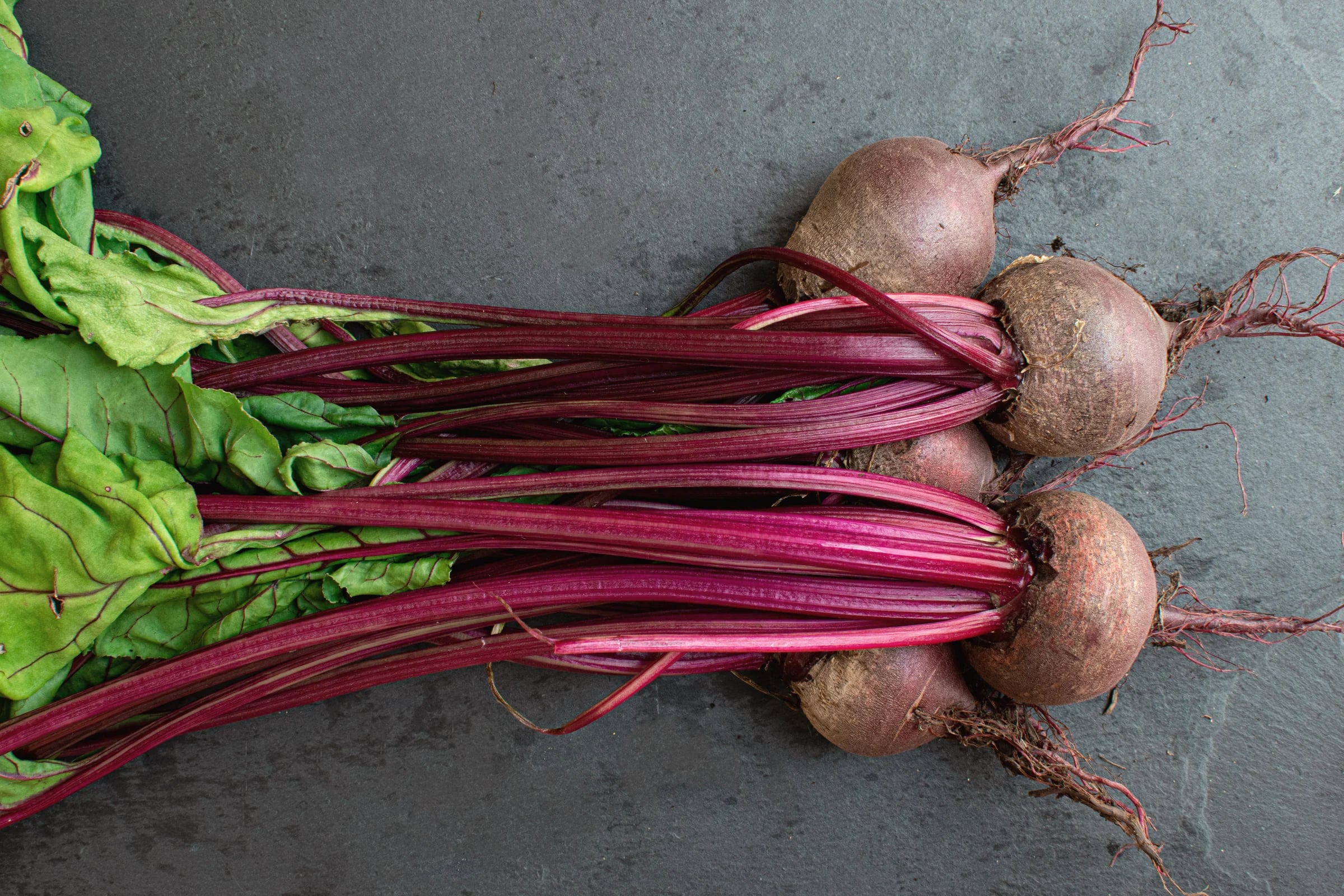
What's in a beetroot supplement: capsules, tablets and powder?
Beetroot capsules, tablets and powders are made from dried beetroot, sometimes concentrated into an extract. What researchers are interested in is the nitrate. Beetroot is one of the high-nitrate vegetables, along with spinach, rocket and celery. In the body, nitrate is converted to nitrite and then to nitric oxide, and that pathway is what sport researchers study.
How much nitrate a product contains is the part most labels leave out. The nitrate content of beetroot itself varies a lot. "Organic" on a label describes how the beetroot was grown and says nothing about its nitrate content.
How much nitrate is in a beetroot supplement?
Often not much, and you usually can't tell from the label. A 2023 study from the Medical University of Gdansk tested 50 beetroot supplements sold in Poland (tablets, capsules and powders) and compared them with fresh beetroot:
- every tablet and capsule product gave less nitrate per daily dose than a 100 g serving of fresh beetroot
- powders gave about the same as a serving of beetroot, and only three products gave more
- the highest dose was 169 mg of nitrate a day
- most products didn't declare their nitrate content, and 64% didn't meet all EU and Polish labelling requirements
Juices vary as well. When US researchers tested 24 beetroot juice products from 21 companies in 2019, nitrate content differed about 50-fold between the lowest and highest, and only five products reliably gave at least 5 mmol (310 mg) per serving.
| Form | What testing found | What to look for |
|---|---|---|
| Tablets | Less nitrate per daily dose than 100 g of fresh beetroot | Nitrate per daily dose, in mg or mmol |
| Capsules | Less nitrate per daily dose than 100 g of fresh beetroot | Nitrate per daily dose and how many capsules that takes |
| Powder | About the same as 100 g of beetroot on average, a few products more | Nitrate per scoop, plus any added sugar or flavouring |
| Juice and concentrated shots | Used in much of the sport research, but a 50-fold range between products | Nitrate per serving, ideally from batch testing |
Are beetroot shots and pure beetroot juice worth it?
Shots and juice are the forms with the most sport research behind them, but they vary just as much as capsules. Beetroot shots are small, concentrated bottles of juice. The British Heart Foundation (BHF) says shots have more nitrate per millilitre than ordinary juice and also more sugar. It puts a 150 ml portion of beetroot juice at about 10 g of sugar, and says that portion counts only once a day towards your 5 A Day.
A label that says pure or 100% beetroot juice describes the ingredients, not the nitrate, which the 2019 US tests found differed about 50-fold between products. So look for a nitrate figure per serving as well as the sugar. The BHF's blood pressure advice applies to juice and shots: if you take blood pressure medicine, check with your doctor before drinking them regularly.
What is beetroot extract?
Beetroot extract is beetroot that has been concentrated, but the word doesn't tell you how much nitrate is in a dose. The Gdansk study above didn't compare extracts with whole beetroot powder, and it noted that producers often don't standardise beetroot products. Across the capsules, tablets and powders it measured, nitrate per daily dose ranged from under 1 mg to 169 mg: tablets averaged about 5 mg, capsules about 6 mg and powders about 43 mg. A 100 g serving of fresh beetroot gave about 90 mg in the same study. Tablets also had less nitrate per gram than capsules or powders, which the authors suggested could be down to the other ingredients used to make tablets.
An extract on the label is a prompt to look for the nitrate figure, not a reassurance.
What's in beetroot gummies?
Nobody can tell you from the label, because few beetroot products state their nitrate content and we found no published testing of gummies. The Gdansk analysis covered capsules, tablets and powders, and only four of the supplements it tested declared a nitrate figure. Without a figure you can't compare a gummy with the 310 to 560 mg used in sport research, or with a 100 g serving of fresh beetroot, which that study measured at about 90 mg of nitrate for conventionally grown beetroot and about 54 mg for organic.
Gummies are also sweet, so check the sugar per serving. The Food Standards Agency (FSA) lists gummies among the forms food supplements come in, and advises not going over the recommended dose and checking that any health claim appears on the Great Britain register.
What does the research on beetroot and exercise show?
Dietary nitrate has better evidence in sport than most supplements, but only at doses many beetroot capsules don't come close to. The International Olympic Committee's 2018 consensus statement puts nitrate among a handful of supplements with good evidence, alongside caffeine, creatine and some buffering agents. What it reports:
- benefits generally appear within 2 to 3 hours of taking 5 to 9 mmol (310 to 560 mg) of nitrate, and taking it for more than 3 days also seems to help
- studies found improvements of 4% to 25% in time to exhaustion and 1% to 3% in time trials lasting under 40 minutes, and of 3% to 5% in high-intensity team-sport exercise lasting 12 to 40 minutes
- evidence is equivocal for efforts under 12 minutes, and gains are harder to find in highly trained athletes
- 1,041 mg did no better than 521 mg, and some people get stomach upsets, so it should be tried in training first
Responses also vary between individuals. On the 2023 test results, even the strongest supplement gave about half the lowest dose used in this research. Our guides to what to eat before a workout and how to take creatine cover the basics that matter more.
Can you take beetroot with blood pressure medicine?
Check with your doctor first. Beetroot juice has been studied for blood pressure: in a 2015 trial, 68 people with high blood pressure who drank 250 ml of beetroot juice daily for four weeks had lower readings than those given juice with the nitrate removed. The British Heart Foundation (BHF) says studies so far have been small, there isn't enough evidence for specific dietary recommendations, and beetroot is no magic bullet. Its advice: if you take blood pressure lowering medication, check with your doctor before drinking beetroot juice regularly, because blood pressure that drops too low can also affect your health. The same caution makes sense for concentrated supplements.
Is the nitrate in beetroot safe?
For most people eating vegetables, yes. In 2008 the European Food Safety Authority (EFSA) concluded that the benefits of eating vegetables and fruit outweigh any risk from the nitrate they contain. In 2017 it confirmed safe levels for added nitrates and nitrites: an acceptable daily intake of 3.7 mg of nitrate per kg of body weight (about 260 mg for a 70 kg adult) and 0.07 mg of nitrite per kg. EFSA noted that, counting all sources, people with medium to high intakes can go over the nitrate figure. The 310 to 560 mg used in sport research is above it for most adults.
Nitrite raises a separate question. EFSA links it to the formation of nitrosamines, some of which cause cancer, though it judged nitrite added to food at approved levels to be of low concern. Most nitrate in the diet comes from vegetables, and food additives supply under 5%. In the 2019 juice tests, nitrite was usually very low, but two products had unusually high levels, one more reason to choose a product that is tested batch by batch.
Why does beetroot turn your pee pink?
Eating beetroot can turn your pee pink or red, which is sometimes called beeturia. The NHS lists recently eating beetroot as one reason pee can look pink when it isn't blood. If you aren't sure the colour comes from beetroot, its advice is to see a GP if you think it's blood.
Who should avoid beetroot?
Beetroot is a normal food for most people, but some should take care with concentrated forms:
- People who form calcium oxalate kidney stones. North Bristol NHS Trust lists beetroot as high in oxalate (50 to 100 mg per serving) and advises cutting down rather than cutting out, ideally eating something rich in calcium at the same time. We found no data on the oxalate content of beetroot capsules or powders, so ask your kidney team, and the NHS says not to change your diet for kidney stones without speaking to your doctor.
- People taking blood pressure medicine, or who have low blood pressure, as above.
- Anyone being treated for a kidney or heart condition, who should ask before taking a concentrated supplement.
Is pickled beetroot good for you?
Pickled beetroot is still a vegetable and low in calories, but it has far less folate and more salt than fresh or boiled beetroot. According to the UK's food composition tables, 100 g of drained pickled beetroot has about 28 kcal, 5.6 g of sugars and 120 mg of sodium (0.3 g of salt), against 7.0 g of sugars and 66 mg of sodium in raw beetroot. That salt level is at the threshold for "low" on UK food labels, and the NHS limit is 6 g of salt a day. Folate drops to 2 µg per 100 g, from 150 µg in raw beetroot and 90 µg in boiled. Those pickled samples were analysed in 1989 and 1990, so check the label of the jar you buy, including the ingredients list for added sugar.
An 80 g portion of vegetables counts towards your 5 A Day, and the NHS suggests choosing tinned vegetables without added salt or sugar and eating pickles less often or in small amounts. Plain boiled beetroot keeps more folate and has less sodium, though it has more natural sugar (10.9 g per 100 g). We couldn't find reliable figures for how much nitrate survives pickling.
How to choose the best beetroot supplement
No beetroot supplement is best for everyone. If you want one for training, the useful questions are:
- Does the label give the nitrate per serving in mg or mmol? Research doses start at about 5 mmol (310 mg).
- Is it whole beetroot powder or an extract, and how many grams per serving?
- Does a powder or shot contain added sugar?
- Does it promise benefits for your blood pressure, heart or stamina? No such claim is authorised for beetroot or nitrate, so treat that as a warning sign.
- Is it independently tested? Competitive athletes should use a batch-tested product, because the IOC warns that some supplements contain substances banned in sport.
Where Natura fits
Daily Beetroot (3 g) is in the Natura cabinet (coming soon) as part of the Circulation Pack, with Daily Potassium (300 mg). The pack label says "Not a blood-pressure medicine", our product listing gives no nitrate figure, and we make no health claim for beetroot. Because the pack contains potassium, it isn't for anyone taking ramipril or other medicines that raise blood potassium (such as spironolactone, amiloride or triamterene), or anyone with kidney disease, unless their doctor agrees. The NHS says older people shouldn't take potassium supplements unless a doctor advises it.
Common questions
Is it safe to take beetroot capsules every day?
For most healthy adults, yes. Typical capsules give modest amounts of nitrate, often less than a serving of beetroot. Take care if you form calcium oxalate kidney stones, take blood pressure medicine or have kidney disease, and ask your GP first. Daily use may keep your pee pink, so get it checked by a GP if you think it might be blood.
What are the side effects of beetroot tablets?
The most noticeable is pink or red pee, which the NHS lists as a possible effect of eating beetroot rather than a sign of blood. Some people get stomach upsets from concentrated nitrate, which is why the International Olympic Committee advises trying it in training first. Beetroot is high in oxalate, which matters for people prone to calcium oxalate kidney stones, and it may add to the effect of blood pressure medicines.
When should you take beetroot before exercise?
In the research summarised by the International Olympic Committee, benefits generally appeared within 2 to 3 hours of a dose of 5 to 9 mmol (310 to 560 mg) of nitrate, and taking it daily for more than 3 days also seemed to help. Few capsules come close to that dose. Try any new supplement in training, never for the first time on race day.
Does beetroot juice count towards your 5 A Day?
Yes, but only once a day, however much you drink. The NHS counts 150 ml of fruit juice, vegetable juice or smoothie as a maximum of one portion. Whole beetroot counts as a portion at 80 g, and you can count it more than once. Beetroot capsules and powders don't count towards your 5 A Day.
Are beetroot shots better than capsules?
For nitrate, usually, but only if the shot gives a nitrate figure. Juice and shots were used in much of the sport research, while the tablets and capsules in the 2023 tests gave less nitrate per daily dose than 100 g of fresh beetroot. The 2019 juice tests found about a 50-fold range between products, and the BHF notes that shots also carry more sugar per millilitre.
Are beetroot gummies as good as beetroot juice?
There's no way to tell from most labels. We found no published testing of nitrate in beetroot gummies, and few beetroot products declare it at all: only four of the supplements in a 2023 analysis did. Look for nitrate per serving in mg, check the sugar, and treat a gummy that gives neither as a sweet rather than a source of nitrate.
Is organic beetroot powder better?
Organic tells you how the beetroot was farmed, not how much nitrate the powder contains. Tests of beetroot products have found large differences in nitrate from one product to the next, and even between batches of the same product. If nitrate is why you're buying it, choose a powder that states nitrate per serving, whether or not it's organic.
Sources
- Maughan RJ et al. IOC consensus statement: dietary supplements and the high-performance athlete. Br J Sports Med, 2018
- Brzezińska-Rojek J et al. Antioxidant capacity, nitrite and nitrate content in beetroot-based dietary supplements. Foods, 2023
- Gallardo EJ, Coggan AR. What's in your beet juice? Nitrate and nitrite content of beet juice products marketed to athletes. Int J Sport Nutr Exerc Metab, 2019
- British Heart Foundation: Can beetroot juice lower blood pressure? (May 2024)
- Kapil V et al. Dietary nitrate provides sustained blood pressure lowering in hypertensive patients. Hypertension, 2015
- EFSA: EFSA confirms existing safe levels for nitrites and nitrates added to food (2017)
- EFSA: Nitrate in vegetables, consumer risks balanced with the benefits of a diet high in vegetables and fruit (2008)
- NHS: Blood in urine
- North Bristol NHS Trust: Additional information if you form calcium oxalate stones
- NHS: Kidney stones
- GOV.UK: McCance and Widdowson's composition of foods integrated dataset (CoFID) 2021
- nidirect: Salt (labels and sodium)
- NHS: Salt in your diet
- NHS: 5 A Day, what counts?
- Food Standards Agency (GOV.UK): Food supplements, guidance for consumers
- NHS: Vitamins and minerals, others (potassium)
- NHS: Taking ramipril with other medicines and herbal supplements
This guide is general information, not medical advice. If you have a medical condition, take prescription medicines, or are pregnant or breastfeeding, speak to your GP or pharmacist before starting a supplement.
This product is a food supplement intended for use by adults aged 18 and over. It is not intended to diagnose, treat, cure, or prevent any disease. Consult a qualified healthcare professional before use, particularly if pregnant, breastfeeding, or taking medication. Individual results vary.
Further reading
Sport and training
What to eat before a workout
Eat a meal built on carbohydrate, with some protein, 3 to 4 hours before you train, or a lighter one 2 to 3 hours before. If you only have 30 to 60 minutes, keep it to a small snack that's mostly carbohydrate and low in fat and fibre, and start the session well hydrated.
7 min read
Sport and training
How to take creatine: how much and when
The standard dose is 3 to 5 g of creatine monohydrate a day, every day, at whatever time suits you. Loading with about 20 g a day for a week fills your muscles faster but isn't necessary, and the evidence on taking it before or after training is too thin to plan around.
16 min read

Sport and training
What is pre-workout, and is it safe?
Pre-workout is a powder or drink you take shortly before training, usually built around caffeine with beta-alanine, citrulline, creatine and taurine. In one analysis of best-sellers the average scoop held about 250 mg of caffeine, so the main risks are too much caffeine, stacking it with coffee or energy drinks, and products that contain undeclared or banned stimulants.
10 min read