What to eat before a workout
Eat a meal built on carbohydrate, with some protein, 3 to 4 hours before you train, or a lighter one 2 to 3 hours before. If you only have 30 to 60 minutes, keep it to a small snack that's mostly carbohydrate and low in fat and fibre, and start the session well hydrated.
By The Natura teamUpdated 7 min read
What is a good pre-workout meal?
A good pre-workout meal is mostly carbohydrate with some protein, and fairly low in fat and fibre if you're eating close to training. Carbohydrate is the main fuel for exercising muscles. It tops up glycogen, the store of fuel in your muscles and liver. The British Dietetic Association (BDA) suggests a regular eating pattern that includes a low-fat, high-carbohydrate snack or a light meal two to three hours before exercise.
How much it matters depends on the session. The International Society of Sports Nutrition (ISSN) says carbohydrate-rich meals or snacks in the hours before exercise are commonly recommended for harder sessions lasting more than about 90 minutes, and that eating first matters more if you've eaten little carbohydrate in the days before or haven't recovered from your last session. For a 30-minute gym visit, your usual meals will often cover it.
Protein belongs in the bigger meal. The ISSN says protein before or after training, with or without carbohydrate, may support gains in strength, and that the size and timing of your pre-exercise meal may affect how much protein you need afterwards. Eggs, yoghurt, milk, chicken, fish, beans and tofu all count.
How long before a workout should you eat?
Allow 3 to 4 hours after a full meal, 2 to 3 hours after a light one and 30 to 60 minutes after a small snack, whether you're heading to the gym, a run or a class. The closer you get to the start, the smaller and plainer the food should be.
| When | What to eat | UK examples |
|---|---|---|
| 3 to 4 hours before | A normal meal: carbohydrate, some protein, some vegetables | Chicken with rice and veg; a jacket potato with beans; pasta with a tomato and tuna sauce; porridge made with milk, with fruit |
| 2 to 3 hours before | A light meal, low in fat | Toast with scrambled egg; a bowl of cereal with milk and a banana; a bagel with a little cream cheese |
| 30 to 60 minutes before | A small snack, mostly carbohydrate | A banana; a currant teacake; two crumpets with jam; a handful of dried apricots; a glass of fruit juice |
| Under 15 minutes | Usually nothing, or something tiny | A few jelly sweets or a few mouthfuls of a sports drink, if you feel you need it |
For a sense of portion size, the BDA lists foods that each give about 50 g of carbohydrate. They include one bagel, two crumpets with jam, one large currant teacake, a large 60 g bowl of breakfast cereal, two medium-large bananas and 15 dried apricots.
What to eat 3 to 4 hours before training
Eat a normal meal. The ISSN cites a study in which a high-carbohydrate meal four hours before 105 minutes of cycling, after an overnight fast, raised the glycogen stored in both muscle and liver. This is the window for a proper plate: rice, pasta, potatoes or bread, a portion of protein, and vegetables. Fibre and fat matter less at this distance, though if you get stomach trouble when you train, keep them modest.
What should I eat 30 minutes before a workout?
Have something small that's mostly carbohydrate, like a banana, a teacake or a glass of juice. The ISSN describes an older worry that carbohydrate in the hour before exercise could make blood sugar dip once the session starts. It says a later study found the equivalent of a proper warm-up effectively cancels that dip, and that eating closer to the start (15 minutes before rather than 75) makes it less likely. In a double-blind, placebo-controlled trial it describes, a carbohydrate drink 30 minutes before hard cycling led to greater increases in exercise capacity.
Save fat, fibre and large amounts of protein for the earlier meal. The 2014 review of gut problems covered below says foods that slow stomach emptying appear more likely to cause symptoms.
Should you eat before a morning workout?
Not always. For a short or easy session, training before breakfast is fine for many people. For a longer one, eat something first. A 2018 systematic review and meta-analysis (Aird and colleagues) found that eating beforehand improved performance in prolonged aerobic exercise but not in shorter sessions.
If you can't face food early, a drink works. The ISSN notes that solid and liquid carbohydrate promote glycogen resynthesis about equally, which gives you flexibility before early starts. A glass of milk, a smoothie, juice or half a banana are all easy. If you train on an empty stomach, eat a proper meal afterwards.
High protein breakfast ideas before a morning workout
A high protein breakfast before training is one built around a protein food with some carbohydrate alongside it. The BDA lists portions that each give approximately 20 g of protein, and three suit breakfast: 3 medium eggs, half a 450 g pot of Greek yoghurt (225 g) and half a 300 g pot of low-fat cottage cheese (150 g). With 2 to 3 hours to spare, put eggs or cottage cheese on toast or a bagel, or stir the Greek yoghurt into porridge made with milk. With less time, keep it lighter, such as a small pot of yoghurt with a banana. Baked beans on toast give carbohydrate and protein too, but the British Nutrition Foundation notes that beans are high in fibre, so save them for a longer gap.
Can you have a protein shake before a workout?
Yes, you can have a protein shake before a workout, and it suits people who find solid food hard to face early on. The ISSN says protein before or after training, with or without carbohydrate, may support gains in strength, and that the size and timing of your pre-exercise meal may affect how much protein you need afterwards. It also suggests 20 to 40 g of protein every three to four hours across the day, so a shake can count towards that.
If you train within an hour, keep it small and plain: protein, fat and fibre have all been linked with stomach problems during exercise, and the NHS lists protein shakes among the foods that can contain lactose. Allow two to three hours for a bigger one. For a breakfast protein shake before a morning session, milk or yoghurt blended with a banana adds carbohydrate as well as protein. Try it in training first. Our protein calculator shows how a shake fits your daily total.
How much should you drink before exercise?
Start the session well hydrated, then drink to stay just ahead of thirst. That's the BDA's advice, and it helps you avoid drinking too much as well as too little. If you need to top up fluids beforehand, the American College of Sports Medicine suggests starting at least several hours before the activity, so your body can absorb the fluid and your urine output can return to normal.
The NHS recommends 6 to 8 cups or glasses of fluid a day, and more if you're physically active for long periods or in a hot environment. Water, lower-fat milk and lower-sugar drinks, including tea and coffee, all count. Our guide to how much water you need a day goes through the numbers.
For most sessions under an hour, water is usually all you need. The BDA says that if you're exercising hard for longer than an hour, carbohydrate during exercise can improve performance. If you sweat heavily or train in heat, see do you need electrolytes, or is water enough?
How do you avoid stomach problems when you exercise?
Keep the last thing you eat small and plain, and practise your pre-exercise food in training. Gut trouble is common in endurance sport: a 2014 review (de Oliveira and colleagues) says studies generally find 30 to 50% of athletes report it. Fibre, fat, protein and fructose have all been linked to a higher risk, and dehydration can make symptoms worse.
The review's practical tips, which the authors say rest on limited research, include:
- Avoid high-fibre foods in the day, or even the days, before a race.
- Avoid drinks sweetened only with fructose.
- Start well hydrated, and take carbohydrate with enough water.
- Avoid aspirin and anti-inflammatory painkillers such as ibuprofen before endurance events, as they can make the gut more permeable. If a doctor has prescribed aspirin or another medicine for you, don't stop it without talking to them.
The review also says practising your nutrition in training can reduce the risk of symptoms, so try any new food or drink on a training day first.
Do you need a pre-workout supplement?
Most people don't, because food does the fuelling. Many pre-workout products contain caffeine. The International Olympic Committee's 2018 consensus statement on supplements names caffeine among the few supplements with enough support for small performance gains, in research protocols taken about 60 minutes before exercise. No caffeine performance claim is authorised in Great Britain. Our guide what is pre-workout? covers what's in them and who should avoid them, and the caffeine calculator adds up your daily total. If you're pregnant, the NHS says to have no more than 200 mg of caffeine a day.
Where Natura fits
Daily Electrolytes, in the Natura cabinet (coming soon), has 1000 mg of sodium, 250 mg of potassium, 100 mg of magnesium and 50 mg of calcium per sachet, with no sugar. That makes it a salt and mineral drink, not a source of carbohydrate to fuel a session. Several of our sport packs, including the Football, Tennis and Cricket packs, pair it with a second product.
Common questions
What can I eat 10 minutes before the gym?
Usually nothing, if you've eaten in the last few hours. If you're hungry, keep it tiny and quick to digest: a few jelly sweets, half a banana or a few mouthfuls of juice or sports drink. Avoid anything fatty, high in fibre or large, which can sit heavily once you start. The meal you ate a few hours earlier does most of the fuelling.
Is a banana a good pre-workout snack?
Yes. A banana is mostly carbohydrate, low in fat and easy to carry, which suits a snack 30 to 60 minutes before training. The British Dietetic Association counts two medium-large bananas as about 50 g of carbohydrate, so one gives you roughly half that. If you're eating a couple of hours before, add yoghurt or a glass of milk for some protein.
Should I eat protein before a workout?
Some, in the meal a few hours before. The International Society of Sports Nutrition says protein before or after training may support gains in strength, and that the size and timing of your pre-exercise meal may affect how much you need afterwards. Close to the session, keep protein small, because protein, fat and fibre have all been linked with stomach problems during exercise.
Is it OK to have a protein shake before a workout?
Yes, for most healthy people. The International Society of Sports Nutrition says protein before or after training may support gains in strength. If you are training within an hour, keep the shake small, as protein, fat and fibre have all been linked with stomach problems during exercise. Allow two to three hours for a bigger one, and try it in training first.
What is a high protein breakfast before training?
One built around a protein food with some carbohydrate, such as scrambled eggs on toast, Greek yoghurt stirred into porridge, or cottage cheese on a bagel. The British Dietetic Association lists 3 medium eggs or half a 450 g pot of Greek yoghurt as portions that each give approximately 20 g of protein. Leave 2 to 3 hours before a hard session.
Is it bad to work out on an empty stomach?
For short sessions, it's usually fine for healthy people. A 2018 review found eating beforehand helped performance in prolonged aerobic exercise but not in shorter sessions. If you feel light-headed or flat when you train fasted, have a small snack or a glass of milk first. If you have diabetes and use insulin or similar medicines, ask your diabetes team.
Is porridge good before a workout?
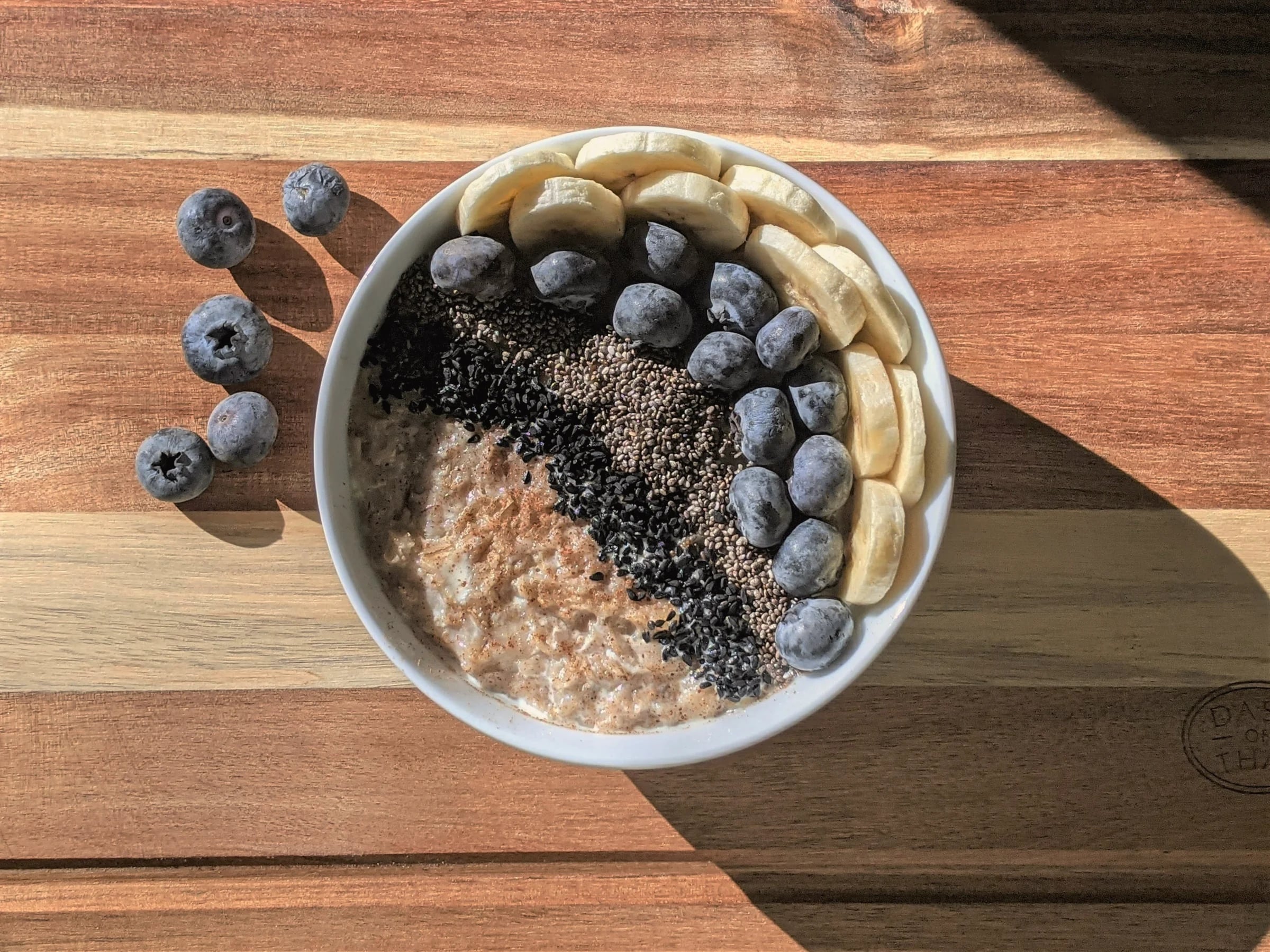
Yes, given time. Porridge is a filling source of carbohydrate, and made with milk it adds some protein, so it suits a meal 2 to 4 hours before training. Oats contain fibre, so a big bowl straight before a run may sit heavily. If you only have 30 to 60 minutes, a banana, a teacake or toast with jam is easier on the stomach.
Sources
- British Dietetic Association: Sport and exercise nutrition, food fact sheet
- Kerksick et al. (2017), J Int Soc Sports Nutr: ISSN position stand, nutrient timing
- NHS: Water, drinks and your health
- Sawka et al. (2007), Med Sci Sports Exerc: ACSM position stand, exercise and fluid replacement
- Aird et al. (2018), Scand J Med Sci Sports: fasted vs fed-state exercise, systematic review and meta-analysis
- de Oliveira et al. (2014), Sports Med: gastrointestinal complaints during exercise
- Maughan et al. (2018), Br J Sports Med: IOC consensus statement, dietary supplements and the high-performance athlete
- UCLH NHS Foundation Trust: Exercise and activity snacks (diabetes)
- NHS: Foods to avoid in pregnancy (caffeine)
- GOV.UK: Great Britain nutrition and health claims (NHC) register
- British Nutrition Foundation: Protein
- NHS: Lactose intolerance
This guide is general information, not medical advice. If you have a medical condition, take prescription medicines, or are pregnant or breastfeeding, speak to your GP or pharmacist before starting a supplement.
This product is a food supplement intended for use by adults aged 18 and over. It is not intended to diagnose, treat, cure, or prevent any disease. Consult a qualified healthcare professional before use, particularly if pregnant, breastfeeding, or taking medication. Individual results vary.
Further reading
Hydration
Do you need electrolytes, or is water enough?
For most people on most days, water and normal meals cover your electrolytes, and UK adults already eat more salt than recommended. Electrolyte drinks earn their place in a few situations: long or hot sessions with heavy sweating, hours of work in serious heat, and (as pharmacy oral rehydration solution) sickness or diarrhoea.
16 min read
Hydration
How much water should you drink a day?
The NHS suggests 6 to 8 cups or glasses of fluid a day, and water, milk, tea and coffee all count. The British Dietetic Association puts that at about 1.6 litres of drinks a day for women and 2 litres for men, with food supplying the rest of the 2 and 2.5 litres of total water that European reference values set.
7 min read

Sport and training
What is pre-workout, and is it safe?
Pre-workout is a powder or drink you take shortly before training, usually built around caffeine with beta-alanine, citrulline, creatine and taurine. In one analysis of best-sellers the average scoop held about 250 mg of caffeine, so the main risks are too much caffeine, stacking it with coffee or energy drinks, and products that contain undeclared or banned stimulants.
10 min read