Elderberry syrup: the research and how to make it
Elderberry syrup is a cooked, sweetened syrup of black elderberries. Small trials on colds and flu disagree with each other, no health claim for elderberry is authorised in the UK, and the berries have to be ripe, stripped of their stems and cooked, because raw elder can make you ill.
By The Natura teamUpdated 9 min read
What is elderberry syrup?
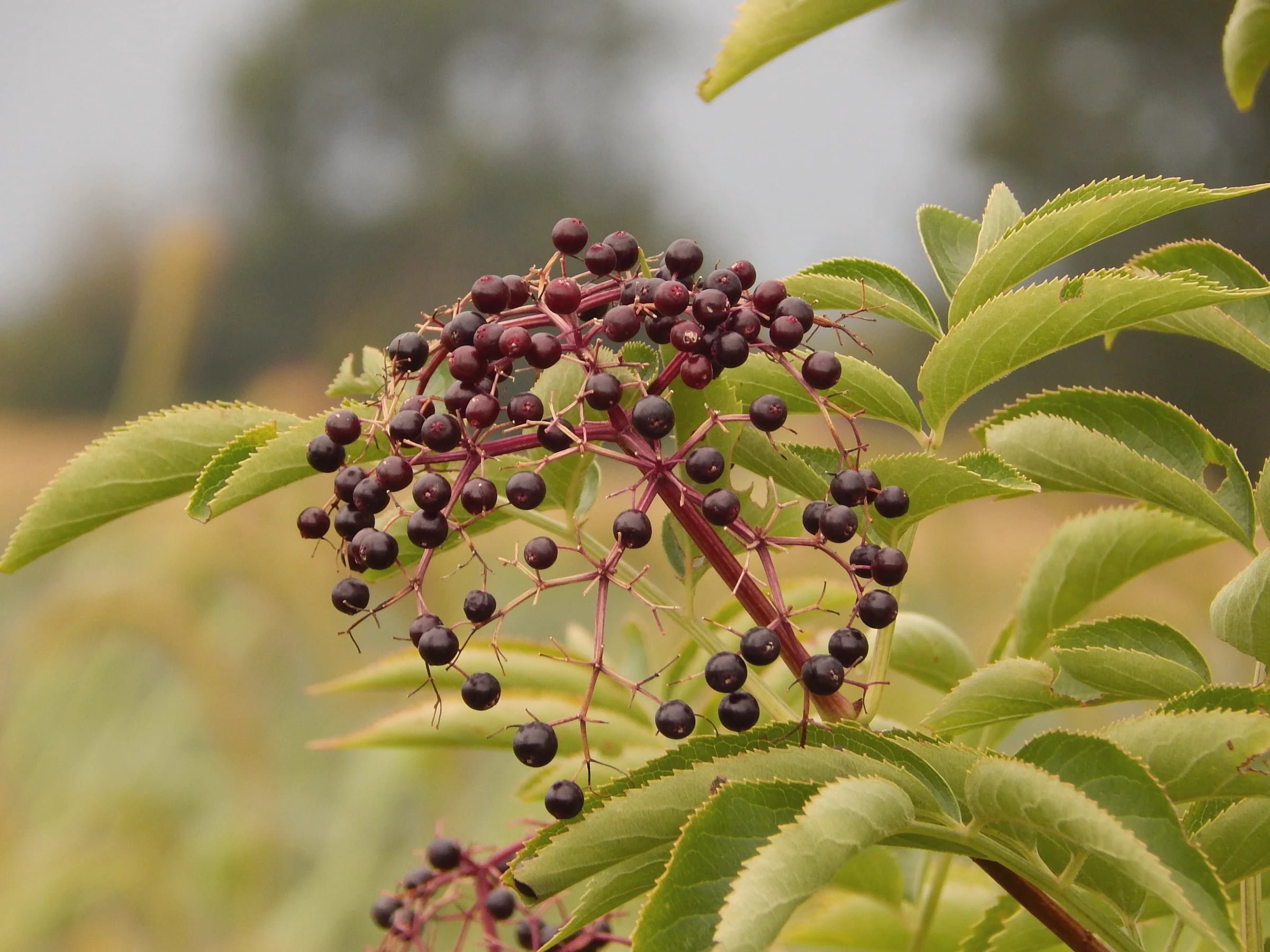
Elderberry syrup is a dark purple syrup made by simmering ripe elderberries in water, straining out the fruit and sweetening the juice with sugar or honey. Shop-bought versions often add spices, lemon, vitamin C or zinc, and the same berries are sold as gummies, capsules and teas. In the UK all of these are sold as foods or food supplements.
Elderberry products are usually made from black elder, Sambucus nigra, a small tree common in British hedgerows, with flat heads of white flowers in early summer. "Black elderberry" on a label means this species. Elderflower and elderberry come from the same tree at different times of year: cordials and elderflower tea are made from the flowers, syrups from the fruit. The research in this guide is about the fruit.
What are the benefits of elderberry syrup?
Elderberry has no authorised health claim in Great Britain, and only claims on the government's register may be used, so no syrup or capsule can tell you it supports your immune system or helps with colds. There is a small body of research on colds and flu, and its results disagree.
- A 2021 systematic review in BMC Complementary Medicine and Therapies, funded by the US National Institutes of Health, found five randomised trials with 946 people. It concluded that elderberry may not lower the chance of catching a cold and may shorten colds and flu, but it rated that evidence as low or very low certainty.
- A 2016 trial gave elderberry extract capsules or a placebo to 312 economy-class passengers flying from Australia. Colds were about as common in both groups (12 with elderberry, 17 with placebo, a difference that could be chance), but the elderberry group had fewer days of cold symptoms. The extract's maker funded the trial and supplied the capsules.
- A 2020 trial in 87 people with flu, recruited through three US emergency departments, found no difference: people taking elderberry extract took about as long to recover as those taking a placebo.
The US National Center for Complementary and Integrative Health (NCCIH) says a small number of studies suggest elderberry may relieve symptoms of colds and flu, and that there isn't enough information on any other use. It also says not to rely on elderberry to prevent or treat COVID-19.
| Study | Who took part | What it found | Funding |
|---|---|---|---|
| Wieland and colleagues, 2021 (review) | 5 trials, 946 people | May not prevent colds; any effect on how long colds or flu last is uncertain | US National Institutes of Health |
| Tiralongo and colleagues, 2016 (trial) | 312 air travellers | Similar number of colds; fewer days with cold symptoms on elderberry | The extract's maker |
| Macknin and colleagues, 2020 (trial) | 87 people with flu | No difference in recovery time | Hospital research committee and a family foundation |
Elderberries get their colour from anthocyanins, a group of purple plant pigments, and the amount varies with growing conditions. Slovenian researchers measured more than twice as much in berries picked on a hilltop as in berries from the foot of the same site.
Can you eat elderberries? Are they poisonous?
You can eat elderberries once they are ripe and cooked, but not raw. Oregon State University's food safety team says to always cook them: freezing and drying are fine for storing the berries, but frozen or dried berries still need cooking before you eat them. It also advises against making food from red elderberries, which may carry more of the toxin, especially in the seeds. The rule that matters is the same for the whole plant: strip off every stem and leaf, use only ripe berries, and cook.
Raw elderberries can make you ill, and so can unripe berries, leaves, stems and bark. They contain cyanogenic glycosides, natural compounds that can release cyanide, and NCCIH lists nausea, vomiting and severe diarrhoea among the effects. It also says cooking gets rid of the toxin.
One documented case comes from California in 1983. Juice was pressed from wild elderberries crushed together with their leaves and branches, and within 15 minutes of drinking it 11 people at a gathering had nausea and vomiting. Eight were flown to hospital by helicopter, and all of them recovered.
How much of these compounds you get depends on the part of the plant and how it's processed. The same Slovenian team found the lowest levels in the berries, with more in the leaves and flowers. In a second study they compared home-made products with raw berries: heating had cut the levels by 44% in juice, 80% in tea and 96% in liqueur and a fruit spread.
How do you make elderberry syrup safely?
Whatever recipe you use, these are the steps that matter for safety.
- Only pick from a tree you can identify with certainty, and only berries that are fully ripe and dark purple-black. Leave any green or red ones.
- Strip the berries from their stalks (running a fork down each cluster works) and remove every stem and leaf. Oregon State University's food safety team says these parts contain higher levels of the toxic compounds.
- Simmer the berries in water until they're soft, then strain and press out the juice.
- Sweeten it, bottle it and keep it in the fridge or freezer. The same Oregon State guidance says home-made syrup from European and American elder isn't safe to preserve in jars for the cupboard.
Most recipes use plenty of sugar or honey, and both count as free sugars. The NHS says adults should have no more than 30 g of free sugars a day, including the sugar in honey and syrups, so a few spoonfuls of syrup can use up a good share of that. If you have diabetes, count it like any other sugary food. Never give honey, or a syrup made with it, to a baby under one: the NHS warns that honey can occasionally cause infant botulism.
Elderberries in the UK: fresh, frozen, dried or as a supplement
Elderberries come fresh, frozen or dried, and as ready-made syrups, gummies, capsules and teas. The safety rule is the same for all of the whole-berry forms: they are eaten cooked, and Oregon State's team says dried berries should be rehydrated and cooked before use.
The ready-made products are sold as food supplements. The Food Standards Agency (FSA) says supplements are regulated as food, not medicine, so they can't be sold with claims that they prevent, treat or cure a medical condition, and it advises checking that any health claim appears on the Great Britain register. As explained above, no authorised claim covers elderberry. Follow the dose on the label and don't go over it.
Are elderberry gummies worth taking?
There's no evidence specific to gummies, so they carry the same uncertainty as other elderberry products. None of the trials in the 2021 systematic review used gummies: they tested syrups, capsules, lozenges and one hot drink that combined echinacea and elderberry. The review rated the certainty of the evidence moderate to very low overall, and mostly low or very low.
Gummies also bring sugar, so check the nutrition table, and look at anything extra such as vitamin C or zinc that adds to your daily total. The FSA lists gummies among the forms supplements come in, advises not exceeding the recommended dose, and says to check with a GP or healthcare professional first if you are pregnant, breastfeeding, have a medical condition or take regular medicines.
Elderberry syrup in the UK: what should you look for?
Some echinacea and lemon balm products are registered with the MHRA as traditional herbal medicines (our echinacea guide explains what that means), but we found no elderberry fruit product on the MHRA's medicines database. Elderberry products are sold under food law instead, which allows only the health claims on the GB register, and none of those covers elderberry.
When you compare products, the label tells you most of what you need:
- how much elderberry is in a dose, and in what form (juice, concentrate or extract)
- how much sugar is in a dose, from the nutrition table
- anything added, such as vitamin C, zinc or vitamin D, which counts towards your daily total if you take other supplements; our guide to taking supplements together covers overlaps
- the maximum daily dose, which you shouldn't go over
How do you make elderberry tea?
Elderberry tea is usually made from dried elderberries, often blended with hibiscus, apple or elderflower. If you make it from loose dried berries, buy berries sold as food and simmer them in water rather than just pouring water over them, because cooking is what deals with the toxic compounds. Then strain it. The Slovenian study above found 80% less of those compounds in elderberry tea than in raw berries.
Elderflower tea is a different drink, made from the flowers, and the research on colds and flu doesn't apply to it.
Who should avoid elderberry?
- If you're pregnant or breastfeeding, check with your midwife, GP or pharmacist first. NCCIH says little is known about whether elderberry is safe for health purposes at these times.
- If you take regular medicines, ask a pharmacist before you start. NCCIH advises talking to a health professional before using elderberry or any herbal product, because some herbs and medicines interact.
- Syrups sold for children usually contain sugar, and anything made with honey is unsuitable for babies under one. Natura's products are for adults only.
- If you forage and aren't completely sure a tree is elder, leave it alone.
If cold or flu symptoms are severe or aren't getting better, speak to a pharmacist or your GP.
Where Natura fits
Daily Elderberry, in the Natura cabinet (coming soon), is one capsule of 300 mg elderberry fruit extract, and it's also one of five bottles in the Herbs Pack (The Fifty), alongside ginkgo, milk thistle, ginseng and cranberry. Elderberry has no authorised health claim, so we don't say it supports your immune system or does anything for colds or flu, and the research above isn't evidence for our capsule. If you're pregnant, breastfeeding or take regular medicines, ask a pharmacist before taking it or the pack.
Common questions
Who should not drink elderberry syrup?
Check with a GP, midwife or pharmacist first if you're pregnant, breastfeeding or take regular medicines, because little is known about elderberry's safety in pregnancy and some herbs interact with medicines. Syrups made with honey aren't suitable for babies under one, and people with diabetes should count the sugar. Nobody should drink home-made syrup or juice made from raw, unripe or unstripped berries.
Are there side effects of elderberry?
Raw or unripe berries, leaves and stems can cause nausea, vomiting and diarrhoea, which is why elderberries have to be cooked. Syrups and extracts made from cooked fruit haven't been linked to serious side effects in trials, but the trials were small and short, and a 2021 systematic review called the evidence on harms uncertain. If you feel unwell after taking it, stop and speak to a pharmacist.
How often can you take elderberry syrup?
There's no official daily amount, so follow the dose on the label and don't go over it. Trials have used very different products and schedules, from daily capsules around a long-haul flight to 15 ml of extract four times a day for five days, so they can't tell you how much a syrup should contain. Count the sugar as well, because several spoonfuls a day add up.
Can you eat elderberries?
Yes, but only ripe and cooked, never raw. Raw and unripe elderberries contain cyanogenic glycosides, compounds that can release cyanide, and eating them or drinking raw juice can cause nausea, vomiting and diarrhoea. The leaves, stems and bark contain them too. Cooking removes the risk, so use only ripe berries, strip off every stem and cook them, for example into a syrup, jam or pie filling.
Are elderberry gummies as good as syrup?
Nobody has compared them. The trials of elderberry in colds and flu used syrups, capsules and lozenges, not gummies, and a 2021 review rated the evidence mostly low or very low certainty. Gummies also contain sugar, so check the label for sugar per serving and the maximum daily dose.
Is elderberry the same as elderflower?
They come from the same tree, the black elder, but they're different parts of it. Elderflowers are the creamy white flowers used in cordials and teas, and elderberries are the dark purple fruit that ripens later in the year. The two aren't interchangeable, and the trials on colds and flu described in this guide used elderberry, not elderflower.
Sources
- NCCIH (US National Institutes of Health): Elderberry, usefulness and safety (updated November 2024)
- Wieland et al. (2021), BMC Complementary Medicine and Therapies: elderberry for viral respiratory illness, systematic review
- Tiralongo et al. (2016), Nutrients: elderberry in air travellers, randomised trial
- Macknin et al. (2020), Journal of General Internal Medicine: elderberry extract for influenza, randomised trial
- CDC, Morbidity and Mortality Weekly Report: Poisoning from elderberry juice, California
- Senica et al. (2017), Journal of the Science of Food and Agriculture: phenolics and cyanogenic glycosides in elder leaves, flowers and berries
- Senica et al. (2016), LWT Food Science and Technology: processed elderberry products, beneficial or harmful
- Oregon State University Extension (November 2024): Play it safe when preserving elderberries
- Food Standards Agency (GOV.UK): Food supplements, guidance for consumers
- NHS: Sugar, the facts
- NHS: Foods to avoid giving babies and young children
- GOV.UK: Great Britain nutrition and health claims (NHC) register
This guide is general information, not medical advice. If you have a medical condition, take prescription medicines, or are pregnant or breastfeeding, speak to your GP or pharmacist before starting a supplement.
This product is a food supplement intended for use by adults aged 18 and over. It is not intended to diagnose, treat, cure, or prevent any disease. Consult a qualified healthcare professional before use, particularly if pregnant, breastfeeding, or taking medication. Individual results vary.
Further reading
Vitamins and minerals
Which supplements can you take together?
Most vitamins and minerals, vitamin C and zinc included, can be taken together. Keep iron about 2 hours away from calcium, tea, coffee and antacids, keep mineral supplements away from medicines such as levothyroxine, alendronic acid and some antibiotics, and add up your totals so two products don't take you past NHS limits.
15 min read
Herbs and botanicals
Spirulina and blue spirulina explained
Blue spirulina is a colour extract: the blue pigment phycocyanin, pulled out of spirulina and left with few of its other nutrients. Spirulina itself is a dried cyanobacterium sold as green powder or tablets; it has no authorised health claim in Great Britain, the trials are small, and the safety questions are contamination, B12 and a few medical conditions.
9 min read