Spirulina and blue spirulina explained
Blue spirulina is a colour extract: the blue pigment phycocyanin, pulled out of spirulina and left with few of its other nutrients. Spirulina itself is a dried cyanobacterium sold as green powder or tablets; it has no authorised health claim in Great Britain, the trials are small, and the safety questions are contamination, B12 and a few medical conditions.
By The Natura teamUpdated 9 min read
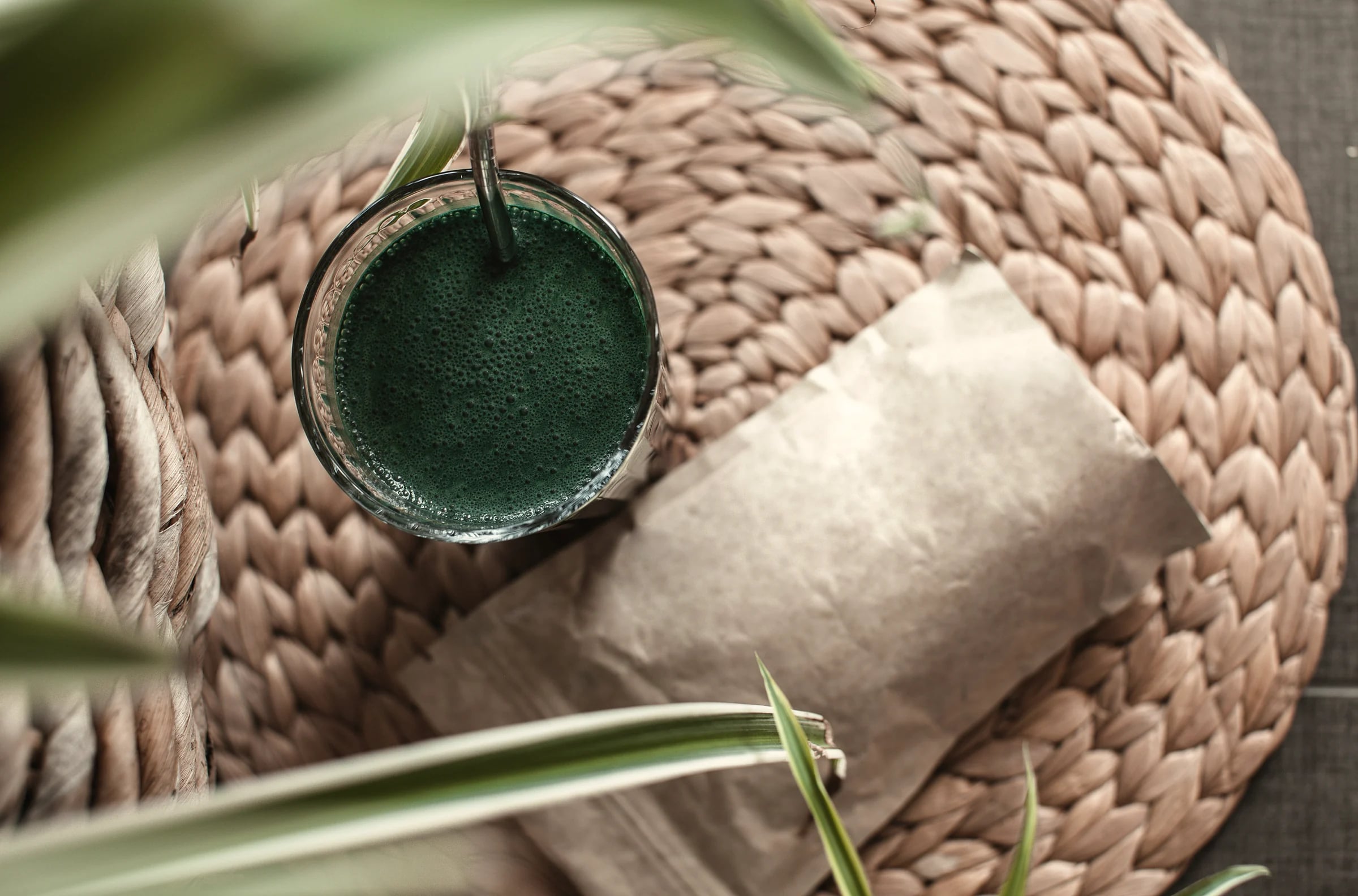
What is blue spirulina?
Blue spirulina, which is sold as blue spirulina powder, is a food colour. It's an extract of spirulina that contains mostly phycocyanin, the blue pigment, and few of spirulina's other nutrients, as McGill University's Office for Science and Society puts it. That's why it can turn a smoothie, latte or icing bright blue without the green colour or much of the taste of whole spirulina.
Phycocyanin is fragile. A 2024 review found that spirulina phycocyanin is most stable below 45 °C and at a slightly acidic pH of 5.5 to 6.0, and that heat and light limit its use. Blue spirulina keeps its colour best in cold drinks, yoghurt and uncooked toppings, and fades when baked or stirred into anything hot.
Blue spirulina has no authorised health claim in Great Britain. Most of the human research on spirulina used the whole green product, so it tells you little about the blue extract.
What is spirulina?
Spirulina is a dried cyanobacterium, the group once called blue-green algae, sold as a dark green powder or pressed into tablets. The commercial strains have been renamed more than once: they were classed as Arthrospira and are now placed in a genus called Limnospira, which is why labels often say Arthrospira platensis.
About 60% of spirulina's dry weight is protein, and it also contains carotenoids such as beta-carotene, lutein and zeaxanthin, plus B vitamins, vitamin E and iron. Supplement servings are small, though: 1 g of spirulina gives you about 0.6 g of protein.
Spirulina health benefits: what the research shows
Spirulina has no authorised health claim in Great Britain, so a product can tell you what it contains but not what it does for you. What follows is research, not a claim for any product, and most of it covers blood fats and blood pressure.
- A 2023 meta-analysis pooled 20 small trials with 1,076 people and found lower LDL cholesterol, total cholesterol and triglycerides, and slightly higher HDL cholesterol, with spirulina.
- A 2025 meta-analysis of 9 spirulina trials (101 to 299 people per outcome, 8 to 16 weeks, 200 mg to 8 g a day) found no significant effect on blood fats and a small fall in diastolic blood pressure that the authors called of uncertain clinical significance. Two of its authors were employed by a commercial company, Sea4Us.
The two reviews disagree on cholesterol, and the trials in both were small. The same research applies whether you take powder or tablets, since tablets are pressed powder. If your cholesterol or blood pressure is raised, talk to your GP, and don't swap a prescribed medicine for a supplement.
What are the dangers of spirulina?
Spirulina grown under controlled conditions is generally well tolerated, according to LactMed, a US National Institutes of Health database. A 2011 safety review by an expert committee of the US Pharmacopeia, which looked at 31 adverse event reports, gave Spirulina platensis and Spirulina maxima its Class A safety rating. The risks come from contamination, and from a few medical conditions and medicines.
Microcystins and heavy metals
Some spirulina products can be contaminated with Microcystis aeruginosa, a different cyanobacterium that makes liver toxins called microcystins, and products grown in uncontrolled conditions can contain heavy metals. Market surveys put the risk mainly elsewhere. In Italy in 2012, samples containing only spirulina were free of contamination, while products made from Aphanizomenon flos-aquae (AFA), another blue-green alga, had microcystins at highly variable levels. A German survey the same year found microcystins only in AFA products, not in spirulina or chlorella. A 2017 Canadian analysis of 18 products containing spirulina or AFA found cyanotoxins above tolerable daily intake values in some of them.
Serious harm looks rare. The US LiverTox database says liver injury from spirulina must be very rare if it occurs at all, and that the few case reports haven't separated spirulina from contaminants or other ingredients. Still, buy from a seller who can show batch tests for microcystins and heavy metals, and avoid blends that contain AFA.
Who should avoid spirulina
- People with phenylketonuria (PKU). As a concentrated protein, spirulina contains the amino acid phenylalanine, and Harvard Health Publishing advises people with PKU to avoid it.
- People with an autoimmune condition. A 2004 case series described three people whose autoimmune disease began or flared after immune-stimulating supplements: echinacea or spirulina in two people with pemphigus vulgaris, and a spirulina and AFA blend in one person with dermatomyositis. The authors suggested such supplements may worsen autoimmune disease. If you take medicines that damp down the immune system, for example after a transplant, ask your specialist first.
- People on anticoagulants. Harvard Health notes that spirulina may interfere with blood clotting, so check with a pharmacist if you take warfarin or a similar medicine.
- Pregnant or breastfeeding women. LactMed found no data on the safety of spirulina while breastfeeding, and there's little research in pregnancy, so speak to your midwife, GP or pharmacist first.
The minor side effects LactMed lists include diarrhoea, bloating, an upset stomach, wind, headache, muscle pain, flushing and sweating.
Spirulina and vitamin B12
Spirulina labels can show a lot of vitamin B12, but most of it is a form your body can't use. A 1999 analysis of spirulina tablets found that most of what standard tests count as B12 was inactive analogues, and that the main B12-like compound was pseudovitamin B12, which is inactive in humans. A 2014 review concluded that edible cyanobacteria are not suitable as a source of B12 for vegetarians. If you're vegan, rely on fortified foods or a B12 supplement; our guide to B12 deficiency covers the signs and who is at risk.
Spirulina and chlorella: what's the difference?
They're often sold together, but they're different organisms and the evidence differs too.
| Spirulina | Chlorella | |
|---|---|---|
| What it is | A cyanobacterium (Arthrospira, now Limnospira) | A single-celled green alga |
| Vitamin B12 | Mostly inactive pseudovitamin B12 | Some products contain active B12, but amounts range from none to several hundred µg per 100 g |
| Trial findings on heart risk factors (2025 meta-analysis) | 9 trials: small fall in diastolic blood pressure, no significant effect on blood fats | 12 trials: no effect on blood pressure or blood fats |
| Doses used in those trials | 200 mg to 8 g a day | 1.5 to 8 g a day |
| Microcystins in the 2012 German survey | None found | None found |
| Heavy metals | Possible if grown in uncontrolled conditions | Can accumulate them from its environment |
| Authorised GB health claims | None | None |
Chlorella also has a strong colour, taste and smell, according to a 2024 review of its use in food. Taking spirulina and chlorella together hasn't been studied as a combination, so the cautions for each apply to both, and it's worth checking the total dose of a greens blend.
Chlorella powder and chlorella tablets
Chlorella is sold as a powder, tablets or a liquid extract, and powder and tablets are the same ingredient, so choose the one you'll take. A 2024 review notes that chlorella's cell wall is hard and difficult to digest, so its nutrients are poorly absorbed unless processing such as milling weakens the wall. It describes the taste as earthy and grassy, which is one reason many people prefer tablets. Chlorella can also take up mercury, lead and cadmium from the water it grows in, so ask for batch tests, as you would with spirulina.
The trials in the 2025 meta-analysis used 1.5 to 8 g of chlorella a day for 4 to 12 weeks, and none of the trials it included reported adverse effects, though they were small and short.
Who should be careful with chlorella?
Digestive effects are the most common. LactMed, a US National Institutes of Health database, lists nausea, diarrhoea, cramps, wind and green stools. It also lists allergic reactions, including asthma and anaphylaxis, in people taking chlorella and in people handling chlorella tablets, and sensitivity to sunlight.
If you take warfarin, ask your anticoagulant clinic first. A 1995 Japanese case report described a man whose clotting test moved out of its target range after he began chlorella, and the authors suggested its vitamin K content as the reason. It's one case, not proof. As the Food Standards Agency advises for any supplement, ask a pharmacist or GP first if you're pregnant, breastfeeding, have a medical condition or take regular medicines.
Spirulina powder or tablets: how to take them
Spirulina powder and tablets are the same ingredient, so choose whichever you'll actually use. Tablets avoid the taste. Powder is easier to adjust and to mix into food. There's no UK recommended amount, so follow the label and don't take more than it says; the trials above used anything from 200 mg to 8 g a day.
How to use spirulina powder:
- Start with less than the label amount for the first few days, since digestive side effects are the most common.
- Stir it into a smoothie, fruit juice, yoghurt or a dip, where stronger flavours can cover the taste.
- Add blue spirulina at the end, to cold or warm food, because heat fades the colour.
- Store it sealed, away from light and heat.
What does spirulina taste like?
It tastes strong. Most people describe it as earthy and seaweed-like, sometimes with a pond or fishy note, which is why tablets are popular. Blue spirulina tastes of much less, because most of the rest of the spirulina has been removed.
Is organic spirulina better?
Organic spirulina tells you how it was farmed. It doesn't tell you whether a batch was tested for microcystins or heavy metals, which matters more for safety. Whether or not a product is organic, look for 100% spirulina (no AFA), a named species such as Arthrospira platensis, and a seller willing to share recent batch test results. Independent third-party testing is a good sign.
Where Natura fits
Daily Spirulina, in the Natura cabinet (coming soon), is two tablets a day, each with 500 mg of Arthrospira platensis, so 1 g a day, at the lower end of the doses used in trials. It's a food supplement, not a protein meal, and carries no health claim. It will be sold as a single bottle and in the Sight Pack, and the safety advice above applies to it.
Common questions
What does blue spirulina do to the body?
Mainly, it colours food. Blue spirulina is phycocyanin extracted from spirulina, with few of spirulina's other nutrients, and it has no authorised health claim in Great Britain. Most human trials of spirulina used the whole green product, so they can't tell you what the blue extract does. Its usefulness is as a natural blue colour for cold drinks and uncooked food.
Who should not take blue spirulina or spirulina?
People with phenylketonuria should avoid spirulina because it contains phenylalanine. Check with a doctor or pharmacist first if you have an autoimmune condition, take immunosuppressants or anticoagulants such as warfarin, or are pregnant or breastfeeding, as safety data are lacking. Blue spirulina is a purified extract, but the same caution is sensible because it comes from the same source.
Is it OK to take spirulina every day?
The trials in a 2025 review gave spirulina daily for 8 to 16 weeks, and LactMed describes spirulina grown under controlled conditions as generally well tolerated. There's much less information on taking it for years. If you take it daily, stick to the label dose, choose a product with batch tests for microcystins and heavy metals, and stop if you get digestive symptoms or any unexpected reaction.
Is spirulina a good source of vitamin B12 for vegans?
No. Labels can show high B12 figures, but a 1999 analysis found that the main B12-like compound in spirulina tablets was pseudovitamin B12, which is inactive in humans. A 2014 review concluded that edible cyanobacteria are not suitable as a B12 source for vegetarians. Vegans need fortified foods or a B12 supplement instead.
How much spirulina powder should you take a day?
There's no UK recommended amount, so follow the label and don't exceed it. The trials in a 2025 meta-analysis used 0.2 to 8 g a day for 8 to 16 weeks. If you're new to it, start with less than the label dose for a few days, stir it into a smoothie or yoghurt, and stop if you get digestive symptoms.
What are the benefits of spirulina and chlorella?
Research is limited, and neither has an authorised health claim in Great Britain. A 2025 meta-analysis found a small fall in diastolic blood pressure with spirulina across 9 trials, which its authors called of uncertain clinical significance, and no effect on blood pressure or blood fats with chlorella across 12. Both sets of trials were small and short.
Who should not take chlorella?
Ask a doctor or pharmacist first if you take warfarin, are pregnant or breastfeeding, or have a medical condition. LactMed lists allergic reactions, including asthma and anaphylaxis, and sun sensitivity among chlorella's effects, and a 1995 case report linked chlorella to a warfarin patient's clotting results going out of range. Stop and seek help if you have signs of an allergic reaction.
Can you take spirulina and chlorella together?
Many greens blends combine them, but the combination hasn't been studied as such, so the cautions for each apply. Check the total grams of algae per serving against the label of each, avoid any blend that includes AFA (Aphanizomenon flos-aquae), and ask for batch tests for microcystins and heavy metals. People who should avoid spirulina should avoid blends containing it too.
Sources
- McGill University Office for Science and Society (2025): Claims about blue spirulina raise a red flag
- Yu et al. (2024), Food Research International: phycocyanin sources and stability, review
- Sinetova et al. (2024), Foods: Spirulina, Arthrospira, Limnospira, three names of a single organism
- LactMed (US National Institutes of Health): Spirulina
- LiverTox (NIH): Spirulina
- Marles et al. (2011), Critical Reviews in Food Science and Nutrition: US Pharmacopeia safety evaluation of spirulina
- Vichi et al. (2012), Food and Chemical Toxicology: microcystins in blue-green algae supplements in Italy
- Heussner et al. (2012), Toxicology and Applied Pharmacology: toxin content of algal supplements in Germany
- Roy-Lachapelle et al. (2017), Toxins: cyanotoxins in algae dietary supplements
- Lee and Werth (2004), Archives of Dermatology: autoimmunity after immunostimulatory herbal supplements
- Harvard Health Publishing (2021): Is spirulina good for you?
- Watanabe et al. (1999), Journal of Agricultural and Food Chemistry: pseudovitamin B12 in spirulina tablets
- Watanabe et al. (2014), Nutrients: vitamin B12-containing plant food sources for vegetarians
- Rahnama et al. (2023), Pharmacological Research: spirulina and lipid profile, meta-analysis
- Pinto-Leite et al. (2025), Nutrients: chlorella and spirulina and cardiovascular risk factors, meta-analysis
- Wang et al. (2024), Journal of Food Science: Chlorella vulgaris as a food
- LactMed (US National Institutes of Health): Chlorella
- Ohkawa et al. (1995), Rinsho Shinkeigaku: warfarin therapy and chlorella, a case report
- Food Standards Agency (GOV.UK): Food supplements, guidance for consumers
- GOV.UK: Great Britain nutrition and health claims (NHC) register
This guide is general information, not medical advice. If you have a medical condition, take prescription medicines, or are pregnant or breastfeeding, speak to your GP or pharmacist before starting a supplement.
This product is a food supplement intended for use by adults aged 18 and over. It is not intended to diagnose, treat, cure, or prevent any disease. Consult a qualified healthcare professional before use, particularly if pregnant, breastfeeding, or taking medication. Individual results vary.
Further reading

Vitamins and minerals
What causes B12 deficiency?
In the UK, B12 deficiency is most often caused by pernicious anaemia, an autoimmune condition that stops you absorbing B12. Diets low in animal foods, medicines such as metformin and PPIs, and gut conditions or surgery cause most of the rest, and the cause decides whether you need tablets or lifelong injections.
12 min read
Vitamins and minerals
Which supplements can you take together?
Most vitamins and minerals, vitamin C and zinc included, can be taken together. Keep iron about 2 hours away from calcium, tea, coffee and antacids, keep mineral supplements away from medicines such as levothyroxine, alendronic acid and some antibiotics, and add up your totals so two products don't take you past NHS limits.
15 min read
Herbs and botanicals
Elderberry syrup: the research and how to make it
Elderberry syrup is a cooked, sweetened syrup of black elderberries. Small trials on colds and flu disagree with each other, no health claim for elderberry is authorised in the UK, and the berries have to be ripe, stripped of their stems and cooked, because raw elder can make you ill.
9 min read