How to choose a probiotic, and do you need one?
No probiotic is best for everyone, because what a probiotic does depends on the exact strain, the dose and what it's being used for. Most healthy people don't need one. If you want to try one, choose a strain with research behind it for your purpose, at the dose used in that research, from a label that shows the count at the end of its shelf life.
By The Natura team7 min read
What's the best probiotic in the UK?
There isn't one best probiotic, because what a probiotic does depends on the exact strain, the dose and what it's being taken for. A 2018 review of 228 trials found that effects were specific both to the strain and to what it was tested for: some strains of a species worked in trials where other strains of the same species didn't. That makes the practical question which product contains a strain with good research for your purpose, at the dose used in that research.
These are the label details worth checking. Most of them come from FAO/WHO guidelines on probiotics in food, which recommend that labels show them.
| What to check on the label | Why it matters |
|---|---|
| Genus, species and strain code (the letters or numbers after the species name) | Effects appear to be strain-specific, and a strain code is how you find the research on that strain |
| Number of live bacteria in CFU, at the end of shelf life | Bacteria die over time, so a count at manufacture tells you less than a minimum count at the end of shelf life |
| A daily serving that matches the research | The serving should deliver the amount used in trials of that strain. A bigger number on the pack isn't evidence on its own |
| Storage instructions | The BDA says storage affects how many live bacteria are left when you take it |
| Allergens, such as milk, emphasised in the ingredients | Prepacked food in the UK must emphasise the 14 major allergens in the ingredients list |
| The maker's contact details | Guts UK suggests asking the manufacturer for evidence that a product helps with your problem |
CFU stands for colony forming units, a count of bacteria able to grow. Names have also changed: in 2020 the old genus Lactobacillus was split into 25 genera, so a species you'll see in older studies as Lactobacillus rhamnosus is now Lacticaseibacillus rhamnosus.
Because probiotics are classed as food rather than medicine, the NHS notes, there's no guarantee a product contains the bacteria on its label, so independent testing of what's in the product, where a maker publishes it, adds some confidence. A pack or advert that promises a specific benefit, such as supporting immunity or healing your gut, is making a claim that isn't authorised in Great Britain.
Dairy-free probiotics
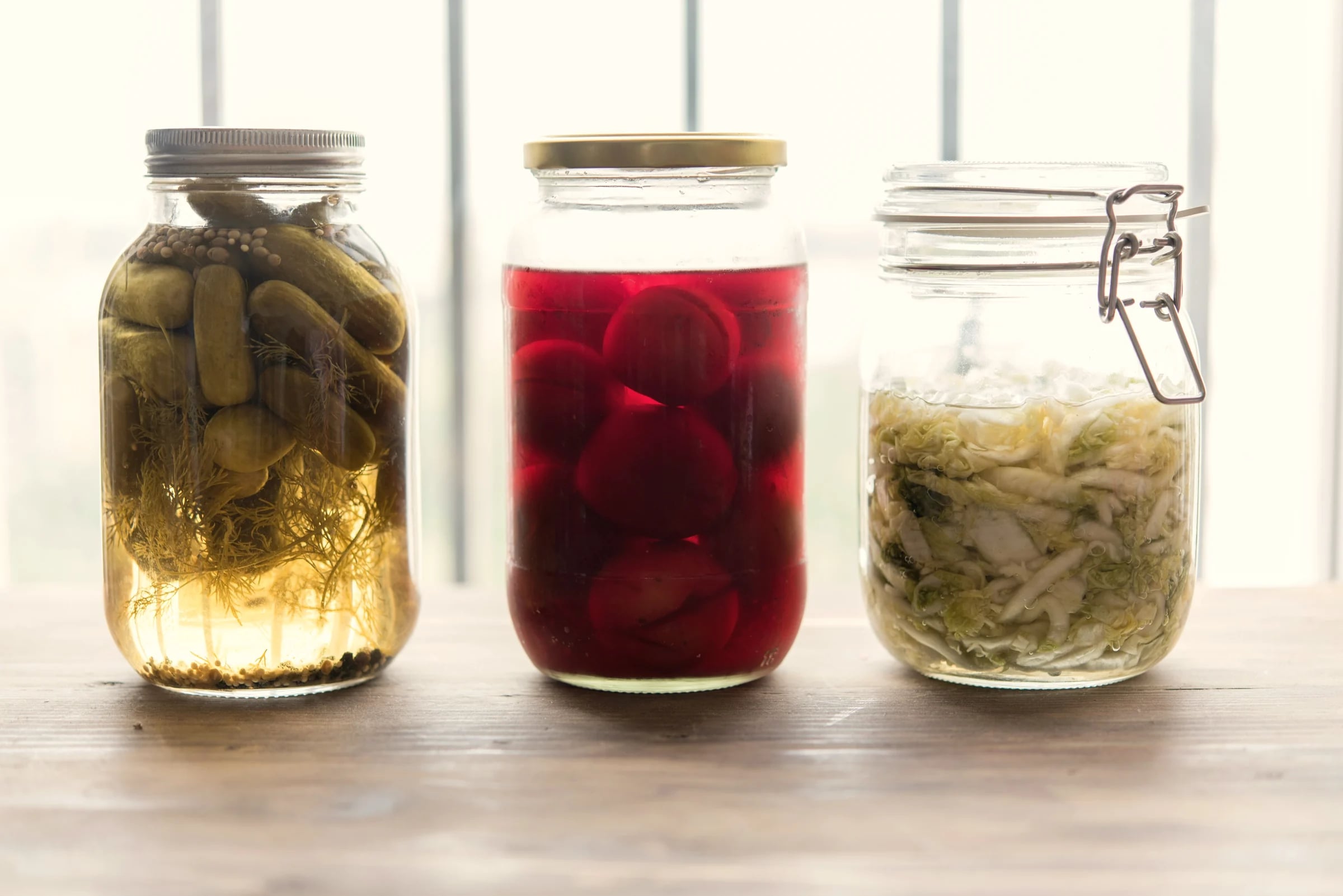
Read the ingredients list. Milk is one of the 14 allergens that must be emphasised, in bold or another way, every time it appears on prepacked food, and a "may contain milk" statement should appear where there's a real risk of cross-contamination. If you'd rather get live cultures from food, sauerkraut and kimchi that haven't been heat-treated, miso, most kombuchas and water kefir are all dairy-free fermented foods; our page on probiotic foods explains which ones still contain live microbes.
Women's probiotics
The same rules apply. A "women's" label is marketing: it doesn't change which strain is inside or what research exists for it, and no probiotic has an authorised health claim for women or anyone else. If you have changes to vaginal discharge, itching, soreness or pain when you pee, the NHS says to get help from NHS 111, and a sexual health clinic can also help. If you're pregnant, check with your midwife or GP before starting any supplement.
Liquid probiotics
A drink or liquid supplement should show the same details as a capsule: strain, count at the end of shelf life and storage, which is often in the fridge. Check the label for added sugar too, as the NHS advises for yogurts.
What are probiotics, and how do they work?
Probiotics are live microorganisms that, when taken in adequate amounts, give a health benefit. That definition comes from FAO and WHO and was reaffirmed by an international expert panel in 2014. In practice, the NHS describes them as live bacteria and yeasts promoted as having health benefits, added to yogurts or taken as supplements. Most are lactobacilli or bifidobacteria, and one, Saccharomyces boulardii, is a yeast.
How they might work isn't fully settled, and it varies by strain. The BDA and Guts UK describe probiotics competing with less helpful bacteria for space and food, helping produce short-chain fatty acids, and interacting with the immune system. To do any of that, a probiotic has to survive stomach acid and the long trip through the small intestine. Even then, it may not stay: in a 2018 study, the bacteria from an 11-strain supplement survived the journey through the gut, but how far they settled varied from person to person and the effect was temporary.
What are prebiotics, and what does "pre and probiotics" mean?
Prebiotics are food for your gut microbes, mostly types of fibre. An expert consensus in 2017 defined a prebiotic as a substance selectively used by microorganisms in the body that gives a health benefit. The BDA lists onions, garlic, asparagus, artichoke and chicory root as sources, and some people take fructooligosaccharides (FOS) or galactooligosaccharides as supplements. "Pre and probiotics" usually means a product that combines live bacteria with one of these fibres.
Claims that FOS or inulin are "prebiotic" or promote healthy gut bacteria have been assessed and are not authorised in Great Britain. The one authorised claim in this area is for native chicory inulin, which contributes to normal bowel function by increasing stool frequency at 12 g a day.
Food is the easier route: most UK adults eat about 20 g of fibre a day against a 30 g target, and our fibre calculator adds up everyday foods. Guts UK notes that some prebiotic-rich foods are high in FODMAPs and can cause symptoms if you have a digestive condition, so a dietitian can help if they do.
What are the benefits of probiotics?
For healthy people, the evidence of benefit is thin. The NHS says there's some evidence probiotics may help in some cases but little evidence for many of the health claims made about them, and no evidence that they can help treat eczema. The BDA says that if you're healthy, a probiotic supplement is unlikely to benefit you, and Guts UK says there isn't enough evidence to support specific strains for general health.
No probiotic has an authorised health claim in Great Britain: the GB register lists a long run of rejected claims for named strains and blends, including several for Lacticaseibacillus rhamnosus under its old name. In 2024 guidance, the advertising regulator's code committee (CAP) said the word "probiotic" itself indicates a relationship between food and health. The only authorised claim involving live bacteria is for yogurt cultures and lactose digestion, which our page on probiotic foods explains. Much of the research on supplements looks at diarrhoea linked to antibiotics.
Should you take probiotics with antibiotics?
The research is mixed, and UK guidance is cautious.
- A 2019 Cochrane review of 33 trials in 6,352 children found that diarrhoea linked to antibiotics affected 8% of those given probiotics, against 19% in comparison groups, rated moderate-certainty evidence. No serious side effects were linked to probiotics in the trials, but the review notes reports of serious adverse events in severely ill or immunocompromised children, including those with central lines.
- A 2017 Cochrane review of C. difficile diarrhoea, in adults and children, found it in 1.5% of people given probiotics against 4.0% in control groups. In a later subgroup analysis, the benefit showed up only in trials where people's starting risk was above 5%.
- A large UK trial, PLACIDE, gave nearly 3,000 hospital patients aged 65 and over, all exposed to antibiotics, a multi-strain probiotic or a placebo for 21 days. Diarrhoea affected 10.8% of the probiotic group and 10.4% of the placebo group, so there was no evidence of an effect.
- NICE's 2021 guideline says not to advise people taking antibiotics to take probiotics to prevent C. difficile infection. It found some evidence of a small effect, but pointed to the high number of people who'd need to take them for one to benefit, results from different probiotics being pooled together, and the UK trial's finding.
If you want to try one with a course of antibiotics, the BDA suggests starting when you start the antibiotics and carrying on for at least a week afterwards. Ask the pharmacist about timing, and don't start one without asking if you're seriously ill or your immune system is weakened. Our guide to how long probiotics take to work covers side effects and when to stop.
Should I take probiotics?
Most healthy people don't need to. Guts UK advises that if you have a healthy gut and no digestive symptoms, you eat a variety of plant foods rather than take a probiotic. If you have ongoing gut symptoms, see a GP first to find out the cause; then, if you want to try one, give it a fair trial of at least four weeks at the label dose and stop if nothing changes.
Common questions
Does the NHS recommend probiotics?
Not generally. The NHS says probiotics appear safe for most people but that there's little evidence for many of the claims made about them. NICE notes that NHS England's guidance says probiotics shouldn't routinely be prescribed in primary care, and its 2021 guideline advises against recommending them to people on antibiotics to prevent C. difficile infection. Your GP or pharmacist can tell you whether one makes sense for you.
Which probiotic do most doctors recommend?
There isn't one. UK guidance doesn't name a probiotic for general use, and NICE's guidance for people with IBS who choose to try them just says to take the product at the manufacturer's dose for at least four weeks while watching the effect. A pharmacist or dietitian can look at the strain and research behind a specific product if you're considering one.
Can I take probiotics while on infliximab?
Ask your IBD or rheumatology team before you start. Infliximab is one of the medicines that affect the immune system, and both the NHS and Guts UK say people with a weakened immune system or on immune-affecting medicines should speak to a doctor before taking probiotics. Guts UK also says there's no evidence that probiotics help people with inflammatory bowel disease.
What does CFU mean on a probiotic?
CFU stands for colony forming units, a count of the bacteria in a serving that are alive and able to grow. FAO/WHO guidelines recommend that labels give the minimum count at the end of the shelf life, because numbers fall over time. The count only means something alongside the strain, since the research behind each strain used its own dose.
Do probiotics need to be kept in the fridge?
Some do and some don't, depending on the strains and how the product is made. Follow the storage instructions on the pack. The BDA says storing a probiotic differently can affect how many live bacteria are left when you take it, and a product kept somewhere warm or damp may contain fewer than the label states.
Is it safe to take probiotics every day?
For most people with a healthy immune system, the NHS says probiotics appear to be safe and shouldn't cause unpleasant side effects, and trials have generally given them daily. In a Cochrane review of children on antibiotics, side effects were no more common with probiotics than without. If you have a weakened immune system, a central line or a serious illness, ask a doctor first, because there are reports of serious problems in these groups.
Sources
- NHS: Probiotics
- FAO/WHO (2006): Probiotics in food, health and nutritional properties and guidelines for evaluation
- Hill et al. (2014), Nature Reviews Gastroenterology and Hepatology: ISAPP consensus on the term probiotic
- Gibson et al. (2017), Nature Reviews Gastroenterology and Hepatology: ISAPP consensus on prebiotics
- McFarland et al. (2018), Frontiers in Medicine: strain-specificity of probiotic efficacy, meta-analysis
- Zheng et al. (2020), International Journal of Systematic and Evolutionary Microbiology: reclassification of the genus Lactobacillus
- Zmora et al. (2018), Cell: personalised gut colonisation resistance to probiotics
- Guo et al. (2019), Cochrane Database of Systematic Reviews: probiotics for preventing antibiotic-associated diarrhoea in children
- Goldenberg et al. (2017), Cochrane Database of Systematic Reviews: probiotics for preventing C. difficile-associated diarrhoea
- Allen et al. (2013), The Lancet: PLACIDE trial of probiotics in older inpatients
- NICE NG199: Clostridioides difficile infection, antimicrobial prescribing
- NICE NG199: rationale and impact
- NICE CG61: Irritable bowel syndrome in adults, recommendations
- British Dietetic Association: Probiotics food fact sheet
- Guts UK: Prebiotics and probiotics
- GOV.UK: Great Britain nutrition and health claims (NHC) register
- ASA/CAP advice: Food, probiotic claims
- FSA/GOV.UK: Allergen labelling for food manufacturers
- NHS: Vaginal discharge
- NHS: Dairy and alternatives in your diet
- NHS: How to get more fibre into your diet
- Yelin et al. (2019), Nature Medicine: probiotic capsule to blood transmission in ICU patients
This guide is general information, not medical advice. If you have a medical condition, take prescription medicines, or are pregnant or breastfeeding, speak to your GP or pharmacist before starting a supplement.
This product is a food supplement intended for use by adults aged 18 and over. It is not intended to diagnose, treat, cure, or prevent any disease. Consult a qualified healthcare professional before use, particularly if pregnant, breastfeeding, or taking medication. Individual results vary.
Further reading
Gut and fibre
Does Greek yogurt have probiotics?
Usually, yes. All yogurt, Greek and Greek style included, is made by fermenting milk with live bacteria, and they stay alive unless the yogurt is heat-treated afterwards, so look for 'live cultures' on the pot. Whether those bacteria count as probiotics is a separate question.
9 min read
Gut and fibre
Psyllium husk: what it is and how to take it
Psyllium husk is the seed coat of the Plantago ovata plant, a soluble fibre that soaks up water and turns to gel, sold in the UK both as a licensed laxative called ispaghula husk (Fybogel is one widely sold brand) and as a food supplement powder. Take it stirred into plenty of water, away from medicines and bedtime, and build up slowly.
11 min read
Gut and fibre
Activated charcoal tablets: uses and risks
Activated charcoal binds other substances to its surface in the gut, so less of them is absorbed. As a food supplement in Great Britain it has one authorised claim, for reducing excessive wind after eating, which needs 1 g at least 30 minutes before a meal and 1 g shortly after; keep it two hours apart from medicines and never use it to treat poisoning yourself.
7 min read