Tart cherry juice: what the research says
Tart cherry juice is made from sour cherries, usually Montmorency. The trials on sleep and muscle recovery are small and mixed, some were paid for by the cherry industry, and no health claim for tart cherry is authorised in Great Britain.
By The Natura teamUpdated 8 min read
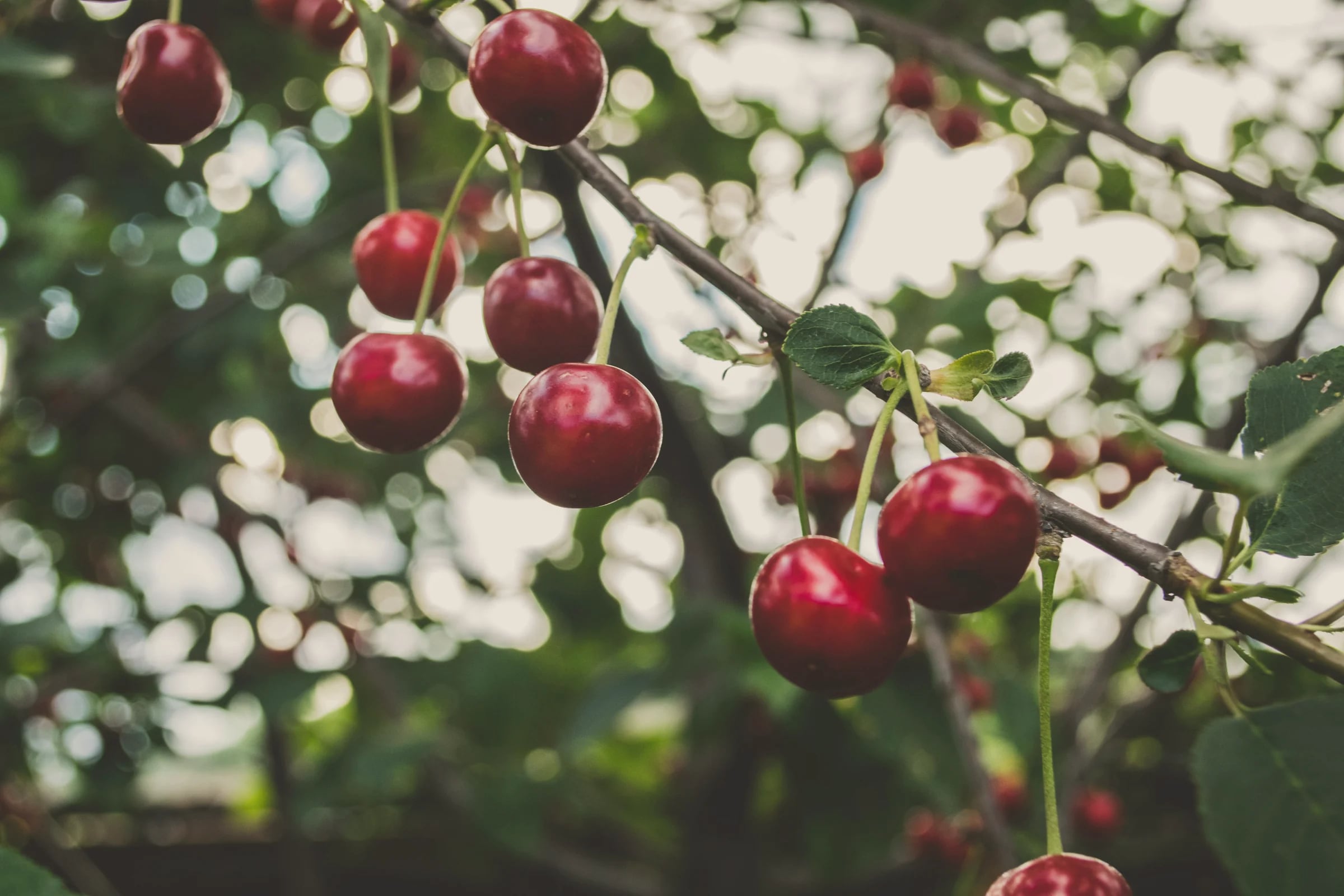
What are the benefits of tart cherry juice?
People drink tart cherry juice hoping for better sleep and quicker recovery after hard training. Small trials give mixed results, and no health claim for tart cherry is authorised in Great Britain, so read "good for" as "what researchers have tested".
Sour cherry juice and tart cherry juice: are they the same?
Yes. Sour cherry and tart cherry are two names for the same fruit, Prunus cerasus, so sour cherry juice is tart cherry juice. Montmorency is the variety most used in studies, and Balaton is another (Burkhardt and colleagues analysed both). They aren't the sweet cherries sold fresh. What differs between products is the form: ready-to-drink juice, concentrate you dilute, or a blend with other juices, which is why the percentage of cherry juice on the label matters.
Sleep
Montmorency cherries contain melatonin, but in tiny amounts: 13.46 nanograms per gram of fruit in one analysis (Burkhardt and colleagues). In the UK, melatonin itself is available on prescription only (NHS), and our melatonin guide covers it.
The sleep trials are small. In 2012, 20 healthy adults who took a concentrate for seven days had more melatonin in their urine and more time asleep on activity monitors than on placebo (Howatson and colleagues). A 2010 pilot of 15 older adults with chronic insomnia tested a branded juice blend. It found fewer minutes awake after sleep onset, but no difference in time to fall asleep, total sleep or sleep efficiency, and the authors said the effects were considerably smaller than those of established insomnia treatments (Pigeon and colleagues). A 2025 systematic review of seven studies found three that reported better sleep indicators, with large differences in dose, length and participants (Barforoush and colleagues).
A 2018 pilot reported 84 more minutes of sleep on a sleep-lab recording in the eight older adults with insomnia who finished it, after 240 ml of juice twice a day for two weeks, although most of its questionnaires showed no difference (Losso and colleagues).
A capsule trial went the other way. In 34 adults with overweight or obesity and sleep problems, a daily Montmorency powder capsule an hour before bed for 14 days changed none of the sleep or inflammation measures (Tucker and colleagues). The Cherry Marketing Institute, a US cherry industry body, funded it, and it still found nothing. If poor sleep has lasted weeks, see a GP, and our guide to sleep supplements covers the wider picture.
Recovery
A 2021 meta-analysis of 14 studies found a small effect on muscle soreness (the confidence interval only just excluded no effect) and a moderate effect on recovery of strength and power. It found no effect on creatine kinase, a blood marker of muscle damage (Hill and colleagues). A 2026 meta-analysis of 19 trials in athletes found better recovery of strength at several time points but no pooled effect on soreness or creatine kinase. It rated the certainty very low to moderate and said some results depended on single studies (Daab and colleagues, with no funding). Our muscle recovery guide sets this beside the ingredients that do have authorised claims.
Is tart cherry juice better than capsules?
We found no trial designed to show whether one works better than the other, though two 30-day trials (described below) ran juice or concentrate groups and capsule groups side by side, each against its own placebo. The recovery trials mostly used juice or concentrate: about 30 ml of concentrate, sometimes diluted to around 130 ml, twice a day for four to ten days, usually starting before the hard session. Some used 236 to 355 ml of juice twice a day. The capsule trial above used Montmorency powder. The 2026 review notes there's no standardised, evidence-based dose (Daab and colleagues).
How much sugar is in tart cherry juice?
At trial doses, quite a lot. A UK trial reported the manufacturer's figures for 30 ml of Montmorency concentrate: 80 kcal, 19 g of carbohydrate and 15 g of sugars. Two servings a day is 30 g of sugars. That equals the NHS limit of 30 g of free sugars a day for adults, and the NHS counts the sugars in unsweetened fruit juice as free sugars. The NHS also advises limiting juice and smoothies combined to 150 ml a day and having them with meals, to protect teeth. If you manage diabetes, ask your GP, practice nurse or pharmacist before adding it. A capsule holds far less.
Tart cherry extract, powder and Montmorency cherry capsules
Capsules hold either dried cherry powder or an extract, and the two aren't the same thing, so look for which one a label says and how many milligrams you get. The trials used a mix: powder, freeze-dried capsules and a proprietary extract. One 2021 trial described its extract by its total polyphenol content, 5 to 6% by weight, which is the kind of detail that lets you compare products. A label that says only cherry extract or tart cherry supplement doesn't tell you the cherry variety, the form or the dose, and the 2026 review found no standardised dose, so amounts can't be compared between products or with juice. Look for tart, sour or Montmorency cherry (Prunus cerasus) and the milligrams per serving.
What have trials of Montmorency cherry capsules and extract found?
The results are mixed. A 2021 randomised crossover trial of 13 men gave a daily capsule of a proprietary tart cherry extract powder for seven days before a hard resistance session. Some muscle-damage markers were lower than on placebo and handgrip strength was higher at 24 hours, but soreness did not differ, and the extract's manufacturer paid for the study (Hooper and colleagues). Two 30-day trials of Montmorency cherry used juice or concentrate in some groups and capsules in others. They found no clear effect on gut bacteria, inflammation markers or blood glucose in 58 healthy adults (Hillman and Chrismas), and no difference from placebo in sleep or blood pressure in 44 (Hillman and colleagues). The powder capsule trial above also found no change in sleep or inflammation.
Where can I buy tart cherry juice in the UK?
In the UK, supermarkets, health-food shops and online retailers sell tart cherry juice as ready-to-drink juice, as concentrate and as capsules or powder. Read the ingredients rather than the front of the pack. Look for tart, sour or Montmorency cherry and for the percentage of cherry juice, because "cherry juice drink" or "cherry flavoured" isn't the same thing. Check the sugar per serving, whether it's from concentrate, and the serving size, since a 1 litre bottle and a 30 ml concentrate dose aren't comparable.
Who should check before taking it?
The NHS warfarin page says to tell your doctor about any other medicines, herbal remedies, vitamins or supplements, and to speak to your doctor before starting a new medicine. We found no authoritative source listing tart cherry as an interaction, but that isn't proof there's none.
People also search for tart cherry and gout. Gout is a medical condition. The NHS says to see a GP if you have symptoms for the first time or your usual treatment isn't helping, and that untreated gout may cause lasting joint damage. Don't swap prescribed treatment for a juice.
Where Natura fits
Daily Cherry, 500 mg, is in the Natura cabinet (coming soon) as part of the Boxing Pack with Daily HMB 3 g, on our sport shelf. No health claim for tart cherry is authorised in Great Britain, so we don't make one. Our HMB guide covers the other half of that pack.
Common questions
Is sour cherry juice the same as tart cherry juice?
Yes. Sour cherry and tart cherry are two names for Prunus cerasus, the species that includes Montmorency and Balaton cherries. Check the label for the percentage of cherry juice and the sugar per serving, because a cherry juice drink or a cherry flavoured drink isn't the same product.
What is the difference between tart cherry extract and tart cherry juice?
Juice and concentrate are pressed cherry juice, and trials used about 30 ml of concentrate twice a day, which carried around 15 g of sugars per serving by one manufacturer's figures. Extract capsules are powders, and one trial's extract was 5 to 6% total polyphenols. We found no trial designed to show which works better, and the 2026 review found no standard dose.
Do Montmorency cherry capsules work?
The results are mixed, and the studies are small and short. A powder capsule trial in 34 adults found no change in sleep or inflammation, and two 30-day trials with capsule groups found no clear effect on sleep, inflammation markers or blood glucose. A small extract trial found some muscle-damage markers lower, but its manufacturer funded it. No health claim is authorised for tart cherry in Great Britain.
Is it okay to drink tart cherry juice every night?
The sleep trials ran for 7 to 14 days, so we don't know about months of nightly use. The practical issue is sugar: by one manufacturer's figures a 30 ml serving of concentrate holds about 15 g of sugars, against an NHS limit of 30 g of free sugars a day for adults. The NHS advises having juice with meals, not as a between-meal drink, to protect teeth.
What medications does tart cherry juice interact with?
We found no authoritative interaction list for tart cherry. The NHS advises telling your doctor about any supplements before starting warfarin or other medicines. If you take an anticoagulant, ask your pharmacist or anticoagulant clinic first, and check the sugar if you take diabetes medicines, since a trial-sized serving carries about 15 g.
Does tart cherry juice contain melatonin?
Yes, in tiny amounts. A 2001 analysis measured 13.46 nanograms per gram of fresh Montmorency cherries, about six times more than Balaton cherries (2.06 ng/g). The authors called that high compared with blood levels in mammals. Melatonin as a medicine is prescription-only in the UK, so it isn't equivalent.
How long does tart cherry juice take to work?
There's no established timeline. Recovery trials usually began four to seven days before a hard session and continued for a few days after, and the sleep trials above ran 7 to 14 days. The 2026 review found no standardised dose, and the average effects in pooled trials were small, so don't expect a quick or certain change.
Sources
- Hill JA, Keane KM, Quinlan R, Howatson G (2021). Tart cherry supplementation and recovery from strenuous exercise: a systematic review and meta-analysis. Int J Sport Nutr Exerc Metab
- Daab W et al. (2026). Effects of tart cherry juice supplementation on recovery from exercise-induced muscle damage in athletes: a systematic review and meta-analysis. Sports Med Open
- Barforoush F et al. (2025). The effect of tart cherry on sleep quality and sleep disorders: a systematic review. Food Sci Nutr
- Tucker RM et al. (2024). Commonly used dose of Montmorency tart cherry powder does not improve sleep or inflammation outcomes in individuals with overweight or obesity. Nutrients
- Hooper DR et al. (2021). Broad spectrum polyphenol supplementation from tart cherry extract on markers of recovery from intense resistance exercise. J Int Soc Sports Nutr
- Hillman AR, Chrismas BCR (2021). Thirty days of Montmorency tart cherry supplementation has no effect on gut microbiome composition, inflammation, or glycemic control in healthy adults. Front Nutr
- Hillman AR et al. (2022). Montmorency tart cherry supplementation does not impact sleep, body composition, cellular health, or blood pressure in healthy adults. Nutr Health
- Howatson G et al. (2012). Effect of tart cherry juice (Prunus cerasus) on melatonin levels and enhanced sleep quality. Eur J Nutr
- Pigeon WR et al. (2010). Effects of a tart cherry juice beverage on the sleep of older adults with insomnia: a pilot study. J Med Food
- Burkhardt S et al. (2001). Detection and quantification of the antioxidant melatonin in Montmorency and Balaton tart cherries (Prunus cerasus). J Agric Food Chem
- Health benefits of Montmorency tart cherry juice supplementation in adults with mild to moderate ulcerative colitis: a placebo randomized controlled trial (2025). Life (Basel), composition of 30 ml concentrate
- NHS: Sugar, the facts
- NHS: 5 A Day, what counts
- NHS: Melatonin
- NHS: Warfarin
- NHS: Gout
- GOV.UK: Great Britain nutrition and health claims (NHC) register
This guide is general information, not medical advice. If you have a medical condition, take prescription medicines, or are pregnant or breastfeeding, speak to your GP or pharmacist before starting a supplement.
This product is a food supplement intended for use by adults aged 18 and over. It is not intended to diagnose, treat, cure, or prevent any disease. Consult a qualified healthcare professional before use, particularly if pregnant, breastfeeding, or taking medication. Individual results vary.
Further reading
Sport and training
Muscle recovery supplements: the evidence
Protein, creatine and carbohydrate have authorised health claims in Great Britain that relate to muscle or exercise, each with conditions. Tart cherry, omega-3, HMB and beta-alanine have been studied, but none has an authorised claim. No supplement can claim to speed recovery or ease soreness.
10 min read
Sleep and mind
Can you buy melatonin in the UK?
Not over the counter. Melatonin is a prescription-only medicine in the UK, so no shop, website or pharmacy (Boots included) can sell it to you without a prescription, and the NHS says the melatonin supplements sold in other countries aren't authorised for sale here.
11 min read
Sport and training
Creatine for women: what it does and how much
Taken alongside resistance training, creatine gives women small extra gains in strength and lean mass, much as it does for men. The claims you'll see about menopause, bones, brain and mood are early research, and some of it has come back negative.
10 min read