What is whey protein, and who does it suit?
Whey protein is one of the two main proteins in milk, collected from the liquid left over when milk is curdled to make cheese, then filtered and dried into a powder. For most healthy adults it's a safe, convenient way to add protein, though if you eat enough you probably get all the protein you need from food.
By The Natura teamUpdated 9 min read
Is whey protein good for you?
For most healthy adults, whey protein is a safe and convenient source of protein, but you may not need it. Whey is a milk protein, usually sold as a powder you mix into a shake. The British Dietetic Association says that in most cases, provided you eat enough overall, a healthy balanced diet gives enough protein even for people who train, and that supplements can help in certain situations. Our protein calculator shows how much you need a day from your weight and activity; compare that with what you already eat before buying a tub. A pint of semi-skimmed milk, three medium eggs or a small chicken breast each gives about 20 g of protein (BDA).
Is protein powder healthy?
It can fit into a healthy diet, but a powder is still a processed food. The BDA says supplements "will not compensate for poor food choices but may be helpful in certain situations", and the ISSN calls protein supplements a practical way to get enough protein of good quality. What makes one tub a better choice than another is mostly on the label: the protein in each serving, any sugar (the NHS says adults should have no more than 30 g of free sugars a day) and the ingredients list. If you play tested sport, UK Anti-Doping warns there is no guarantee that any supplement is free from banned substances.
What is whey, and what is whey protein made of?
Whey is the watery part of milk that separates from the curds during cheesemaking, as the Vegetarian Society describes it. Whey protein is made from it, and it's one of the two main groups of protein in milk (the other is casein). When milk is curdled, the casein clumps into curds and the whey stays in the liquid that's left. The International Society of Sports Nutrition (ISSN) notes that adding acid to milk also makes the casein coagulate and leaves the whey behind. That liquid holds lactose (milk sugar), fat and minerals as well as protein.
How is whey protein made?
The liquid whey is filtered to separate the protein from most of the lactose and fat, then dried into a powder. The ISSN describes two main methods: ion exchange, which uses an electrical charge, and membrane filtration, which traps the larger protein molecules and lets lactose pass through. How far the filtering goes decides the product. A concentrate is 29 to 80% protein by dry weight (sports powders are usually 70 to 80%), and an isolate is more than 90%. Our guide to whey protein isolate compares the forms and explains how to read a label.
What is protein powder made of?
Any protein powder starts as a protein from a food that has been separated, concentrated and dried. Whey and casein come from milk. Other powders use egg white, collagen (from animal skin, bones and connective tissue) or plant proteins such as pea, soy and rice, according to the Vegetarian Society. Soy is a complete protein, though it has lower amounts of the amino acids called BCAAs than milk protein (ISSN). The ingredients list on the tub shows everything else that has been added, so read it as well as the protein figure. The non-whey options are covered further down.
What does whey protein do?
Whey protein does what any complete protein does: it supplies amino acids, including all the essential ones your body can't make. Dairy proteins are also among the richest sources of the amino acid leucine, which makes up about 9 to 11% of their protein (ISSN). In Great Britain, foods that are at least a source of protein may say that protein contributes to a growth in muscle mass, to the maintenance of muscle mass and to the maintenance of normal bones. Claims made for whey itself, such as faster recovery, feeling fuller for longer or better strength, have been assessed and not authorised.
What are the benefits of whey protein?
The best-studied benefit is in people who do resistance training. A 2018 analysis of 49 trials with 1,863 participants found that protein supplements added modestly to the strength and lean mass gained from at least six weeks of training: about 2.5 kg more on a one-repetition maximum and 0.3 kg more fat-free mass on average. Going beyond about 1.6 g of protein per kg of body weight a day gave no further gain in fat-free mass (Morton and colleagues). One of the authors has received support from the US National Dairy Council, which funded some of the trials. In all of these trials, the protein was taken alongside resistance training.
Does whey protein powder help with weight loss?
Whey powder isn't a weight loss product, and the research on it is mixed. A 2018 review of nine trials in people with overweight or obesity found slightly lower body weight and fat mass with whey than without it (Wirunsawanya and colleagues). A 2022 review of ten trials found whey raised lean mass but made no clear difference to fat mass or body weight (Piri Damaghi and colleagues), and a 2022 review of 35 trials said any benefit is expected to be greatest alongside resistance training and a lower overall calorie intake (Sepandi and colleagues). A 2026 review of 14 trials in adults with obesity on reduced-calorie diets found whey may help preserve fat-free mass, though the certainty of the evidence was often low. If you're thinking about changing your diet to lose weight, the NHS advises talking to a GP or healthcare professional first if you have a medical condition.
Whey protein side effects
Whey's side effects mostly come from two things in milk: lactose, which some people don't digest well, and milk protein, which people with a milk allergy react to.
Does whey protein have lactose?
Yes, unless it's been removed. Concentrates keep more lactose than isolates, and the NHS lists protein shakes among the foods that can contain lactose. If you're lactose intolerant, whey can cause the usual symptoms: tummy pain, bloating, wind, rumbling, diarrhoea or feeling sick. The NHS says smaller portions can prevent symptoms, and an isolate, which carries less lactose, may suit you better. Some tubs are labelled lactose free.
Can whey protein cause acne?
The evidence is mixed. In a Jordanian study of 201 male teenagers and young adults who went to gyms, those with acne were more likely to have taken whey supplements in the previous three months (Muhaidat and colleagues, 2024). That kind of study can show a link but not a cause. A six-month randomised trial in Thailand gave 49 young men who already had mild to moderate acne either 30 g of whey a day or a non-whey supplement, and found their acne did no worse on whey (Sompochpruetikul and colleagues, 2024). If you think a shake is making your skin worse, a pharmacist or GP can help you work out what's going on.
Does whey protein cause hair loss?
We found no trials linking whey protein to hair loss. The NHS lists the usual causes of temporary hair loss as illness, stress, cancer treatment, weight loss and iron deficiency, and notes that pattern baldness tends to run in families. See your GP if you're worried about your hair.
Is whey protein bad for your kidneys?
In healthy, active people, controlled studies of high protein intakes have not found harm to kidney function (ISSN). It's different if you already have kidney disease: the NHS advises people with chronic kidney disease to check with a doctor or pharmacist before taking nutritional supplements. Ask your GP or kidney team before adding protein powder.
Is whey protein vegetarian, vegan or gluten free?
Whey is not vegan, because it comes from milk. Whether it counts as vegetarian depends on how the milk was curdled, and the sources don't settle every case.
Is whey protein vegetarian?
The Vegetarian Society lists whey protein as suitable for vegetarians but not vegans. It also says animal rennet, made from the stomach lining of ruminant animals, is not vegetarian, while microbial rennet is. Its guidance doesn't say directly whether whey from cheese made with animal rennet counts, and most tubs don't say which rennet was used. If this matters to you, look for a vegetarian certification mark or ask the maker how the whey was produced.
Non-whey protein powder, and is beef protein better than whey?
If you avoid dairy, there are protein powders made from soy, pea, rice, egg and beef. In the only trial the ISSN found comparing powdered animal proteins, 41 men and women did eight weeks of resistance training while taking 46 g a day of beef protein isolate, chicken protein or whey concentrate. All three protein groups gained lean mass while a control group didn't, and strength gains didn't differ between any of the groups (Sharp and colleagues, 2018). With about ten people per group, the trial can't show that beef protein is better than whey, but it's an option if you avoid milk.
Is whey protein gluten free?
Whey comes from milk, which doesn't contain gluten, but flavourings, added ingredients and factory cross-contamination can change that. In the UK, only foods with 20 parts per million of gluten or less can be labelled "gluten free" (Coeliac UK). If you have coeliac disease, choose a tub that says so.
How to make a whey protein shake
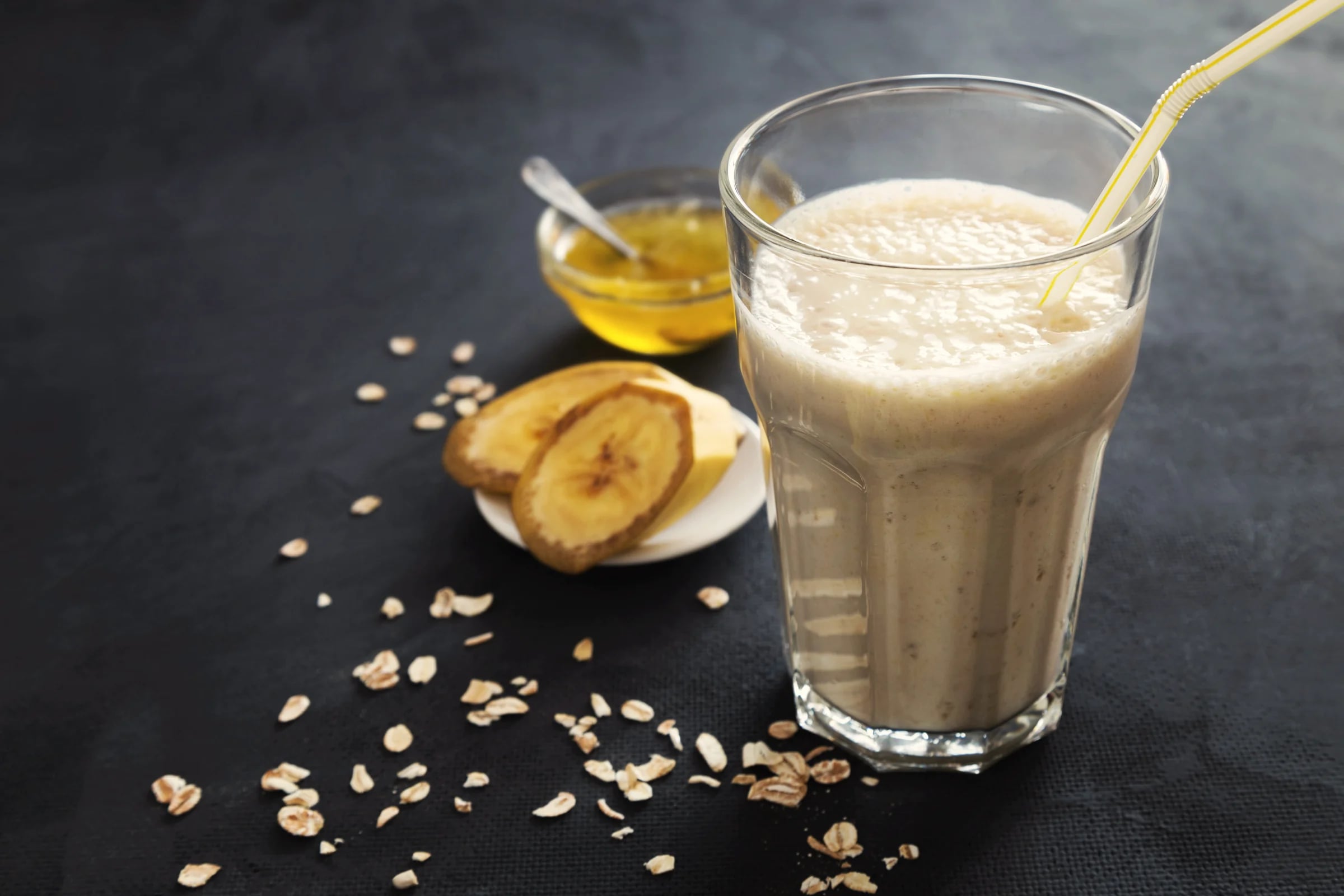
Put about 200 to 300 ml of cold water or milk in a shaker, add the powder, close the lid and shake for 10 to 20 seconds. Liquid first means fewer lumps at the bottom. Milk adds its own protein, about 20 g in a pint of semi-skimmed. You can blend it with fruit, oats or yoghurt, or stir unflavoured whey into porridge after cooking.
How much protein is in one scoop of whey protein?
It depends on the scoop and the powder. Multiply the scoop weight by the protein per 100 g on the label: a 30 g scoop of powder at 80 g of protein per 100 g gives 24 g of protein, and a 25 g scoop at 90 g per 100 g gives 22.5 g. Many brands state protein per serving; check the serving size matches your scoop.
Can I mix creatine with whey protein?
Yes, there's no known problem with combining them. Drink the shake soon after mixing: creatine is stable as a powder but slowly turns into creatinine in liquid, faster when the drink is warm or acidic (ISSN). That matters most with clear whey, which is made as an acidic drink (Best and colleagues, 2025). Our guide to how to take creatine covers dose and timing.
Where Natura fits
Daily Whey, listed at 25 g, is in the Natura cabinet (coming soon) as part of the Conditioning Pack with Daily Creatine 3 g, in our sport packs. Our catalogue doesn't yet state its form, source or flavours, so check the label for milk, lactose and anything else that matters to you when it arrives. Natura's supplements are for adults aged 18 and over.
Common questions
How long does whey protein last?
Go by the best before date on the tub. GOV.UK explains that best before dates are about quality, not safety: after the date, food is usually safe to eat but may not be at its best. Keep the lid closed and follow the storage instructions on the label, usually somewhere cool and dry. If the powder smells off, tastes stale or has clumped from damp, throw it away.
Is whey protein good for you every day?
For healthy adults, a daily serving of whey is generally fine as part of a varied diet, though you may not need it. Use a protein calculator to see your daily target and compare it with what you already eat. If you have kidney disease, a milk allergy or are under 18, check with your GP or a dietitian first.
What's the difference between whey and casein?
They're the two main groups of protein in milk. When milk curdles, casein forms the curds and whey stays in the liquid. Whey is digested quickly and casein slowly, which is why some people take casein before bed. Both are complete milk proteins, and both are unsuitable for anyone with a cow's milk allergy.
Can teenagers take whey protein?
Ask first. If a teenager trains hard and wants to use a protein powder, a GP, school nurse or registered dietitian can check whether their diet already covers it. For active people generally, the British Dietetic Association says a balanced diet with enough energy usually provides enough protein. Natura's supplements are for adults aged 18 and over.
Sources
- Jäger R et al. (2017). International Society of Sports Nutrition position stand: protein and exercise. J Int Soc Sports Nutr
- Morton RW et al. (2018). A systematic review, meta-analysis and meta-regression of the effect of protein supplementation on resistance training-induced gains in muscle mass and strength in healthy adults. Br J Sports Med
- Sharp MH et al. (2018). The effects of beef, chicken, or whey protein after workout on body composition and muscle performance. J Strength Cond Res
- Best AR et al. (2025). Sources of soapy off-flavor in clear acidic whey protein beverages. J Food Sci
- Meulenbroek LA et al. (2014). The degree of whey hydrolysis does not uniformly affect in vitro basophil and T cell responses of cow's milk-allergic patients. Clin Exp Allergy
- Muhaidat J et al. (2024). The effect of whey protein supplements on acne vulgaris among male adolescents and young adults: a case-control study. Dermatol Res Pract
- Sompochpruetikul K et al. (2024). Whey protein and male acne: a double-blind, randomized controlled trial. J Dermatol
- Kreider RB et al. (2017). International Society of Sports Nutrition position stand: safety and efficacy of creatine supplementation in exercise, sport, and medicine. J Int Soc Sports Nutr
- Wirunsawanya K et al. (2018). Whey protein supplementation improves body composition and cardiovascular risk factors in overweight and obese patients: a systematic review and meta-analysis. J Am Coll Nutr
- Piri Damaghi M et al. (2022). Comparison of the effect of soya protein and whey protein on body composition: a meta-analysis of randomised clinical trials. Br J Nutr
- Sepandi M et al. (2022). Effect of whey protein supplementation on weight and body composition indicators: a meta-analysis of randomized clinical trials. Clin Nutr ESPEN
- López-Gómez JJ et al. (2026). Effectiveness of whey protein supplementation in weight loss interventions for patients with obesity: a systematic review. Nutrients
- NHS: Start the NHS Weight Loss Plan
- NHS: How does sugar in our diet affect our health?
- UK Anti-Doping: Supplements
- Vegetarian Society: The animal ingredients hiding in your protein bars and powders
- Vegetarian Society: Which cheeses are suitable for vegetarians, and which aren't?
- British Dietetic Association: Sport and exercise nutrition food fact sheet
- British Dietetic Association: Milk allergy food fact sheet
- NHS: Lactose intolerance
- NHS: Hair loss
- NHS: Chronic kidney disease, living with
- Coeliac UK: Gluten free food labelling law explained
- GOV.UK: Understanding food labelling, allergen labelling
- GOV.UK: Understanding food labelling, best before and use-by dates
- GOV.UK: Great Britain nutrition and health claims (NHC) register
This guide is general information, not medical advice. If you have a medical condition, take prescription medicines, or are pregnant or breastfeeding, speak to your GP or pharmacist before starting a supplement.
This product is a food supplement intended for use by adults aged 18 and over. It is not intended to diagnose, treat, cure, or prevent any disease. Consult a qualified healthcare professional before use, particularly if pregnant, breastfeeding, or taking medication. Individual results vary.
Further reading
Sport and training
Whey protein isolate vs concentrate
Whey protein isolate is whey that has been filtered until it is at least 90% protein by dry weight, so it carries less lactose and fat than a concentrate, which is usually 70 to 80% protein. Which suits you depends mostly on how well you handle lactose and on what 25 g of protein costs in each tub.
10 min read
Sport and training
How to take creatine: how much and when
The standard dose is 3 to 5 g of creatine monohydrate a day, every day, at whatever time suits you. Loading with about 20 g a day for a week fills your muscles faster but isn't necessary, and the evidence on taking it before or after training is too thin to plan around.
16 min read
Skin, hair and nails
Collagen supplements: what they do and how much
Collagen is a protein supplement with no authorised health claims in Great Britain, and there's no good evidence that it helps with weight loss. Pooled trials report small benefits for skin and joints, though the independent and higher-quality skin trials have found no effect.
13 min read