Whey protein isolate vs concentrate
Whey protein isolate is whey that has been filtered until it is at least 90% protein by dry weight, so it carries less lactose and fat than a concentrate, which is usually 70 to 80% protein. Which suits you depends mostly on how well you handle lactose and on what 25 g of protein costs in each tub.
By The Natura teamUpdated 10 min read
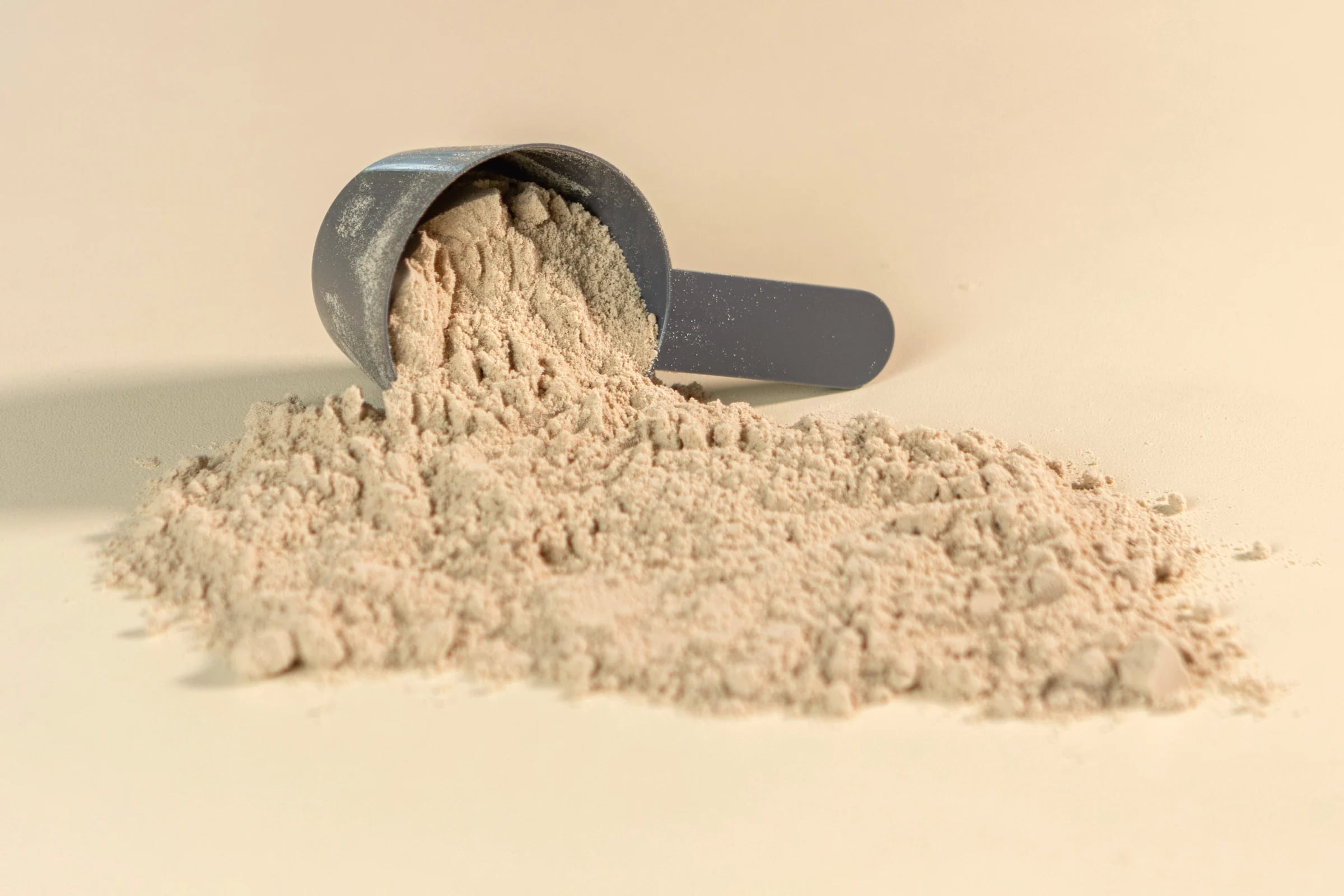
What is whey isolate?
Whey isolate, also called whey protein isolate or isolate protein, is whey that has been filtered further than a standard powder, until protein makes up more than 90% of its dry weight. The extra filtering takes out more of the lactose (milk sugar) and fat, which is why isolate tends to suit people who find ordinary whey hard on the stomach. You will see it sold as whey protein isolate powder and as the base of clear whey drinks. Whey itself is one of the two main groups of milk protein, alongside casein. Our guide to what whey protein is covers how it's made and whether it suits you; this one is about choosing between the forms on the shelf.
Whey isolate vs whey protein: what's the difference?
When a tub just says "whey protein", it's usually a concentrate. The International Society of Sports Nutrition (ISSN) defines a concentrate as 29 to 80% protein by dry weight, and notes that sports products generally use concentrates of 70 to 80%. Once a product passes 90% protein it counts as an isolate. The difference between whey protein and whey isolate is mostly what's left in the rest of the powder.
| Form | Protein by dry weight | Lactose and fat | What's been done to it |
|---|---|---|---|
| Whey protein concentrate | 29 to 80% (sports powders usually 70 to 80%) | More of both | Filtered |
| Whey protein isolate | More than 90% | Less of both | Filtered further |
| Hydrolysed whey | Depends on the whey it's made from | Depends on the starting whey | Treated with enzymes that break the protein into small peptides |
There are two main ways to filter whey. Ion exchange uses an electrical charge to separate protein from lactose and fat. It's relatively cheap and gives the highest protein concentration, but it can denature some of the peptides in whey. Membrane filtration (microfiltration and ultrafiltration) traps the larger protein molecules and lets lactose pass through. The ISSN describes it as gentler but usually more expensive.
What is whey protein concentrate?
Whey protein concentrate, often shortened to whey concentrate, is the standard form of whey: the liquid left after milk curdles, filtered enough to raise its protein share but not as far as an isolate. The ISSN defines a concentrate as any whey product that is 29 to 80% protein by dry weight, and says sports products generally use concentrates of 70 to 80%. The rest of the powder includes lactose and fat, which a concentrate keeps more of than an isolate does. A tub that only says "whey protein" is usually a concentrate, so the nutrition table tells you more than the front of the pack.
Hydrolysed whey protein
Hydrolysed whey has been exposed to digestive enzymes before it reaches the tub, breaking it into chains of two to four amino acids. Research summarised by the ISSN shows amino acids from these small peptides reach the blood faster than from whole protein. Whether that changes anything you'd notice over months of training is much less clear, and hydrolysates usually cost more.
What is clear whey?
Clear whey, sometimes sold as clear whey isolate protein, is whey protein isolate made into a thin, fruit-flavoured drink rather than a milkshake. It is made with isolate because isolate dissolves in acidic liquids: a 2025 food-science study (Best and colleagues) used pH 3.3, the average for commercial clear whey drinks, as its working value. These products come ready to drink or as a powder you mix with water, and the study describes them as typically flavoured with fruity flavours. The same study found they can taste soapy, which it linked to two fatty acids (octanoic and decanoic acid) and which does not show up at neutral pH. The protein itself is the same kind as in any whey isolate, so judge a clear whey on the same numbers as any other tub: protein per serving, per 100 g, and what else is in the ingredients list.
What is casein protein?
Casein protein is the other main group of protein in milk, alongside whey. The ISSN describes casein as water insoluble, coagulating in the gut and digested more slowly than whey, and it notes that milk protein is mostly casein (about 80%). Micellar casein is the form the ISSN calls slow-digesting. If a tub lists casein or micellar casein in its ingredients, it is a casein product or a blend, not a pure whey isolate.
Casein is often taken in the evening. The ISSN position stand says 30 to 40 g of casein before sleep increased overnight muscle protein synthesis (the body building new muscle protein) in studies of young and older men. Results over weeks are less clear: an 8-week study that compared 54 g of casein in the morning with the evening found no differences in body composition or performance. Casein is a milk protein, so the milk allergy warning further down applies to it as well.
What's the best whey protein powder?
No single whey protein powder is best for everyone. Concentrate is often cheaper per gram of protein, isolate carries less lactose, and hydrolysed and clear whey mainly change how fast it's absorbed and what it's like to drink. The questions worth asking are how much protein you get per serving, what else comes with it, whether your stomach copes with the lactose, and what 25 g of protein costs.
Labels don't always match the tub. When Spanish researchers tested 47 whey supplements bought from gyms, pharmacies, sports shops and online stores, the protein they measured averaged 70.9% against 74.3% on the labels, and the lowest sample was just 18% protein (González-Weller and colleagues, 2023). It's worth choosing a seller that publishes independent test results.
What the label must show
Every pre-packed food sold in the UK must show its name, a list of ingredients, the net quantity, a best before or use-by date, any special storage conditions and the name and address of the business behind it. Milk is one of the 14 allergens, so it must be emphasised in the ingredients list every time it appears, in bold, italics or a different colour. Look for:
- protein per 100 g and per serving in the nutrition table
- the form named in the ingredients (whey protein concentrate, isolate or hydrolysate), and whether other proteins are blended in
- sugars per serving, which in an unflavoured whey will be mostly lactose
- any sweeteners, flavourings, thickeners or added amino acids
If the tub is sold as a food supplement, Food Standards Agency guidance says it must also say "food supplement" and give a recommended daily amount with a warning not to exceed it, a statement that supplements shouldn't replace a varied diet, and an instruction to keep it out of reach of young children.
How to compare whey protein on cost per 25 g of protein
A cheap tub can cost more per gram of protein than it looks, because protein content varies so much between powders. Work it out like this:
- Find the protein per 100 g in the nutrition table.
- Multiply by the tub weight in kilograms and by 10. That's the total protein in grams.
- Divide by 25 to get the number of 25 g portions of protein.
- Divide the price of the tub by that number.
A 1 kg tub at 80 g of protein per 100 g holds 800 g of protein, or 32 portions of 25 g. A 1 kg isolate at 90 g per 100 g holds 900 g, or 36 portions. Run the same sums on two tubs and you'll see quickly whether an isolate's higher price is buying you much. If you want to know how much protein you need in the first place, our protein calculator works it out from your weight and activity.
Organic and grass-fed whey protein: what the labels mean
"Organic" is legally protected in Great Britain. GOV.UK says food can only be labelled organic if at least 95% of its agricultural ingredients are organic and the product and its suppliers are certified by an approved control body, whose code appears on the pack in the format GB-ORG-XX. If an organic whey has no code, ask why.
"Grass-fed" works differently. Pasture for Life, which certifies farms that raise animals on 100% pasture, says the term can be used in the UK for animals raised on as little as 51% grass, and it has petitioned the government for a stricter definition. Different schemes set different bars, from a minimum number of days at grass to a fully grass-fed diet. A grass-fed claim on a whey tub tells you something about how the cows were fed under the maker's chosen standard. Ask which standard, and don't read it as a statement about the protein.
Is there a lactose free whey protein?
Some whey tubs are labelled lactose free, and an isolate is the usual first thing to try if ordinary whey upsets your stomach. The filtering that turns whey into an isolate is designed to separate the protein from lactose and fat (ISSN), so less lactose is left behind. Low in lactose is not the same as lactose free, so read the label.
The NHS lists protein shakes among the foods that can contain lactose, and says symptoms of lactose intolerance can be prevented by eating smaller portions of foods containing lactose or by avoiding them. How much people tolerate varies (North Bristol NHS Trust). If symptoms such as bloating, wind or diarrhoea keep coming back after eating, see your GP, and don't cut foods out of your diet without advice from a GP or dietitian.
Unflavoured whey protein
Unflavoured whey protein usually has the shortest ingredients list and no sweeteners, which makes it easier to cook with or stir into porridge.
Is whey protein vegetarian?
Whey protein is made from milk, so it is not vegan, but whether it counts as vegetarian depends on how the milk was curdled. The Vegetarian Society describes whey as the watery liquid separated from the curds during cheese making, and says animal rennet, made from the lining of the stomachs of ruminant animals, is not vegetarian, while microbial rennet, from a fermented fungus, is. Its pages don't say outright whether whey from cheese set with animal rennet counts, and a tub may not say which rennet was used. If it matters to you, look for a vegetarian certification mark on the pack or ask the maker how the whey was produced. Our guide to what whey protein is goes into this further.
Who should check before using whey protein?
If you have kidney disease, don't add a protein powder without talking to your GP or kidney team: the NHS advises people with chronic kidney disease to check with a doctor or pharmacist before taking nutritional supplements, and the ISSN notes that people with kidney failure benefit from protein-restricted diets. Natura's supplements are for adults aged 18 and over; for teenagers, a GP or dietitian is the right person to ask. The British Dietetic Association adds that most people who eat enough overall get enough protein from food.
In Great Britain, foods that are at least a source of protein may say that protein contributes to a growth in muscle mass, to the maintenance of muscle mass and to the maintenance of normal bones. Claims specific to whey, such as faster recovery or feeling fuller, have been assessed and are not authorised.
Where Natura fits
Daily Whey, listed at 25 g, is in the Natura cabinet (coming soon) as part of the Conditioning Pack with Daily Creatine 3 g, in our sport packs. Our catalogue doesn't yet state its form, source or flavours, so read the label for those when it arrives. The Protein Pack in The Fifty is a different product: it holds collagen, creatine, theanine, glycine and ALA, not whey. For creatine alongside a shake, see how to take creatine.
Common questions
What is the difference between whey protein and whey isolate?
Whey isolate is whey filtered further than the concentrate usually sold as whey protein. By dry weight, a concentrate is 29 to 80% protein (sports powders usually 70 to 80%) and an isolate is more than 90%, so an isolate carries less lactose and fat. Both are milk proteins and both come from the same whey.
Is whey isolate better than whey protein?
Not in any general sense. Whey isolate is whey filtered further than a concentrate, so it is more than 90% protein by dry weight and carries less lactose and fat. That matters if lactose upsets you or you want fewer calories per scoop. If concentrate suits your stomach, it usually gives you the same milk proteins for less money per 25 g of protein.
Is hydrolysed whey protein worth it?
For most people, probably not. Hydrolysed whey has been broken into small peptides by enzymes, and studies show its amino acids reach the blood faster than those from intact protein. Whether that leads to better results over weeks of training hasn't been clearly shown, and hydrolysates cost more. It is still a milk protein, so it isn't safe for people with a milk allergy.
What is the best whey protein for lactose intolerance?
An isolate is the usual first choice, because the extra filtering removes more lactose than in a concentrate. Check the sugars line in the nutrition table, since in an unflavoured whey most of that is lactose, and some tubs are labelled lactose free. Tolerance varies from person to person. If symptoms keep coming back after eating, the NHS advises seeing a GP.
What is clear whey, and is it as good as normal whey?
Clear whey is whey protein isolate made into an acidic, juice-like drink, so the protein itself is the same kind. What differs is the format: it is thinner, fruit-flavoured and usually sweetened. Compare it on protein per serving, cost per 25 g of protein and the rest of the ingredients list, as you would any other whey.
Is whey protein vegetarian?
Whey comes from milk, so it is not vegan. For vegetarians the question is the rennet used to make the cheese the whey came from: the Vegetarian Society says animal rennet is not vegetarian and microbial rennet is. A tub may not say which was used, so look for a vegetarian certification mark or ask the maker.
What is casein protein?
Casein is the other main group of protein in milk, alongside whey. The ISSN describes it as digested more slowly than whey, which is why it is often taken before sleep. It is a milk protein, so it is not suitable if you have a cow's milk allergy, and the British Dietetic Association notes that lactose free dairy still contains milk proteins.
Does organic whey protein have to be certified?
Yes. In Great Britain, food can only be labelled organic if at least 95% of its agricultural ingredients are organic and the product is certified by an approved control body. The label must carry the control body's code, in the format GB-ORG-XX for products labelled in Great Britain. 'Grass-fed' has no equivalent single legal standard.
Sources
- Jäger R et al. (2017). International Society of Sports Nutrition position stand: protein and exercise. J Int Soc Sports Nutr
- González-Weller D et al. (2023). Proteins and minerals in whey protein supplements. Foods
- Best AR et al. (2025). Sources of soapy off-flavor in clear acidic whey protein beverages. J Food Sci
- Meulenbroek LA et al. (2014). The degree of whey hydrolysis does not uniformly affect in vitro basophil and T cell responses of cow's milk-allergic patients. Clin Exp Allergy
- GOV.UK: Food labelling, what you must show
- GOV.UK: Understanding food labelling, allergen labelling
- Food Standards Agency: Allergen guidance for food businesses
- Food Standards Agency: Food supplements guidance for businesses
- GOV.UK: Organic food labelling rules
- Pasture for Life: Grass-fed meat and milk you can trust
- NHS: Lactose intolerance
- North Bristol NHS Trust: Dietary advice for avoiding lactose
- British Dietetic Association: Milk allergy food fact sheet
- British Dietetic Association: Sport and exercise nutrition food fact sheet
- NHS: Chronic kidney disease, living with
- GOV.UK: Great Britain nutrition and health claims (NHC) register
- Vegetarian Society: Clean Gains, the animal ingredients in protein bars and powders
- Vegetarian Society: Vegetarian cheese and rennet
This guide is general information, not medical advice. If you have a medical condition, take prescription medicines, or are pregnant or breastfeeding, speak to your GP or pharmacist before starting a supplement.
This product is a food supplement intended for use by adults aged 18 and over. It is not intended to diagnose, treat, cure, or prevent any disease. Consult a qualified healthcare professional before use, particularly if pregnant, breastfeeding, or taking medication. Individual results vary.
Further reading
Sport and training
What is whey protein, and who does it suit?
Whey protein is one of the two main proteins in milk, collected from the liquid left over when milk is curdled to make cheese, then filtered and dried into a powder. For most healthy adults it's a safe, convenient way to add protein, though if you eat enough you probably get all the protein you need from food.
9 min read
Sport and training
How to take creatine: how much and when
The standard dose is 3 to 5 g of creatine monohydrate a day, every day, at whatever time suits you. Loading with about 20 g a day for a week fills your muscles faster but isn't necessary, and the evidence on taking it before or after training is too thin to plan around.
16 min read
Skin, hair and nails
Collagen supplements: what they do and how much
Collagen is a protein supplement with no authorised health claims in Great Britain, and there's no good evidence that it helps with weight loss. Pooled trials report small benefits for skin and joints, though the independent and higher-quality skin trials have found no effect.
13 min read