Taurine benefits: what the research says
Taurine is an amino sulfonic acid your body makes and you also eat, mostly in seafood and meat. Supplement trials, usually of 1 to 6 g, show small and uncertain effects on exercise, and no health claim for taurine is authorised in Great Britain.
By The Natura teamUpdated 8 min read
What are the benefits of taurine?
For most people, taurine from supplements has small and uncertain benefits at best, and no health claim for it is authorised in Great Britain. Your body already makes taurine, so the question is whether extra helps. The trials so far give mixed answers, and most of them are about exercise.
Taurine and exercise
A 2018 meta-analysis of ten studies found that single doses and short courses of 1 to 6 g were linked to better scores in endurance tests, with an average effect size of 0.40 and no sign that bigger doses did more (Waldron and colleagues). A 2025 meta-analysis of 23 trials and 308 people found a smaller effect after a single dose (0.25), clearer in men. It rated the certainty of the evidence low to very low because the studies were small and varied, and its prediction intervals often included no effect at all (Deng and colleagues). Capsules and drinks both seemed to work. For two other ingredients sold alongside it for training, see our guides to beta-alanine and citrulline malate.
Taurine and ageing
A 2023 paper in Science reported that blood taurine falls with age in mice, monkeys and people, and that extra taurine lengthened the lives of mice. The authors said human trials were warranted (Singh and colleagues). A 2025 study of 137 men aged 20 to 93 then found no link between blood taurine and age, muscle mass, strength, physical performance or mitochondrial function (Marcangeli and colleagues). Neither study shows that taking taurine slows ageing in people.
Taurine, blood pressure and blood sugar
A 2026 meta-analysis of 34 randomised trials reported small average falls in fasting blood glucose, cholesterol and blood pressure after taurine, with the best results at 1.5 to 3 g a day. Systolic blood pressure fell by about 4.4 mmHg (Nie and colleagues). We read only the abstract. A pooled result like this mixes different doses, trial lengths and groups of people, and taurine isn't a treatment for any condition.
What is taurine, and where does it come from?
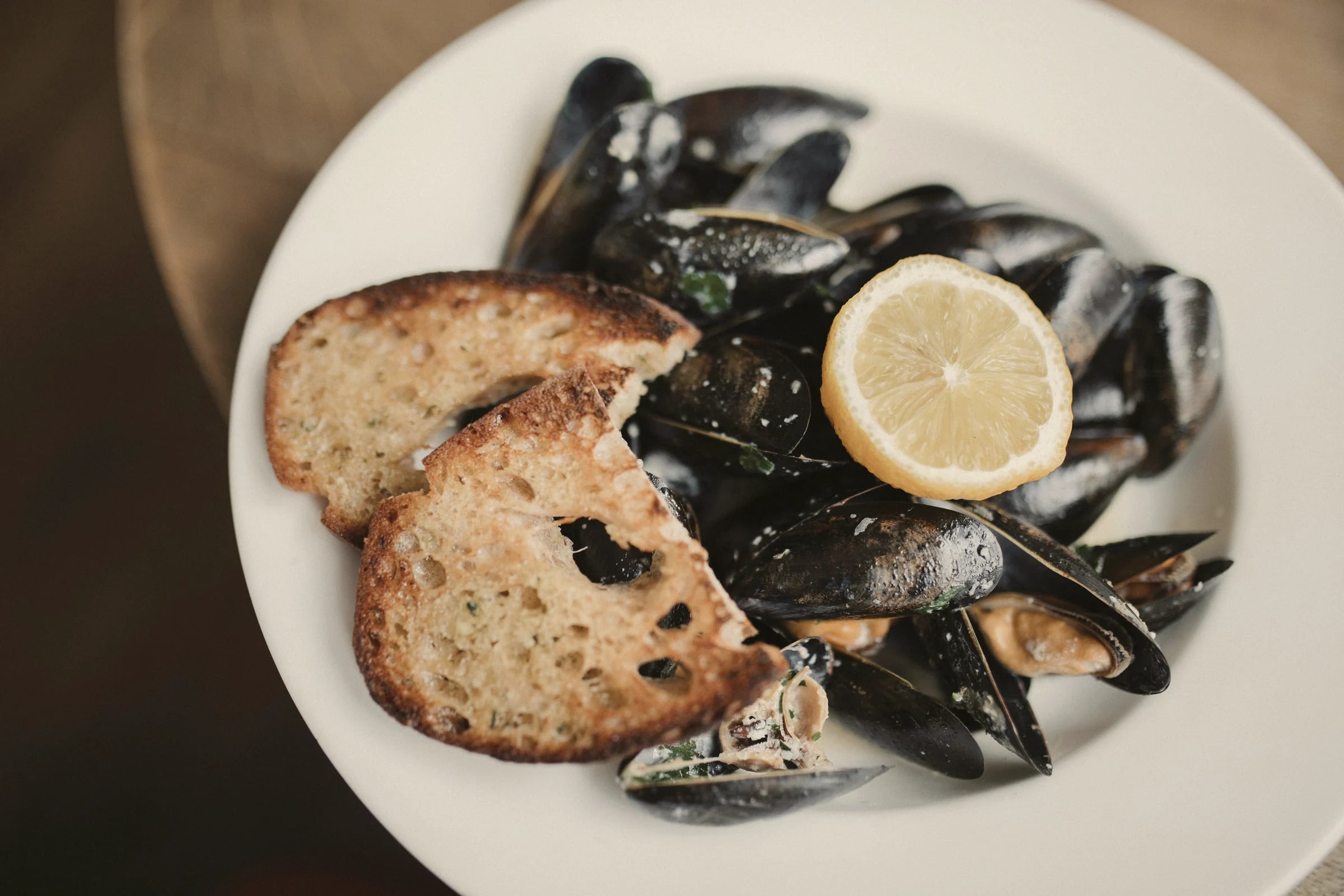
Taurine is a natural compound your body makes, mainly from the amino acid cysteine in the liver. Strictly it's an amino sulfonic acid rather than one of the amino acids that build proteins. It also occurs in food, especially seafood and meat (EFSA). EFSA put the average intake on an omnivore diet at about 58 mg a day, with a range of 9 to 372 mg, and said a strict vegetarian diet gives little or none. Supplement taurine usually takes a different route: a German consumer-advice centre notes that taurine for supplements is mostly made synthetically (Verbraucherzentrale).
Should you take a taurine supplement?
Whether a taurine supplement does anything for you is unclear, and we found no official recommended intake to measure it against. Your body makes taurine, mainly in the liver, and food adds more. A 2021 review puts intake from food at roughly 40 to 400 mg a day, notes that the body's own production is lower in older age and in serious illness, and says vegans have about half the taurine levels of omnivores. It describes taurine supplements only as used in research.
Those studies are small. A 2021 systematic review of 10 exercise trials found results varied by dose, timing and type of exercise, with 8 to 21 people per study, mostly men, and several at high risk of bias. The 2025 meta-analysis above rated its evidence low to very low certainty. If you want to try taurine for training, check the grams per serving on the label, and ask a pharmacist first if you take regular medicines or have a heart or kidney condition.
Is taurine vegan, and is it halal?
Taurine made in a factory contains nothing from animals, so a synthetic supplement is generally suitable for vegetarians and vegans. A label that says vegan is the best check, because capsule shells and other ingredients vary between products.
Halal is a religious ruling, so it isn't ours to give. A synthetic ingredient has no animal source to worry about, which is the usual starting point. The remaining questions are about the rest of the product: the capsule shell, any flavouring and whether the maker holds a halal certificate. If it matters to you, look for a certificate on the label or ask the maker.
How much taurine per day?
There's no official recommended intake for taurine that we could find. The exercise trials used 1 to 6 g, and the 2025 review found no clear difference between doses across that range. Food gives far less: about 58 mg a day on an average omnivore diet.
On safety, a 2008 risk assessment found strong evidence of no adverse effects in healthy adults at supplemental intakes up to 3 g a day. It said much higher amounts had been tested without problems, but not with enough data to be confident (Shao and Hathcock). Its authors worked for the Council for Responsible Nutrition, a US supplement trade body. Long-term data are thin: the 2018 meta-analysis covered supplementation for up to two weeks.
Taurine powder
Taurine powder is the same compound as the capsules, and the 2025 review found both capsules and drinks seemed effective. The practical difference is that a powder lets you set the dose. Use a scoop marked in grams, or kitchen scales that read to 0.1 g, because level and heaped teaspoons differ a lot, and check that the label gives grams per serving.
Are the taurine and caffeine in energy drinks safe?
EFSA concluded in 2009 that the taurine in energy drinks, at the levels it assessed, was not of safety concern. It assumed a 250 ml can holding 1,000 mg of taurine (4,000 mg a litre), and consumption of 0.5 cans a day on average or 1.4 cans for high regular drinkers. That is 500 mg and 1,400 mg of taurine a day. It compared these with a no-effect level in rats of 1,000 mg per kg of body weight a day, which gave margins of 120-fold at average intake and 43-fold at high intake for a 60 kg adult. EFSA assessed the ingredients rather than the drinks, and said some reported adverse effects could be due to the known effects of high caffeine intake, with no scientific evidence that taurine caused them.
Caffeine and sugar are the larger concerns. The government says high-caffeine energy drinks carry about 80 mg of caffeine per 250 ml serving and 160 to 200 mg in 300 to 500 ml cans, and can contain high levels of sugar, though sugar-free versions exist. Any drink other than tea or coffee with more than 150 mg of caffeine a litre must say "High caffeine content. Not recommended for children or pregnant or breast-feeding women". Our caffeine calculator adds up your day. No energy claim for taurine is authorised in Great Britain; caffeine is the better-established stimulant. Pre-workout powders often pair the two, which we cover in what is pre-workout.
Energy drinks and under-16s
On 16 July 2026 the government announced that it will ban the sale of high-caffeine energy drinks to under-16s in England. The ban would cover any drink other than tea or coffee with more than 150 mg of caffeine a litre, in shops, vending machines and online, with fines of up to £2,500 for businesses. It's intended to start on 6 April 2027, subject to Parliamentary approval, so check GOV.UK for the current position. The announcement covers England only.
Who should check before taking taurine?
The government links high-caffeine drinks in children with headaches, sleep disruption and anxiety, which is why it plans the ban. Energy drink labels advise against them in pregnancy and breastfeeding because of the caffeine. For taurine supplements on their own, we found no UK guidance for pregnancy or breastfeeding, so ask a midwife, GP or pharmacist. If you take blood pressure medicines, mention taurine to your pharmacist, since the pooled trials above reported small falls in blood pressure.
Where Natura fits
Daily Taurine, 1 g, is in the Natura cabinet (coming soon) as part of the Swimming Pack, which pairs it with Daily Caffeine 100 mg from green tea. You'll find it on our sport shelf. No health claim for taurine is authorised in Great Britain, so we don't make one.
Common questions
What is taurine in simple terms?
Taurine is a natural compound your body makes in the liver, mainly from the amino acid cysteine, and also takes in from seafood and meat. Strictly it's an amino sulfonic acid, not one of the amino acids that build proteins. It's added to some energy drinks and sold as a supplement, and we found no official recommended intake.
Is a taurine supplement worth taking?
The evidence is weak. Pooled exercise trials show a small average benefit from 1 to 6 g, but a 2025 review rated the certainty low to very low, and a 2021 review found small studies, mostly in men. Your body makes taurine and food adds more. No health claim for taurine is authorised in Great Britain, so a label can't promise a benefit.
Does taurine give you energy?
No health claim linking taurine to energy is authorised in Great Britain. Some trials found small gains in exercise tests after 1 to 6 g, but a 2025 review rated the certainty low to very low. In an energy drink, caffeine is the better-established stimulant, and the calories in non-diet versions come from sugar.
Can you take taurine every day?
Most of the supplement research ran for days or up to two weeks, so long-term data in healthy adults are thin. A 2008 risk assessment found strong evidence of no adverse effects up to 3 g a day, but its authors worked for a supplement trade body. If you plan to take it daily for months, ask a pharmacist first, especially if you take medicines.
Does taurine interact with medications?
We found no authoritative interaction list for taurine. A 2026 meta-analysis reported small average falls in blood pressure, so if you take blood pressure medicines, mention taurine to your pharmacist before starting. A pharmacist can check any supplement against your prescriptions and over-the-counter medicines.
Do taurine and caffeine work better together?
A 2025 network meta-analysis of 12 studies linked the combination with better anaerobic capacity and reaction time than either alone, but the effects on endurance varied and the studies were few and small. Caffeine carries its own limits, so total it with our caffeine calculator before adding anything else.
What foods are high in taurine?
Taurine occurs naturally in food, especially seafood and meat, according to EFSA, and your body makes its own. EFSA estimated an average omnivore takes in about 58 mg a day, with a range of 9 to 372 mg. A strict vegetarian diet provides little or none, though the body's own production continues.
Sources
- EFSA (2009). Scientific opinion on the use of taurine and D-glucurono-gamma-lactone as constituents of the so-called energy drinks. EFSA Journal 935
- Waldron M et al. (2018). The effects of an oral taurine dose and supplementation period on endurance exercise performance in humans: a meta-analysis. Sports Med
- Deng H et al. (2025). Does one shot work? The acute impact of a single taurine dose on exercise performance: a meta-analytic review. Scand J Med Sci Sports
- Deng H et al. (2025). Caffeine and taurine: a systematic review and network meta-analysis of their individual and combined effects. J Int Soc Sports Nutr
- Baliou S et al. (2021). Protective role of taurine against oxidative stress (Review). Mol Med Rep
- Chen Q et al. (2021). The dose response of taurine on aerobic and strength exercises: a systematic review. Front Physiol
- Singh P et al. (2023). Taurine deficiency as a driver of aging. Science
- Marcangeli V et al. (2025). Experimental evidence against taurine deficiency as a driver of aging in humans. Aging Cell
- Nie Z et al. (2026). Effects of oral taurine supplementation on cardiometabolic risk factors: a meta-analysis of randomized clinical trials. Nutr Rev
- Shao A, Hathcock JN (2008). Risk assessment for the amino acids taurine, L-glutamine and L-arginine. Regul Toxicol Pharmacol
- Verbraucherzentrale: Taurin gegen das Altern? Was Nahrungsergaenzungsmittel wirklich koennen
- GOV.UK: Banning the sale of high-caffeine energy drinks to children (consultation)
- GOV.UK: Banning the sale of high-caffeine energy drinks to children, consultation outcome
- GOV.UK: Children's health further protected with energy drinks ban (16 July 2026)
- GOV.UK: Great Britain nutrition and health claims (NHC) register
This guide is general information, not medical advice. If you have a medical condition, take prescription medicines, or are pregnant or breastfeeding, speak to your GP or pharmacist before starting a supplement.
This product is a food supplement intended for use by adults aged 18 and over. It is not intended to diagnose, treat, cure, or prevent any disease. Consult a qualified healthcare professional before use, particularly if pregnant, breastfeeding, or taking medication. Individual results vary.
Further reading

Sport and training
What is pre-workout, and is it safe?
Pre-workout is a powder or drink you take shortly before training, usually built around caffeine with beta-alanine, citrulline, creatine and taurine. In one analysis of best-sellers the average scoop held about 250 mg of caffeine, so the main risks are too much caffeine, stacking it with coffee or energy drinks, and products that contain undeclared or banned stimulants.
10 min read
Sport and training
Citrulline malate and the 2:1 ratio question
Citrulline malate is the amino acid L-citrulline bound to malate. Pooled exercise trials show a small average effect that reviewers rate as low certainty, and no health claim for citrulline is authorised in Great Britain.
7 min read
Hydration
Do you need electrolytes, or is water enough?
For most people on most days, water and normal meals cover your electrolytes, and UK adults already eat more salt than recommended. Electrolyte drinks earn their place in a few situations: long or hot sessions with heavy sweating, hours of work in serious heat, and (as pharmacy oral rehydration solution) sickness or diarrhoea.
16 min read